Sydney Residential Property: What Is the Trend in 2026?
- Written by: The Times
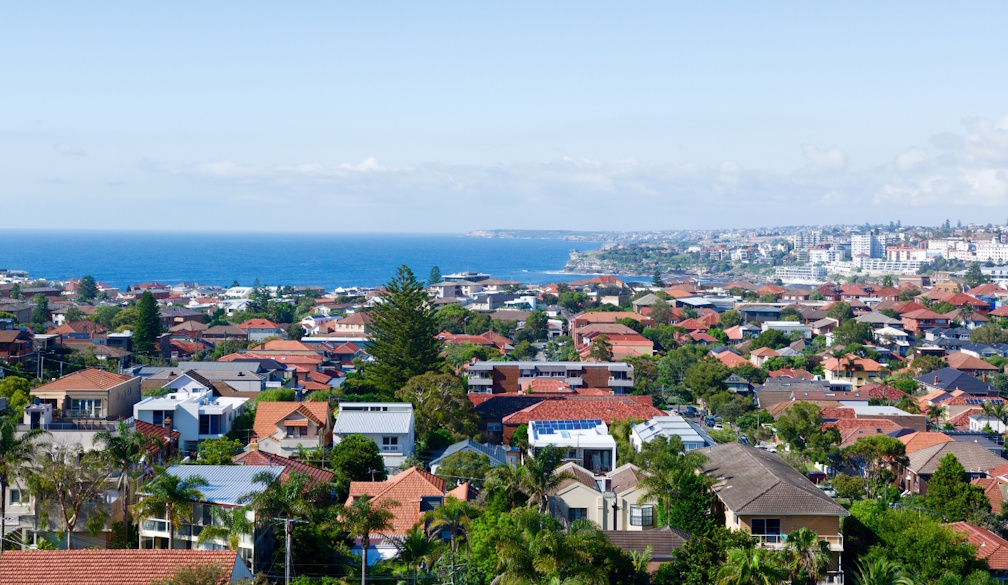
Sydney’s residential property market has entered 2026 in a state of transition — not collapsing, not booming, but recalibrating. After years of aggressive growth, the Harbour City is now experiencing a more complex, uneven cycle shaped by interest rates, affordability constraints, and persistent supply shortages.
The headline trend is clear: Sydney is shifting from rapid growth to a slower, fragmented market — with pockets of strength and signs of softening happening at the same time.
A Market Losing Momentum — But Not Falling Apart
After strong gains in 2025, Sydney’s property market has cooled noticeably in 2026.
-
Prices have slightly declined or flatlined in early 2026, with values down around 0.4% from late 2025 levels
-
Quarterly movements show minor declines (around 0.02%), signalling a market losing upward momentum
-
Forecasts from major banks suggest small falls of around -0.7% across 2026
This is not a crash. It is a slowdown.
Economists consistently emphasise that reduced growth does not equal falling markets — it reflects buyer hesitation in the face of higher borrowing costs and economic uncertainty .
Interest Rates: The Dominant Force
The single biggest influence on Sydney property right now is interest rates.
Sydney, as Australia’s most expensive housing market, is highly sensitive to borrowing costs. Even modest rate increases have an outsized effect:
-
Borrowing capacity declines
-
Mortgage repayments increase
-
Buyer confidence weakens
As a result, higher-end markets — particularly in premium suburbs — are already showing declines, while the broader market slows .
A Split Market: Not All Sydney Is Equal
One of the defining features of the current cycle is divergence.
1. Affordable Areas Are Still Rising
Western Sydney and more affordable suburbs remain highly competitive:
-
Strong demand from first-home buyers and investors
-
Rapid population growth
-
Limited supply
Some areas are experiencing intense competition, with thousands of buyers chasing limited listings .
2. Premium Markets Are Softening
Higher-priced suburbs are:
-
More exposed to interest rate changes
-
Seeing reduced buyer urgency
-
Experiencing slower sales and price pressure
Upper-quartile properties have already recorded noticeable declines compared to lower-priced segments .
3. Units vs Houses
There is also divergence within property types:
-
Units in more affordable areas are seeing stronger growth
-
Houses in premium suburbs are under more pressure
This reflects a broader shift toward affordability-driven demand.
Supply Shortages Still Underpin the Market
Despite the slowdown, Sydney retains one of the most critical structural supports for property prices: chronic undersupply.
-
Housing construction has not kept pace with population growth
-
Migration remains strong
-
Listings remain relatively low
This supply-demand imbalance continues to put a floor under prices, even as demand softens .
In practical terms, this is why Sydney is not experiencing a sharp correction — there simply aren’t enough homes.
Buyer Behaviour Is Changing
The psychology of the market has shifted.
Buyers are:
-
Taking longer to make decisions
-
Negotiating harder
-
Becoming more price-sensitive
Consumer confidence has dropped to very low levels, influencing property decisions directly .
At the same time, some buyers are adapting:
-
Moving to outer suburbs
-
Considering smaller properties
-
Looking for dual-income opportunities (e.g. granny flats)
This behavioural shift is reshaping demand patterns across Sydney and surrounding regions.
The Bigger Picture: National and Global Pressures
Sydney does not operate in isolation. Several macro forces are shaping its property trend:
Cost of Living Pressure
Households are under financial strain, limiting borrowing and discretionary spending.
Global Instability
Events such as geopolitical conflict have influenced interest rate expectations and confidence.
Policy Uncertainty
Possible changes to tax settings (e.g. negative gearing, capital gains) are affecting investor sentiment .
Short-Term Outlook: Flat to Slightly Down
For the remainder of 2026, the consensus view is:
-
Flat or slightly negative price growth
-
Reduced transaction volumes
-
Continued segmentation across suburbs and price points
Sydney is expected to underperform smaller capital cities in the short term .
Medium-Term Outlook: Recovery Likely
Looking beyond 2026, most forecasts point to a rebound:
-
Prices expected to rise again in 2027 (around 2–3%)
-
Demand likely to strengthen as interest rates stabilise
-
Supply shortages will continue to support long-term growth
In simple terms: the current slowdown is widely viewed as cyclical, not structural.
The Underlying Reality: Sydney Remains Supply-Constrained
Even with short-term weakness, the long-term fundamentals remain intact:
-
Sydney is Australia’s economic centre
-
Population growth remains strong
-
Land supply is constrained
-
Housing demand continues to exceed supply
These fundamentals have underpinned decades of growth — and they have not changed.
Final Word
Sydney’s residential property market in 2026 is best described as cooling, not collapsing.
-
Prices are softening slightly
-
Buyers are more cautious
-
Growth has slowed
But beneath the surface, the same forces that drove the market for decades remain in place.
The result is a market that is no longer moving in one direction — but instead fragmenting into multiple sub-markets, each responding differently to economic pressure.
For buyers, this creates opportunity.
For sellers, it demands realism.
For investors, it requires precision.
Sydney is not done — it is simply resetting.