Why Interactive Panels Are Replacing Traditional Whiteboards in Perth
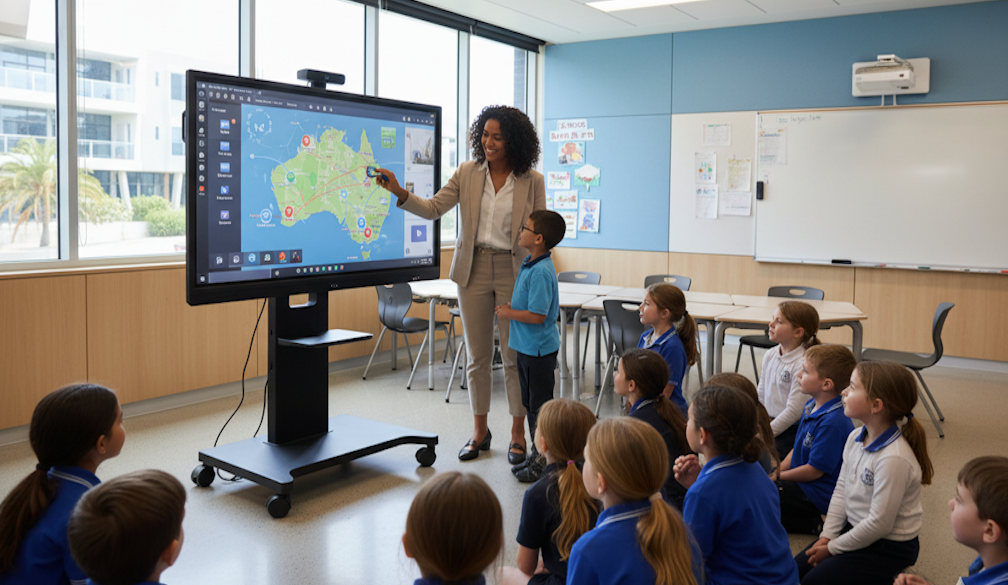
Whiteboards have been part of classrooms and meeting rooms for decades. They’re familiar, flexible, and easy until they quietly become a source of risk, lost time, and frustration.
In Perth offices and learning environments, many organisations are realising that while traditional whiteboards helped teams think out loud, they were never designed for the way modern collaboration actually works. This is why interactive panels are increasingly replacing whiteboards as part of smarter, safer AV systems Perth organisations are investing in.
The shift isn’t about novelty. It’s about protecting ideas, saving time, and working with confidence.
The Hidden Cost of Taking Photos of Whiteboards
If you’ve ever seen a meeting wrap up with everyone pulling out their phones to photograph the whiteboard, you’ve already spotted the problem.
Those photos usually contain:
-
Strategy notesSystem diagrams
-
Network architectures
-
Financial models or IP-sensitive discussions
Once captured on personal devices, control over that information is lost. Photos can be:
-
Shared unintentionally
-
Backed up to personal cloud accounts
-
Stored without any security or retention policy
For organisations dealing with sensitive data, this presents a genuine risk of IP leakage or security exposure, especially when diagrams relate to infrastructure, systems, or governance.
Interactive panels eliminate this risk by allowing content to be securely saved, exported, or shared through approved platforms without relying on personal cameras or informal workarounds.
Lost Ideas, Accidental Erasures, and “We’ll Recreate It Later”
Almost everyone has experienced this moment: someone walks into a room, wipes the board clean, and deletes hours of thinking with a single swipe.
Or worse, a meeting ends, no one captured the content properly, and later someone says, “We’ll just recreate it.”
Recreating ideas is rarely accurate. Context fades quickly, and details get lost or misremembered.
Interactive panels prevent this completely:
-
Content can be saved instantly before a session ends
-
Multiple versions can be retained or rolled back
-
Notes can be shared with attendees automatically
What once lived briefly on a wall can now live securely and consistently as part of the workflow. That continuity saves time, preserves intent, and respects the effort people put into collaborative thinking.
Turning Collaboration into a Digital-First Process
Traditional whiteboards live in a physical bubble. Everything that happens on them has to be manually transferred into digital tools afterwards — documents rewritten, diagrams recreated, notes typed up.
That extra step isn’t just inefficient; it’s mentally draining.
Interactive panels close that gap. They allow teams to:
-
Write, draw, and annotate naturally
-
Save content directly into digital formats
-
Continue working on ideas after the meeting ends
Instead of collaboration stopping when the meeting ends, it extends seamlessly into documentation, planning, and follow-up.
As part of a well-designed AV systems Perth strategy, interactive panels reduce duplication and let teams focus on progress rather than administration.
Security, Governance, and Control by Design
Beyond convenience, interactive panels introduce something whiteboards never could: governance.
Administrators can define:
-
Who can save, export, or share content
-
Where files are stored
-
How long is data retained
For education, government, healthcare, and enterprise environments, this level of control isn’t optional — it’s essential.
Interactive panels align with modern security expectations while still supporting natural, intuitive collaboration. People can work freely, knowing their ideas are protected.
That balance builds trust — not just in the technology, but in the process.
Supporting Hybrid Work Without Compromise
Whiteboards struggle in hybrid environments. Remote participants see grainy photos or partial views, and their ability to contribute is limited.
Interactive panels integrate directly with VC platforms like Microsoft Teams and Zoom, allowing:
-
Real-time interaction from remote participants
-
Equal visibility of content for everyone
-
Shared ownership of ideas regardless of location
This matters because hybrid staff shouldn’t have to work harder to stay involved. Interactive panels help level the playing field — visually and collaboratively.
A Thoughtful Evolution, Not a Trend
The move away from traditional whiteboards isn’t about rejecting what worked before. It’s about recognising what no longer serves modern teams.
Interactive panels don’t just replace markers and erasers. They replace:
-
Risky photo-taking habits
-
Lost ideas from accidental erasures
-
Hours spent recreating work digitally
For Perth organisations rethinking how their spaces support people, interactive panels offer a practical and user-focused upgrade, helping teams collaborate more efficiently, communicate clearly, and work smarter in everyday environments.