The Liberal Party Faces Its Greatest Question Since Menzies: What Does Modern Conservatism Look Like?
- Written by: The Times
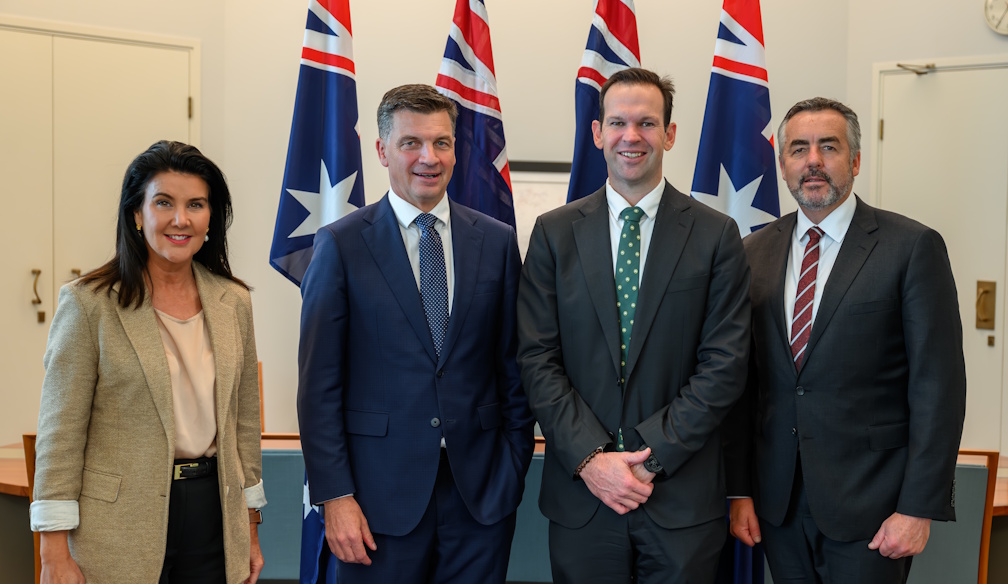
When Robert Menzies founded the Liberal Party of Australia in the aftermath of World War II, Australia was a profoundly different nation.
The social structure was different.
The economy was different.
The population was different.
Even personal identity was different.
Politics in Australia was once almost tribal.
You were often:
- Labor or Liberal
- Union or business
- Catholic or Protestant
- Holden or Ford
- City or country
Political loyalty could last generations. Entire families voted the same way for decades.
That world no longer exists.
Australia in 2026 is a vastly more fragmented, multicultural and economically complex society than the nation Menzies addressed in the 1940s and 1950s.
The question now confronting conservatives is whether the Liberal Party has genuinely evolved to remain fit for purpose — or whether it is trying to fight modern political battles using structures and assumptions from another era.
The Coalition Model Is Under Pressure
For decades, the Coalition arrangement between the Liberals and the Nationals provided stability to non-Labor politics.
The Nationals represented regional Australia.
The Liberals dominated metropolitan and suburban seats.
Preferences flowed efficiently.
The arrangement usually worked.
But preferential voting has evolved into a far more sophisticated political weapon than it once was.
Today, Labor, the Greens, activist organisations such as GetUp! and the Teal movement understand preference mathematics with extraordinary precision.
Their campaigns are often coordinated strategically rather than emotionally.
Seats are targeted scientifically.
Preferences are negotiated ruthlessly.
Narratives are engineered months in advance.
Minor vote fragmentation is exploited.
The result is that conservative politics can win large primary votes while still struggling to form government.
Under a first-past-the-post system, Australian politics may look dramatically different.
But Australia does not operate under that system.
It operates under preferential voting — and parties that understand how to aggregate preferences gain enormous structural advantages.
Labor understands this.
The Greens understand this.
The Teals certainly understand this.
The conservative side of politics appears less certain.
Are The Nationals Reading The Mood Better Than The Liberals?
One of the more uncomfortable questions for Coalition strategists is whether the Nationals increasingly understand voter sentiment in regional and outer suburban Australia better than their Liberal partners do.
On issues including:
- Energy affordability
- Fuel prices
- Agricultural concerns
- Mining and resources
- Regional infrastructure
- Immigration pressures on housing and services
- Skepticism toward inner-city climate activism
…the Nationals often communicate with greater clarity and confidence than metropolitan Liberals.
Yet under Coalition conventions, Nationals candidates frequently do not contest seats notionally allocated to Liberal candidates.
Historically, that arrangement prevented conservative vote splitting.
But in a fragmented political environment, that logic may no longer hold.
If conservative voters feel uninspired by Liberal candidates in suburban and regional growth corridors, they increasingly look elsewhere:
- One Nation
- Independents
- Smaller conservative parties
- Informal voting
- Political disengagement altogether
The old assumption that conservative voters have “nowhere else to go” is becoming dangerous.
The End Of Tribal Politics
Mass immigration, generational change, declining religious affiliation and the collapse of traditional class structures have transformed Australia politically and culturally.
The old political tribes are fading.
A voter whose grandparents voted Labor because they were Catholic dock workers may now own an investment property, run an online business and consume political content from social media rather than traditional institutions.
A voter whose parents were rusted-on Liberals may now prioritise climate policy, housing affordability or anti-establishment politics instead.
Political identity is now fluid.
That creates instability — but also opportunity.
The parties that adapt fastest to this new environment will dominate the next political era.
Conservatives Are Looking For Inspiration
Many conservative and economically liberal Australians appear politically restless.
Some feel the Liberal Party has become managerial rather than inspirational.
Others believe it has become reactive instead of visionary.
Some want stronger economic liberalism.
Others want stronger cultural conservatism.
Some want lower migration.
Others want smaller government.
Many simply want clearer conviction.
Into that vacuum steps One Nation, arguing that it is listening to voters abandoned by both major parties.
Whether One Nation ultimately becomes a governing force in its own right is uncertain.
But its growing resonance highlights a larger reality: many Australians on the non-socialist side of politics are searching for a new political language and a new political structure.
Does Conservatism Need A New Founder Figure?
The uncomfortable truth for the Liberal Party may be that incremental adjustments are no longer enough.
Menzies did not merely modernise existing conservative politics after the war. He rebuilt it.
He created a political force suited to the conditions of his era.
Australia may now be entering another such transition point.
The rise of the Greens, Teals, independents and minor parties suggests the traditional two-party structure is weakening.
If conservatives are to regain long-term competitiveness, they may require not simply another opposition leader, but a transformational political architect capable of redefining what modern Australian conservatism actually means.
Who that figure might be remains unknown.
It may emerge from the Liberal Party.
It may emerge from the Nationals.
It may emerge from outside Parliament entirely.
A non political analogy is Elon Musk. He is not a rocket scientist. Loaded with cash from creating and selling PayPal ( which revolutionised international commerce ) he put his mind to space. The rest is history. Witness the landing tower arms catching a rocket the size of a block of apartments.
Who will be the "Elon Musk" of conservative politics in Australia.
Or perhaps the pressure generated by parties such as One Nation will force the broader conservative movement to reinvent itself before electoral fragmentation becomes permanent.
One thing is increasingly clear: nostalgia for old political loyalties will not be enough in city based seats.
Australian politics has changed.
The National Party appears to be retaining its appeal to rural and regional voters.
The question is whether the Liberal Party is able to adapt or is even capable of changing with it, because Australia needs an effective Opposition in Parliament.