One Nation at 29: Protest Party or Permanent Political Force?
- Written by: The Times
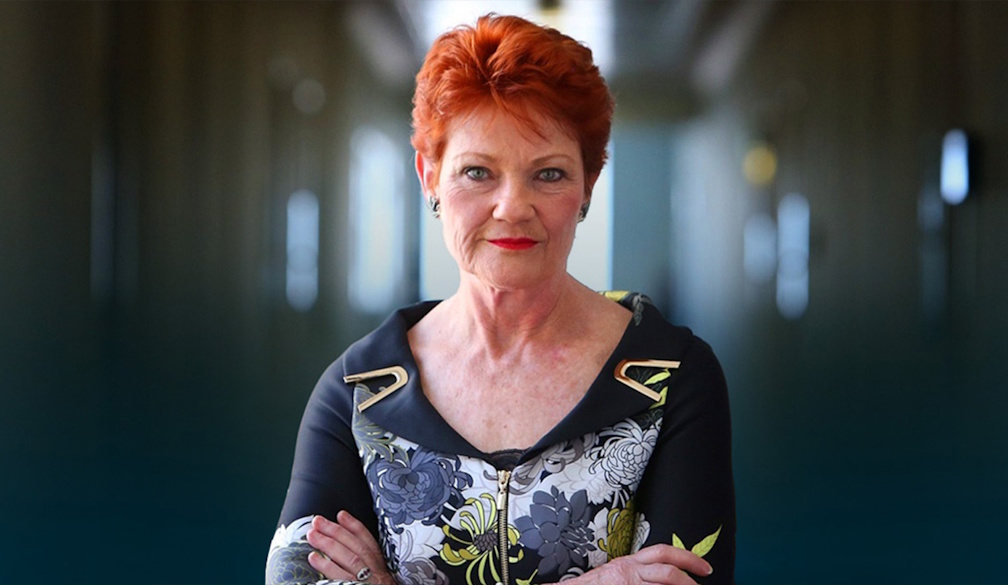
Twenty-nine years ago, when Pauline Hanson's One Nation was officially formed in 1997, many political observers regarded it as a protest movement that would enjoy a brief period of electoral success before fading from Australian politics.
That prediction has not been borne out.
Instead, One Nation has become one of the longest-enduring minor parties in modern Australian politics. It has experienced electoral highs and lows, internal disputes, leadership challenges and changing political priorities, yet it continues to attract a significant share of voters who believe the major parties no longer represent their concerns.
As Australia enters the second half of 2026, One Nation remains a relevant political force and, according to recent opinion polling, may be consolidating support at a time when many voters are again looking beyond Labor and the Coalition for alternatives.
A Different Measure of Success
One Nation's story demonstrates that success in Australian politics is measured in more than seats in the House of Representatives.
Australia's preferential voting system for the lower house has often presented significant challenges for minor parties. Winning a strong primary vote is only part of the task. Candidates must also attract sufficient preference flows to secure victory.
For many elections, preference recommendations from Labor, the Coalition and, in some contests, the Greens have made it more difficult for One Nation candidates to convert support into House of Representatives seats.
The Senate tells a different story.
Australia's proportional representation system allows parties with substantial statewide support to gain representation without winning individual electorates. That system has enabled One Nation to establish and maintain a continuing Senate presence over many election cycles.
While governments are formed in the House of Representatives, the Senate remains a chamber where legislation is scrutinised, amended and sometimes blocked, giving minor parties the opportunity to influence national policy.
From Protest Movement to Political Institution
The political environment of the late 1990s was very different from today's Australia.
Back then, One Nation was widely regarded as a reaction to particular issues of the day.
Today, after a quarter of a century, the party has become part of Australia's established political landscape.
Governments have changed.
Prime ministers have come and gone.
Economic conditions have risen and fallen.
Yet One Nation has continued to attract support from Australians who believe major political parties have become increasingly similar or insufficiently responsive to their concerns.
Whether one agrees with the party's policies or not, its longevity is itself politically significant.
A Changing Electorate
Australian politics has become increasingly fragmented.
The era when Labor and the Coalition together dominated almost every electorate with overwhelming shares of the vote has gradually given way to a more diverse political landscape.
Independents, the Greens and other minor parties now command a larger proportion of votes than in previous decades.
Many Australians no longer identify strongly with a single political party throughout their lives. Instead, they increasingly evaluate parties election by election.
That environment creates opportunities for parties such as One Nation to expand beyond their traditional support base during periods of dissatisfaction with government or opposition alike.
The Preference Debate
One Nation has consistently argued that Australia's preference system disadvantages smaller parties in House of Representatives contests.
Supporters maintain that coordinated preference strategies by larger parties can make it more difficult for smaller competitors to convert significant primary votes into parliamentary representation.
Supporters of the current system respond that preferential voting ensures elected members ultimately receive majority support after preferences are distributed and that voters remain free to determine their own preference order regardless of party recommendations.
The debate is likely to continue well beyond the next federal election.
As more Australians consider voting outside the traditional two-party contest, questions about representation, preferences and electoral competition are likely to receive increasing attention.
Looking Towards the Next Election
Polling is only one indicator of public sentiment.
Election campaigns, candidate quality, local issues and voter priorities all influence the final result.
However, if One Nation continues to consolidate support, the next federal election could become another important milestone in the party's history.
Not necessarily because it forms government.
Not even because it wins substantially more seats.
Rather, because its continued growth would reinforce the broader trend towards a more fragmented Australian political system in which minor parties and independents play an increasingly influential role.
The Times View
The most remarkable aspect of One Nation's history is not any single election result. It is its durability.
Twenty-five years after its formation, the party has moved beyond being simply a protest movement. It has become an established participant in Australia's democratic process, representing a section of the electorate that continues to seek alternatives to the traditional major parties.
The next federal election will test more than One Nation's electoral prospects. It will also test whether Australia's political system is entering a new phase in which voters increasingly reward diversity of representation and place less reliance on the traditional dominance of Labor and the Coalition.
Whatever the outcome, One Nation's first quarter-century has already secured its place as a significant chapter in Australia's modern political history.