The Senate Standoff: Why a Handful of Senators Control Australia’s National Agenda
- Written by: The Times
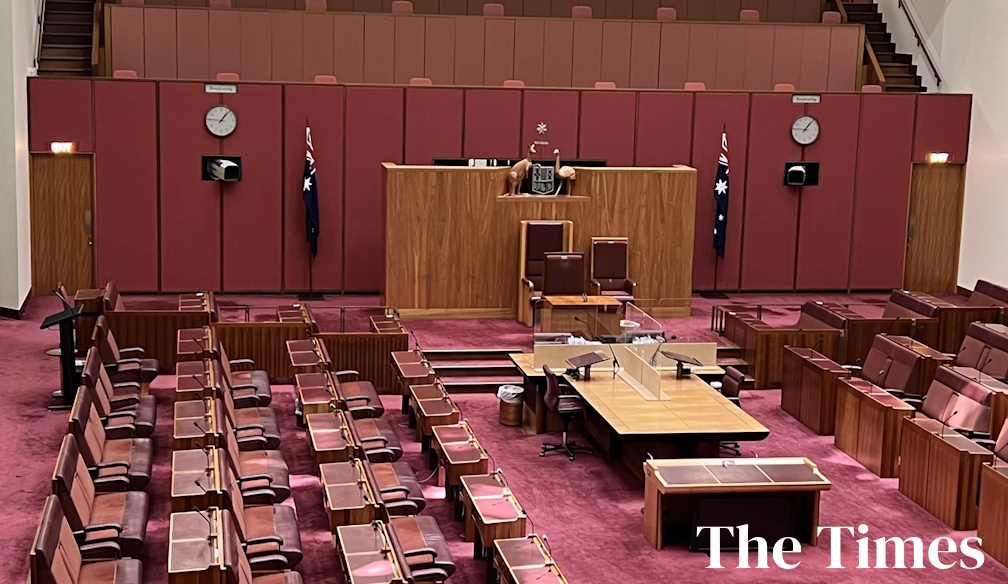
It is one of the most persistent frustrations in Australian politics. A federal government wins a clear majority in the House of Representatives, claims a democratic mandate, and prepares to implement its legislative agenda. Then, it hits the Senate.
Suddenly, flagship policies are stalled, rewritten, or held hostage by a handful of crossbench senators who were elected with just a fraction of the national vote.
If this dynamic leaves you feeling annoyed, you are not alone. It highlights a fundamental, built-in tension within Australia's democracy: the clash between executive government and proportional representation.
Here is an insider look at why the Senate operates this way, how it shapes today’s biggest policy battles, and whether the system is broken or working exactly as intended.
The Math Behind the Power
The root of this frustration comes down to simple parliamentary arithmetic. In the current parliament, the Labor Government holds only 30 out of 76 seats in the Senate. Because a majority of 39 votes is required to pass any law, the government cannot rely on its own numbers. With the Coalition holding 27 seats, the government must look to the 19-strong crossbench.
To pass contested legislation without the Opposition, the government must secure the backing of the 10 Greens senators plus at least two other crossbenchers—such as independents or minor parties like One Nation or the Jacqui Lambie Network.
Consequently, a minor party senator holding a single seat wields the exact same voting power as a major party senator representing millions of voters. When the numbers are tight, that single vote becomes the ultimate political leverage.
Case Studies in Leverage: Tax and Housing
This crossbench leverage is not just theoretical; it actively dictates Australia's economic and social policies. Two current legislative battlegrounds perfectly illustrate how a few senators can reshape the national agenda.
1. The Capital Gains and Tax Reform Backlog
The ongoing gridlock over the Treasury Laws Amendment (Tax Reform No. 1) Bill 2026 is a prime example of the Senate's power to alter fiscal policy.
- The Conflict: The government introduced landmark budget legislation targeting negative gearing and scaling back the 50% capital gains tax discount.
- The Leverage: Lacking a majority, the government has been forced into intense negotiations. The Greens have used their balance-of-power position to demand a comprehensive Senate inquiry and push for a broader rollback of tax concessions.
- The Impact: This forces the executive government to pause its legislative timeline, rewrite tax exemptions—such as carving out specific protections for tech startups—and compromise on its original fiscal strategy just to clear the upper house.
2. The Housing Policy Standoff
The political deadlock over flagship federal housing initiatives, such as the Help to Buy scheme, offers another clear look at minor party influence.
- The Conflict: The government designed a shared-equity housing program to help low-to-middle income earners enter the property market.
- The Leverage: A small group of crossbench senators successfully blocked the bill. They used their crucial votes to demand sweeping concessions, including billions in direct funding for social housing and changes to the Build-to-Rent tax framework.
- The Impact: This tactical roadblock stalled a pillar of the government's domestic platform, sparking fierce public debate over whether the crossbench was practicing "obstructionism" or rightfully forcing better social policy.
Hasn't the System Been Fixed?
Voters often ask how senators with seemingly low primary votes still hold this much sway, especially after major electoral overhauls. To understand today's Senate, it helps to look at the landmark 2016 Senate Voting Reforms.
- The Old Problem (Group Voting Tickets): Before 2016, voters could place a single '1' "above the line" on their ballot, handing total control of their preferences to the political parties. This allowed micro-parties to engage in "preference harvesting." Candidates with microscopic primary support—sometimes as low as 0.5%—mathematically stitched together complex preference deals to win a six-year Senate term.
- The Reform (Optional Preferential Voting): The system was changed to abolish Group Voting Tickets, giving voters total control over their preferences. Voters are now required to number at least 1 to 6 above the line, or 1 to 12 below the line.
- The Current Reality: While these reforms successfully stopped micro-parties from winning seats on virtually zero primary support, they did not eliminate the power of a single quota. Today’s minor party and independent senators win their seats legitimately under proportional representation. However, holding the final, deciding votes in a split parliament amplifies their negotiation power exponentially.
Two Sides of the Democratic Coin
Whether this system is frustrating or functional depends entirely on how you view the role of the Senate.
The Case for Frustration
Critics argue that the current setup creates a democratic deficit. A government elected with a clear majority in the House of Representatives can see its national mandate stalled by individuals representing only a tiny fraction of the population. This can lead to watered-down legislation, policy instability, and a feeling that minor parties are pulling the executive agenda off course.
The Case for the System
Defenders point out that the Senate was deliberately designed by the authors of the Constitution as a "house of review." It acts as a vital check and balance, preventing the government of the day from enjoying absolute, unchecked power. Proportional representation ensures that the 25–30% of Australians who do not vote for the major parties still have a voice in parliament. From this perspective, the gridlock forces negotiation, rigorous scrutiny, and ultimate compromise—resulting in more thoroughly vetted laws.
The Bottom Line
The Senate balance of power ensures that governing Australia requires constant negotiation. While it can be deeply frustrating to watch a few individuals alter major national frameworks, it is the direct result of a system designed to ensure no single party has total control.
The Mathematics of a Senate Quota
The Mathematics of a Senate Quota
To understand how minor parties and independents win seats, it helps to look at the exact mathematical formula used to count Senate votes.
Australia uses a system called Proportional Representation with a Single Transferable Vote (STV). This ensures that seats are distributed in proportion to the total votes cast.
1. The Droop Quota Formula
To win a seat in the Senate, a candidate does not need a majority of votes. Instead, they must reach a specific threshold called the Droop Quota.
The formula to calculate this quota is:
\(\text{Quota}=\left(\frac{\text{Total\ Number\ of\ Formal\ Votes}}{\text{Total\ Number\ of\ Seats\ to\ be\ Elected}+1}\right)+1\)
2. A Real-World Scenario
In a standard half-Senate election (which occurs at every regular federal election), each of the six Australian states elects 6 senators.
Let us calculate the quota using a hypothetical state with \(3,500,000\) formal votes:
\(\text{Quota}=\left(\frac{3,500,000}{6+1}\right)+1\)
\(\text{Quota}=\left(\frac{3,500,000}{7}\right)+1\)
\(\text{Quota}=500,000+1\)
\(\text{Quota}=500,001\text{\ votes}\)
Expressed as a percentage of the total vote, this means a candidate needs exactly \(14.3\%\) of the vote to guarantee their election.
\(\frac{500,001}{3,500,000}\approx 14.286\%\rightarrow \mathbf{14.3\%}\)
(Note: In a rare Double Dissolution election where all 12 seats are up for election, the quota drops to just \(7.7\%\), making it much easier for minor parties to win seats).
3. How Preferences Build a Quota
Very few minor party or independent candidates reach that \(14.3\%\) target on primary "number 1" votes alone. Instead, they rely on the transfer of preferences through a two-step elimination process:
- Surplus Transfers: If a major party candidate receives more votes than the required quota, their "surplus" votes are not wasted. They are passed down to the voters' next choices at a fraction of their value (a transfer value).
- Exclusion Transfers: If no one hits the quota, the candidates with the lowest number of votes are progressively eliminated. Their physical ballot papers are re-examined, and their full votes are passed on to whoever the voter numbered next (2, 3, 4, etc.) on above-the-line or below-the-line selections.
Through this compounding process, a minor party candidate starting with only \(4\%\) or \(5\%\) of the primary vote can steadily harvest preferences as other candidates drop out, eventually crossing the \(14.3\%\) finish line to capture a six-year Senate term.
✅ Summary of the Math
Under a standard half-Senate election, the magic number to secure a seat is exactly \(14.3\%\) of the formal state vote.