Australia’s Luxury Property Divide: Should Homes Be Reserved For Australian Citizens?
- Written by: The Times
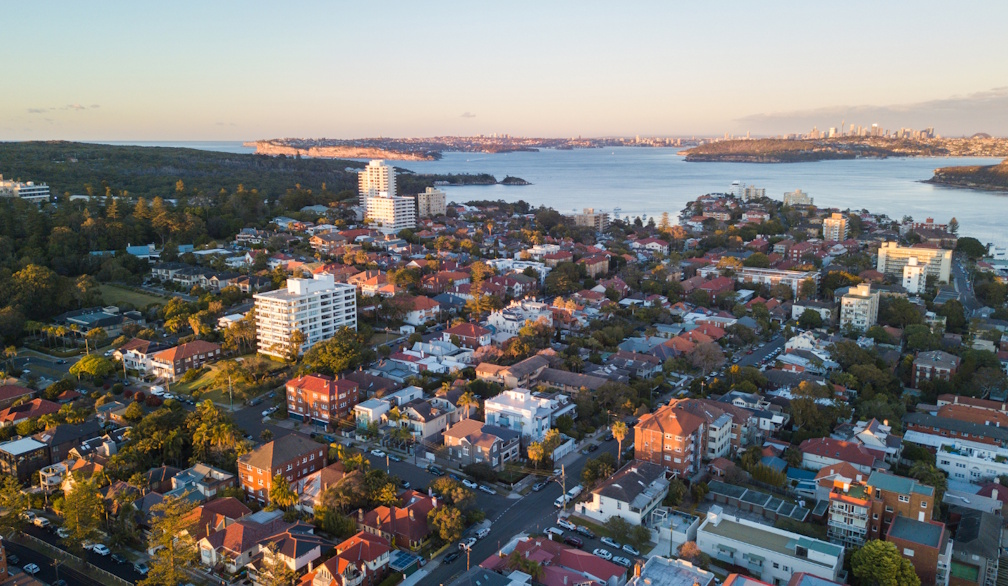
Australia is home to some of the world’s most desirable residential real estate. From harbourfront mansions in Sydney to beachfront compounds on the Gold Coast, vineyard estates in regional Victoria, luxury apartments overlooking Perth’s Swan River and sprawling acreage in Byron Bay, prestige property has become both a status symbol and an international investment target.
But while the top end of the market continues to break records, many younger Australians now view home ownership not as an expectation, but as a distant aspiration.
That divide is fuelling a growing political and social debate: should Australia impose stronger laws restricting foreign ownership of residential property, particularly existing dwellings, so more housing remains accessible to Australian citizens?
The question was once considered politically extreme. Today, it is increasingly being discussed openly at dinner tables, in parliament, across social media and throughout the real estate industry itself.
The Luxury Market Keeps Climbing
Australia’s prestige property market has proven remarkably resilient.
Even during periods of higher interest rates and economic uncertainty, wealthy buyers have continued purchasing premium homes. Some buyers are local entrepreneurs, executives and investors. Others are international purchasers seeking security, lifestyle, education access or capital protection.
Australia remains attractive for several reasons:
-
Political stability
-
Strong legal protections
-
Clean environment
-
Desirable coastal lifestyle
-
World-class universities
-
Relative safety
-
Long-term land scarcity in elite suburbs
Prestige suburbs in Sydney, Melbourne, Brisbane and Perth continue attracting extraordinary prices. Waterfront homes, penthouses and trophy estates increasingly trade in price brackets once associated only with cities like London, New York or Hong Kong.
For ordinary Australians, those figures can seem detached from reality.
The Younger Generation Faces A Different Reality
A generation ago, many Australians expected that steady employment, disciplined saving and patience would eventually allow them to buy a home.
That assumption is weakening.
In many cities, even dual-income professional households struggle to enter the market. Deposits have become enormous. Lending standards are stricter. Stamp duty, insurance and living costs absorb savings capacity. Construction costs remain high.
Meanwhile, luxury homes continue selling for tens of millions of dollars.
The frustration grows sharper when people see foreign companies, overseas investors or ultra-wealthy international residents purchasing high-end Australian property while many citizens cannot afford even modest housing near employment centres.
For some Australians, the issue is no longer simply envy or economics. It has become a question of national interest.
Australia Already Restricts Some Foreign Purchases
Australia is not entirely open to unrestricted foreign residential ownership.
Foreign investment rules already exist through the Foreign Investment Review Board (FIRB). In broad terms:
-
Temporary residents can usually buy one established dwelling to live in
-
Foreign buyers are generally encouraged toward new dwellings
-
Foreign investors face fees and taxes
-
Some states impose additional foreign purchaser surcharges
The policy logic is that foreign investment in new housing can increase supply.
However, critics argue enforcement is inconsistent and loopholes remain. Others claim the rules are too weak relative to the scale of international capital flowing into desirable Australian property markets.
Some also argue that even if foreign ownership is concentrated at the luxury end, it still pushes prices upward throughout the broader market.
The “Trickle-Up” Effect In Property
Property markets are interconnected.
When wealthy buyers aggressively compete for premium homes, owners of those homes upgrade into even more expensive properties or invest elsewhere. Rising prestige prices can flow downward across broader housing categories.
Developers also respond to profitability. If luxury apartments and prestige homes produce stronger returns than affordable housing, more capital naturally flows toward high-end development.
Critics say this gradually transforms cities into investment landscapes rather than communities designed primarily for residents.
The result is increasingly visible across parts of Australia:
-
Workers commuting vast distances
-
Younger families priced out of suburbs they grew up in
-
Essential workers unable to live near hospitals, schools or city centres
-
Regional towns becoming unaffordable after prestige migration trends
The Argument For Restricting Ownership To Citizens
Supporters of stricter laws argue housing should first serve citizens before functioning as a global investment asset.
Some propose reserving existing residential dwellings exclusively for Australian citizens and permanent residents.
Others suggest:
-
Banning foreign ownership of established homes entirely
-
Imposing much higher taxes on overseas ownership
-
Limiting purchases to new developments only
-
Requiring foreign-owned properties to be actively occupied
-
Restricting corporate ownership of residential dwellings
Their central argument is straightforward: Australia’s housing supply is finite, while global capital is enormous.
Competing against international wealth pools is difficult for ordinary wage earners.
Some supporters also frame housing as a sovereignty issue. They argue a nation should prioritise citizens’ ability to secure housing before enabling international wealth accumulation through residential property.
The Counterargument: Australia Needs Investment
Opponents of stricter foreign ownership laws warn against oversimplifying the issue.
They point out that housing affordability problems are driven by multiple factors, including:
-
Population growth
-
Insufficient housing construction
-
Planning restrictions
-
Infrastructure delays
-
Tax settings
-
High migration
-
Construction industry costs
-
Land release bottlenecks
Some economists argue foreign ownership represents only a small proportion of the total housing market.
Others warn that overly restrictive laws could reduce investment confidence and harm sectors reliant on international capital.
Luxury property construction also supports jobs:
-
Builders
-
Architects
-
Tradespeople
-
Real estate agencies
-
Interior designers
-
Legal firms
-
Hospitality suppliers
There is also concern that aggressive restrictions could provoke retaliation from trading partners or damage Australia’s reputation as an open economy.
The Emotional Factor Cannot Be Ignored
Housing debates are rarely purely economic.
A home represents security, identity and belonging. When citizens feel permanently locked out of ownership in their own country, frustration inevitably rises.
Many younger Australians increasingly believe the economic ladder that existed for previous generations has been pulled away.
That sentiment becomes politically powerful when contrasted against headlines involving record mansion sales, foreign investment funds and luxury developments marketed heavily overseas.
Whether fully accurate or not, perceptions matter.
If enough Australians conclude that housing policy favours capital over citizens, pressure for reform will intensify.
Could Australia Introduce Citizen-First Housing Laws?
International examples already exist.
Some countries impose strict controls on foreign ownership of residential property. Others heavily tax vacant homes or speculative purchases.
Australia could theoretically move further in that direction.
Possible future measures could include:
-
Citizen-only ownership zones
-
Foreign ownership caps
-
Heavier vacancy taxes
-
Restrictions on institutional ownership of detached housing
-
Priority purchasing schemes for Australians
But such reforms would face legal, economic and diplomatic complexities.
Governments would also need to balance competing realities:
-
Australia benefits from foreign investment
-
Housing affordability has become politically critical
-
Younger voters are increasingly frustrated
-
The economy still depends heavily on property activity
A National Conversation Is Emerging
For decades, rising property values were widely celebrated because homeowners became wealthier on paper.
Now the conversation is changing.
The next generation increasingly asks whether housing should primarily be:
-
Shelter
-
A family asset
-
A retirement vehicle
-
Or a globally traded investment commodity
Australia’s luxury property market showcases extraordinary wealth and aspiration. But it also highlights a widening divide between those who can buy almost anything and those struggling to buy anything at all.
That divide may ultimately force governments to confront uncomfortable questions.
Not whether Australia should remain open to investment.
But whether there comes a point where preserving housing access for citizens becomes more important than preserving unrestricted access to Australian residential property for global capital.