The dispute causing empty shelves at Woolies is a test case for companies using AI and automation on workers
- Written by: Tom Barnes, Principal Research Fellow, Institute for Humanities and Social Sciences, Australian Catholic University
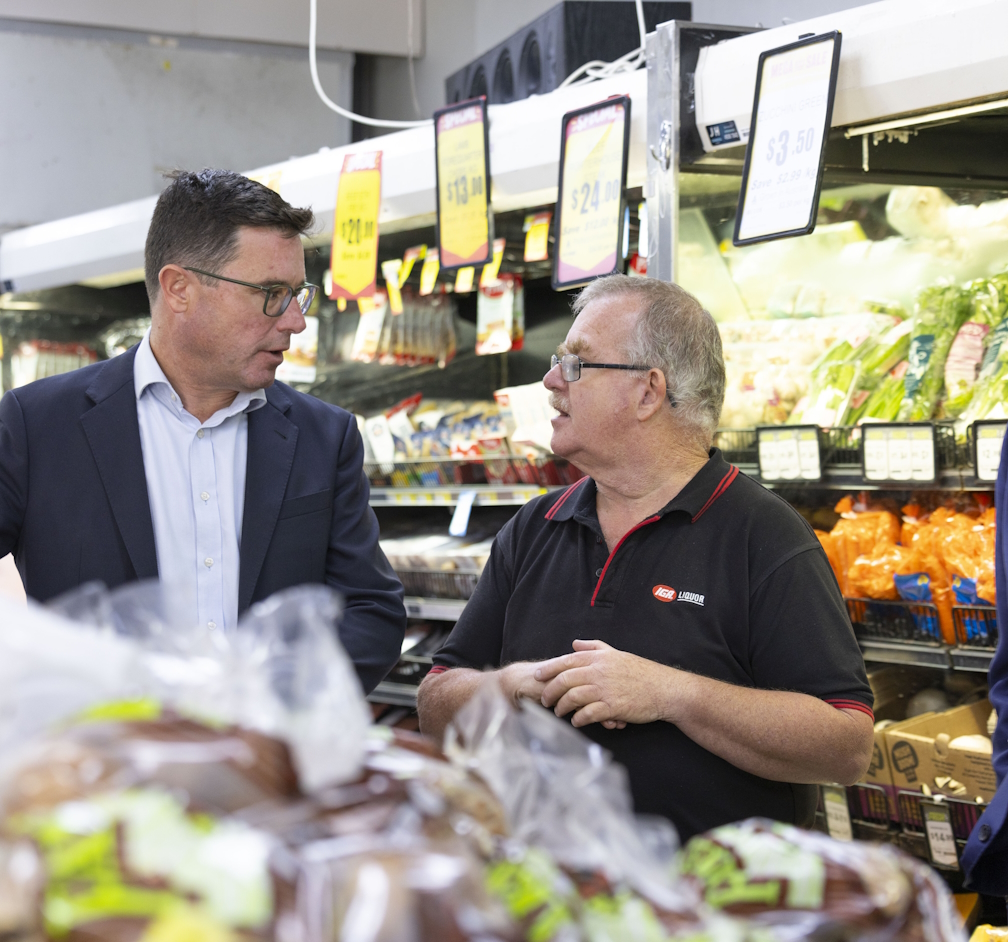
Behind the empty shelves in Woolworths supermarkets[1] across Victoria and New South Wales is a fraught battle between workers and employers that could affect the future of workplaces everywhere.
The dispute has been triggered by stalled enterprise bargaining negotiations between Woolworths and the United Workers Union.
A major factor involves Woolworths introducing a “coaching and productivity framework[2]” to speed up work at distribution centres. This involves surveillance technology and monitoring to direct each worker’s movement and output.
Under this framework, so-called engineered standards[3] or “pick rates” are designed to speed up work on the warehouse floor. Warehouse workers typically wear headsets through which they are told what items to pick and from where, via AI-generated algorithms.
More than 1,500 workers[4], who are also seeking a large pay increase over three years, have been blockading distribution centres in the two states for just over a fortnight. This is causing stores to run out of toilet paper, meat, dairy and other staples.
Woolworths filed an urgent application[5] with the Fair Work Commission on Tuesday. It wants the blockades lifted, claiming the interruption has cost the business at least A$50 million so far. Coles and independent grocers have reportedly[6] seen an increase in business.
A test case for the changing workplace
Around the world, warehousing has become a test-case for conflict over the role of technology at work. Researchers are pointing[7] to the dangers of an “Amazonian era[8]”. This refers to the growth of the US-based multinational e-commerce company, which critics say is characterised by low-paying jobs with exhausting workloads and high turnover.
Given the high cost of living and falling real wages[9] in Australia, much is at stake in this dispute locally.
Woolworths’ management say they have made their employees a fair offer[10] on wages and conditions as part of enterprise bargaining negotiations.

But the United Workers’ Union says they have tried to reach agreement with the company for more than seven months.
As well as concerns about the framework, they are asking to be paid $38 an hour and for pay equity across the distribution centres. Currently, workers can be paid different rates for similar work at different sites.
Cracking down on ‘non-productive’ practices
When the framework was first introduced in 2023, some workers were warned to “stop all time wasting and non-productive behaviors[12]”. There were reports[13] work intensification would lead to workplace injuries.
A union submission[14] to the recent Australian Competition and Consumer Commission supermarket inquiry[15] argued the framework did not account for “gap times”, which were beyond workers’ control, such as congested aisles or missing items.
Growth of AI in the workplace
The use of AI and wearable technologies to speed up work and monitor employees is becoming more widespread in international logistics.
For critics[16], the deployment of such technologies represents a form of “Digital Taylorism[17]” in which every aspect of workers’ movements are recorded and analysed.
If you think this is dystopian, consider the radical transformation of workplaces already underway.
The evolution of automation at Woolworths
I spent five years[18] researching the impacts of the closure of Woolworths’ previous main Melbourne warehouse, the Hume distribution centre in the northern suburbs.
In 2015, the company announced Hume would close and about 700 jobs would be lost. As the centre wound down, Woolies opened its new semi-automated replacement warehouse in Dandenong[19], in Melbourne’s outer southeast. This is central to the current dispute.
The centre has become a model for closing and relocating to new semi-automated warehouses, including upcoming relocations in Sydney[20] and elsewhere.
It is state-of-the-art in warehouse automation, with more than double the product capacity of the old site and a smaller workforce. It uses robot-based control, known as an automated storage and retrieval system in a warehouse with half the number of workers as the old Hume site.
Wages at the Dandenong site are lower than they were at Hume. When the new site opened in 2018, the basic hourly rate was $28[21], less than the $32 paid at Hume[22] when it finally closed.
The currently depleted Woolworths shelves and the inconvenience this is causing encapsulates a range of issues about work, technology and living standards that will affect many workers for years to come.
References
- ^ Woolworths supermarkets (www.theage.com.au)
- ^ coaching and productivity framework (www.theguardian.com)
- ^ engineered standards (www.youtube.com)
- ^ 1,500 workers (www.9news.com.au)
- ^ filed an urgent application (www.abc.net.au)
- ^ reportedly (www.abc.net.au)
- ^ Researchers are pointing (mitpress.mit.edu)
- ^ Amazonian era (www.ifow.org)
- ^ high cost of living and falling real wages (australiainstitute.org.au)
- ^ a fair offer (www.theguardian.com)
- ^ Holly Hales/AAP (photos.aap.com.au)
- ^ stop all time wasting and non-productive behaviors (www.theguardian.com)
- ^ reports (theconversation.com)
- ^ union submission (www.accc.gov.au)
- ^ supermarket inquiry (www.accc.gov.au)
- ^ For critics (www.plutobooks.com)
- ^ Digital Taylorism (www.economist.com)
- ^ spent five years (www.unitedworkers.org.au)
- ^ Dandenong (www.vaughans.com.au)
- ^ upcoming relocations in Sydney (www.woolworthsgroup.com.au)
- ^ basic hourly rate was $28 (www.fwc.gov.au)
- ^ $32 paid at Hume (www.fwc.gov.au)