when a snake sheds its skin, why isn’t it colourful?
- Written by: Damian Lettoof, PhD Candidate, Curtin University
When a snake sheds its skin, why isn’t it colourful? Yahya, aged eight

Thanks for the question Yahya!
Snakes come in all sorts of colours and patterns, especially in Australia. Our prettiest snakes include the Jan’s banded snake, the black-striped snake and the broad-headed snake (but this one is endangered, which means there aren’t very many broad-headed snakes left in the world).
You can see each of these snakes in the photos I’ve taken below.
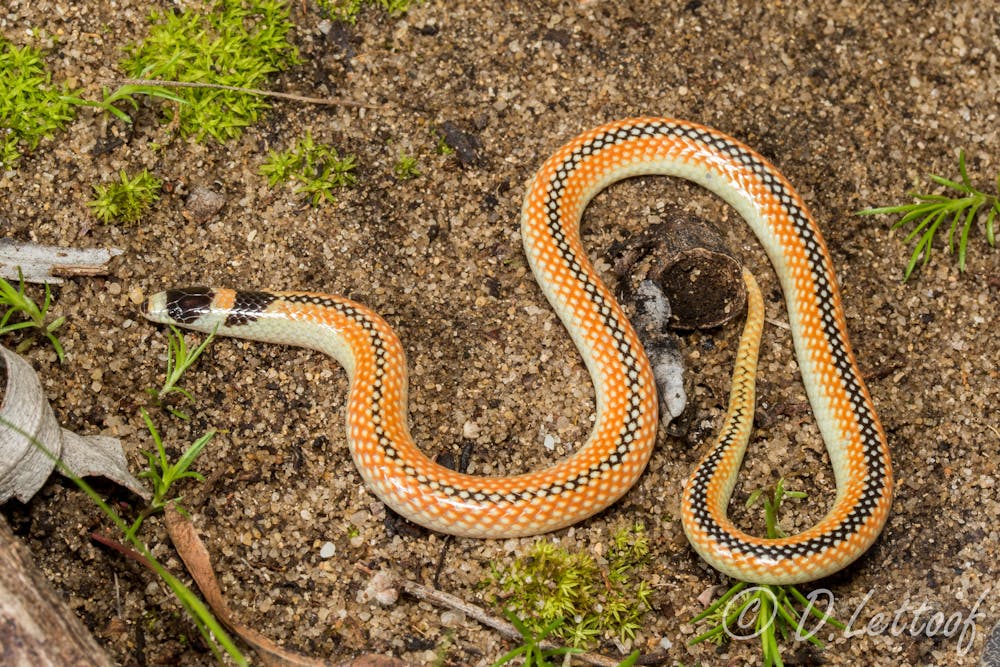 The black-striped snake.
Damian Lettoof, Author provided
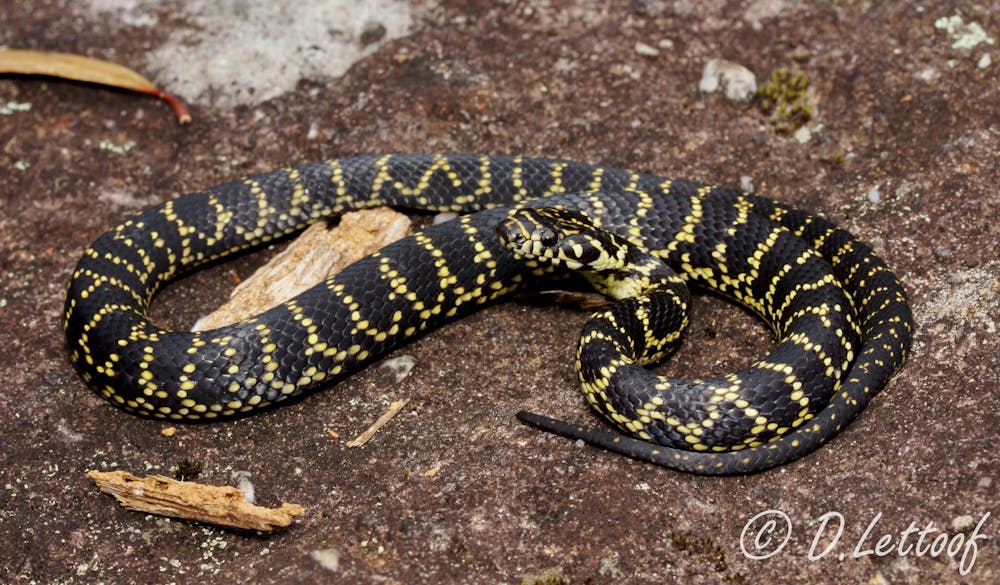 The endangered broad-headed snake.
Damian Lettoof, Author provided
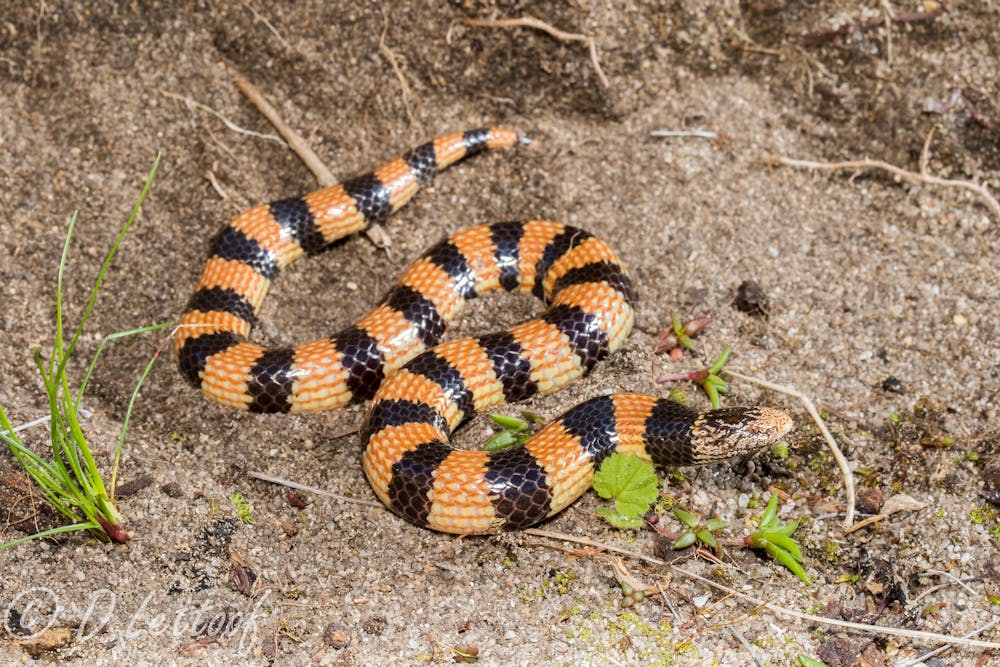 Jan’s banded snake.
Damian Lettoof, Author provided
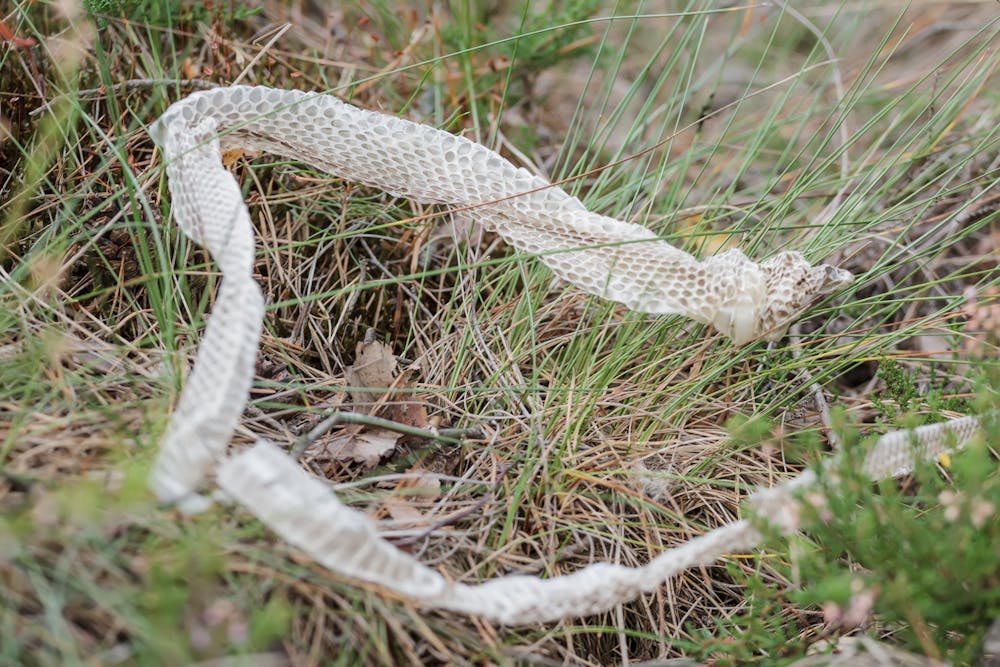
Snakes are well known for being able to shed their entire skin in one piece. But why isn’t the shed skin of a snake colourful, like the snake itself?
To answer your question, we should explore how snake skin and colour works.
All animals grow new skin over their lifetime. This replaces old skin, heals wounds and lets the animal grow bigger. Most animals, including humans, shed tiny pieces of dead skin all the time.
Read more: Curious Kids: How do snakes make an 'sssssss' sound with their tongue poking out?[1]
But snakes have to do it all at once, and this is because snake skin is quite different to a lot of other animals.
Snake skin is actually made up two main layers: the soft, colourful tissue (what scientists call the “dermis”), and hard, mostly see-through scales.
The dermis is filled with nerves, which is what we use to feel things touching us, as well as tiny grains called pigments, which is what gives skin its colour.
 Scales sit on top of the snake’s soft dermis.
Shutterstock
Scales sit on top of the snake’s soft dermis. These are much harder than the skin because scales are made of “keratin” — the same thing our fingernails and hair are made of.
In mammals, like us, the keratin grows from a single point and keeps on growing — think how your fingernails grow from the end of your finger. But in snakes, keratin grows all over, and is stuck on top of the soft dermis, protecting it like a thin shield.
Read more: Curious Kids: What happens if a venomous snake bites another snake of the same species?[2]
While the keratin in snake (and lizard) scales is mostly see through, it also holds lots of tiny dark brownish black grains called “melanin”, which protects snakes from harmful sun rays. This means scales themselves are mainly either colourless or dark brownish black, depending on the snake.
But sometimes, like for Australian water pythons, the outer layer of scales can shine rainbow colours when the light hits it at the right angle.
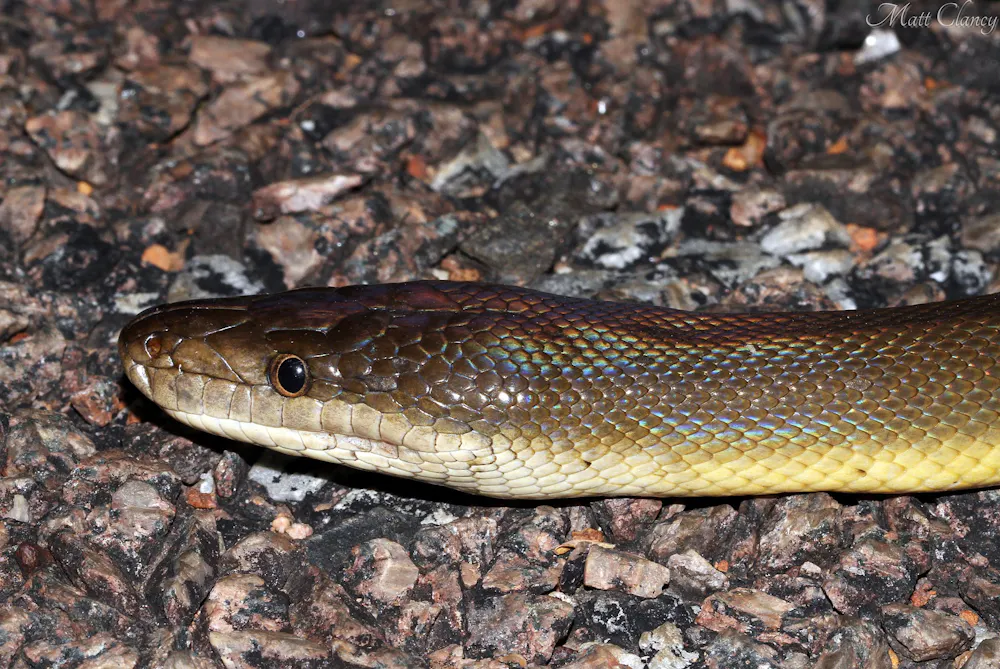 The outer layer of some snake scales, like for Australian water pythons, can shine rainbow colours when the light hits it at the right angle.
Wikimedia, CC BY-SA[3]
First, it’ll grow a new layer of keratin scales underneath the old layer. When the new layer has finished growing, the snake rubs its body along rocks, plants and other rough things to peel the old layer of keratin off — often in a single, snaky piece.
Because all the brightly coloured pigments live in the soft dermis, and not the scales, the colour mainly stays on the snake, not the part it sheds.
But every so often, the shed skin can show dark brownish black stripes or blotches, because of melanin in the scales.
 A little bit of melanin sometimes make the shed skin looks black, so it isn’t always see through.
Shutterstock
Have you ever touched a snake’s shed skin?
Since it’s made up of both the hard keratin scales and a bit of the softer dermis, it feels both rough and soft. And because it’s so stretchy, it can be much longer than snake itself!
Damian Lettoof will be taking questions from kids at the Perth launch of our new Curious Kids picture book Why Do Tigers Have Whiskers[4], published by Thames and Hudson.
Venue: Paperbird Books[5]
Date: July 10, at 10:30am
Price: Free, but space is limited and bookings are essential.
If you’re a Curious Kid with a question you’d like an expert to answer, ask an adult to send it to curiouskids@theconversation.edu.au
References
- ^ Curious Kids: How do snakes make an 'sssssss' sound with their tongue poking out? (theconversation.com)
- ^ Curious Kids: What happens if a venomous snake bites another snake of the same species? (theconversation.com)
- ^ CC BY-SA (creativecommons.org)
- ^ Why Do Tigers Have Whiskers (www.booktopia.com.au)
- ^ Paperbird Books (www.paperbird.com.au)
Read more https://theconversation.com/curious-kids-when-a-snake-sheds-its-skin-why-isnt-it-colourful-160997