American Business Leaders Went to China: That Market Is Vital for Them — and Australian Businesses Know It Too
- Written by: The Times
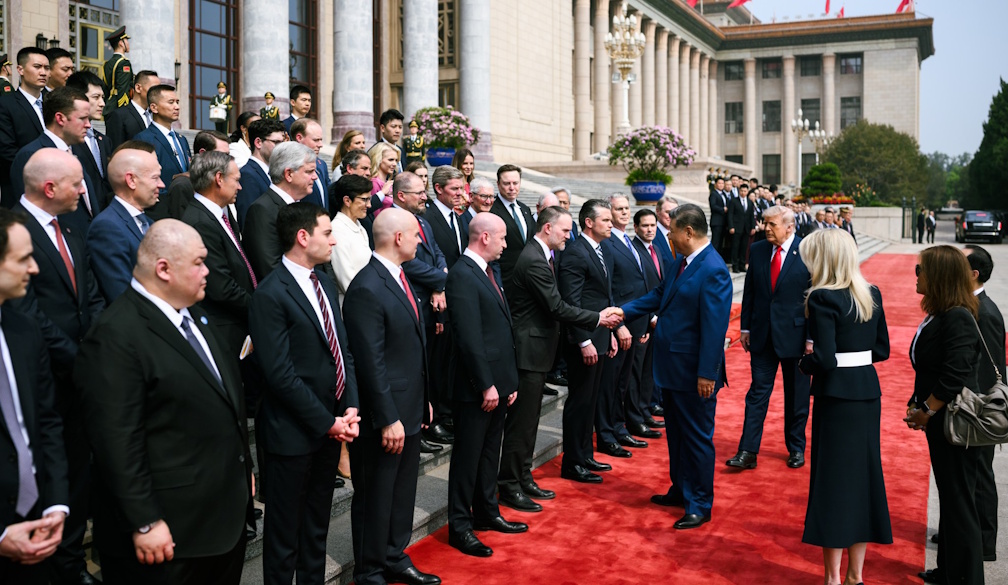
When Donald Trump arrived in China accompanied by a powerful entourage of American business leaders, the symbolism was unmistakable.
Despite years of tariffs, sanctions, trade wars and geopolitical hostility, America’s corporate elite still boarded aircraft bound for Beijing.
Why?
Because China remains too important to ignore.
That reality is not limited to the United States. Australian businesses — from major mining corporations to small suburban entrepreneurs — understand exactly the same thing.
China is not merely a competitor or strategic rival. It is one of the largest buyers and sellers on Earth.
For Australian businesses, the message emerging from the Trump-Xi summit appears increasingly clear: the coast may not be permanently clear, but it is clear enough for business to move forward again.
And many Australian operators are already exploring opportunities.
The relationship modern businesses have with China is vastly more complex than simply “selling products overseas”.
China today is simultaneously a customer, manufacturer, financier, logistics hub, technology supplier and industrial partner.
Australia’s resources sector demonstrates this reality most obviously.
China buys enormous quantities of Australian iron ore, LNG and critical minerals. Entire regions of Western Australia and Queensland depend heavily on Chinese industrial demand. When Chinese construction and manufacturing activity rises, Australian mining companies benefit almost immediately.
This dependence has sometimes worried policymakers, but businesses tend to view it pragmatically.
China builds cities, railways, factories and infrastructure at a scale the modern world has rarely seen. That industrial activity requires raw materials, and Australia possesses many of them.
The financial services sector also sees opportunity.
Chinese wealth creation over the past two decades has been extraordinary. Australian banks, wealth managers, universities, property developers and investment firms have long recognised the value of Chinese capital and Chinese consumers.
Australian universities especially understand this clearly.
Chinese students have contributed billions of dollars to the Australian economy through tuition fees, accommodation, tourism and broader consumer spending. A stabilisation in US-China tensions indirectly benefits Australia’s education sector because it reduces fears of sudden geopolitical escalation across the Indo-Pacific.
Technology companies are watching carefully as well.
The Trump visit highlighted an important contradiction in global business: even while politicians argue about technology restrictions, companies remain deeply interconnected with Chinese manufacturing and supply chains.
Much of the world’s electronics industry still depends heavily on Chinese production capacity.
Australian technology startups know this.
A software developer in Brisbane, Sydney or Melbourne may design a product locally while sourcing components, manufacturing and assembly through China. Hardware entrepreneurs frequently rely on Chinese factories for rapid prototyping, scalable production and lower manufacturing costs.
Even products Australians use every day often involve Chinese supply chains at some level.
Phones.
Computer accessories.
Solar panels.
Batteries.
Drones.
Electrical appliances.
Automotive components.
Camping equipment.
Caravans.
The list is enormous.
In fact, one of the biggest shifts in Australian small business over the past decade has been the rise of entrepreneurs building entire operations around Chinese manufacturing ecosystems.
The “little guy” now has opportunities that previously only belonged to major corporations.
A person operating from a spare bedroom can launch an online business importing products from Shenzhen, using global marketplaces, social media advertising and local fulfilment networks.
Drop shipping has become part of this modern reality.
Australian entrepreneurs increasingly source products directly from Chinese suppliers and manufacturers, often without holding large amounts of inventory themselves. Some build highly profitable niche businesses selling everything from pet accessories and camping products to home décor and electronic gadgets.
For many of these operators, China is not viewed politically.
It is viewed commercially.
It is where the factories are.
It is where the manufacturing expertise exists.
It is where products can often be sourced at prices impossible to match locally.
This does not mean there are no risks.
Australian businesses remain cautious about geopolitical uncertainty, intellectual property concerns, cyber security risks and sudden changes in trade policy. Many companies are also seeking to diversify supply chains into Vietnam, India and other Asian markets.
But diversification is not the same as abandoning China.
That is why the Trump visit mattered.
When American business leaders publicly travel to Beijing alongside a president once associated with aggressive tariffs and trade wars, global markets notice.
Businesses notice.
Australian entrepreneurs notice.
The signal being sent is not that tensions have disappeared. Rather, it is that economic engagement remains alive because the financial incentives are simply too large for both sides to walk away entirely.
China itself also appears eager to reinforce this message.
Chinese state media has strongly emphasised cooperation, trade stability and mutual economic benefit during coverage of the summit. Beijing understands its economy benefits enormously from maintaining international investment and export relationships.
China wants buyers.
But China is also one of the world’s greatest sellers.
This dual role creates extraordinary opportunities for Australian businesses prepared to think globally.
Importers can source products.
Exporters can access consumers.
Service providers can build partnerships.
Technology firms can manufacture efficiently.
Retailers can expand product ranges.
Even tourism operators benefit when diplomatic tensions cool.
The caravan industry offers a fascinating example.
Many Australian caravan brands now source components or entire manufacturing stages from China. The same applies to electric bicycles, drones, batteries and solar systems. Australian businesses often combine local branding, local compliance standards and customer service with internationally sourced manufacturing.
Consumers may not always realise how integrated the relationship has become.
Even businesses that publicly promote “Australian owned” products frequently rely on global supply chains that involve Chinese manufacturing somewhere in the process.
That is modern commerce.
The drone industry demonstrates another reality.
China has become globally dominant in civilian drone manufacturing. Australian agriculture, photography, surveying, mining and emergency services sectors increasingly rely on drone technologies developed and manufactured in China.
For many Australian operators, there are few realistic alternatives at comparable prices and quality levels.
Again, this creates strategic debates in politics and security circles.
But from a commercial perspective, businesses focus heavily on capability, reliability and affordability.
The Trump visit may therefore become psychologically important far beyond any specific trade agreement.
It reassures businesses that dialogue between the world’s two largest economies continues.
It lowers fears of immediate economic decoupling.
It signals that commercial engagement remains possible.
And importantly, it gives businesses confidence to pursue opportunities that may have felt politically risky only months earlier.
Australian companies of all sizes are likely to pay attention.
Because whether it is a mining giant exporting billions of dollars of iron ore or a solo entrepreneur running a small online store, the reality increasingly looks the same:
China is too large, too wealthy and too industrially important for modern business to ignore.
For Australian businesses, the lesson from Trump’s Beijing visit may ultimately be simple.
The world’s political leaders may compete fiercely.
But business still wants access to the market.