Where Our Batteries Come From: Battery making is big business
- Written by: The Times
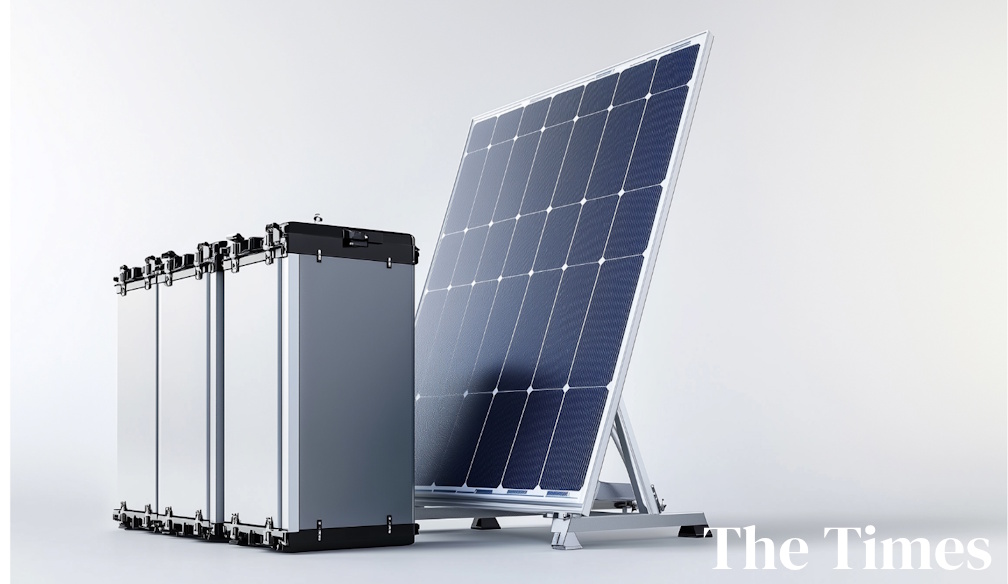
Batteries are now so deeply embedded in modern life that most people rarely stop to think about them.
They power:
- electric vehicles
- smartphones
- laptop computers
- solar storage systems
- watches
- cordless tools
- children’s toys
- remote controls
- medical equipment
- power stations
The modern economy increasingly depends not merely on electricity, but on the ability to store electricity.
That reality has transformed batteries from simple consumer products into strategic geopolitical assets.
Behind every battery sits a vast global supply chain involving mining, chemical processing, manufacturing, shipping and increasingly political competition between major powers.
The battery inside a television remote and the battery pack inside a modern electric vehicle may differ enormously in scale, but both rely on materials extracted from the earth and refined through complex industrial systems.
As nations race toward electrification, renewable energy and artificial intelligence infrastructure, batteries have become one of the most important technologies in the world economy.
The Materials Inside Batteries
Most modern rechargeable batteries rely on combinations of:
- lithium
- nickel
- cobalt
- manganese
- graphite
- copper
- aluminium
Different battery chemistries use these materials in varying proportions.
The most common rechargeable battery technology today is the lithium-ion battery.
Despite the name, lithium itself is only one part of the system.
The battery’s performance depends on the interaction between multiple minerals and engineered chemical structures.
Electric Vehicle Batteries
Electric vehicle batteries are among the largest and most technologically advanced batteries currently mass-produced.
A single EV battery pack can weigh hundreds of kilograms and contain thousands of individual battery cells.
Major EV battery production centres include:
- China
- South Korea
- Japan
- the United States
- parts of Europe
China dominates global battery manufacturing.
Chinese companies control enormous portions of:
- battery refining
- processing
- cell manufacturing
- rare earth supply chains
This dominance did not happen accidentally.
China spent years strategically investing in mining rights, processing infrastructure and manufacturing capacity while much of the Western world remained focused on fossil fuel systems.
Where Lithium Comes From
Lithium is mined and processed from several regions around the world.
Major producers include:
- Australia
- Chile
- Argentina
- China
Australia is one of the world’s largest lithium producers, particularly through hard rock spodumene mining operations in Western Australia.
Yet there is a major catch.
Australia exports much of its raw lithium overseas for refining, especially to China.
This means Australia extracts significant quantities of the mineral but does not yet dominate the higher-value battery manufacturing process.
That reality has sparked increasing debate about whether Australia should build more domestic refining and battery production capability.
Cobalt: The Ethical Problem
Cobalt has become one of the most controversial battery minerals.
Large amounts of the world’s cobalt supply come from the Democratic Republic of Congo.
Concerns surrounding cobalt mining include:
- child labour
- dangerous working conditions
- corruption
- environmental damage
- political instability
Major battery manufacturers have spent years trying to reduce cobalt usage partly because of these ethical concerns and partly because cobalt prices can fluctuate sharply.
Newer battery technologies increasingly aim to reduce dependence on cobalt altogether.
Household Solar Batteries
Household battery systems are becoming increasingly common in Australia.
As electricity prices rise and solar panel adoption expands, many homeowners want the ability to:
- store daytime solar energy
- reduce grid dependence
- maintain backup power during outages
- lower long-term electricity costs
Popular household battery systems generally rely on lithium-ion chemistry similar to EV batteries.
Australia has become one of the world’s strongest residential solar markets due to:
- high electricity prices
- abundant sunlight
- government incentives
- large detached housing stock
But again, most battery systems themselves are manufactured overseas.
Solar Farm Batteries And Grid Storage
One of the largest changes occurring in global energy systems involves utility-scale battery storage.
Massive battery farms are increasingly being built beside:
- solar farms
- wind farms
- electricity substations
Their purpose is to stabilise electricity grids.
Renewable energy sources like solar and wind are intermittent. The sun does not always shine and the wind does not always blow.
Large batteries help smooth supply fluctuations by storing excess power and releasing it when demand rises.
Australia has become a significant testing ground for grid-scale battery projects.
South Australia’s large battery systems demonstrated that batteries could respond extremely rapidly to power fluctuations.
Governments and energy companies now increasingly view large battery storage as critical infrastructure.
Computer And Smartphone Batteries
Laptop and smartphone batteries are smaller but rely on similar underlying technology.
Consumers now expect:
- fast charging
- long battery life
- lightweight devices
- safe operation
This has driven enormous innovation in battery density and thermal management.
Modern smartphones contain highly engineered battery systems packed into extremely small spaces.
The challenge is balancing:
- energy storage
- heat control
- longevity
- charging speed
- safety
Battery failures remain rare but highly publicised because lithium-ion batteries contain substantial stored energy.
Common Household Batteries
Not all batteries are rechargeable.
Common household batteries still include:
- alkaline batteries
- AA batteries
- AAA batteries
- button batteries
- hearing aid batteries
These batteries often use combinations of:
- zinc
- manganese dioxide
- lithium
- silver oxide
Millions are discarded every year.
Environmental concerns surrounding battery disposal are increasing because batteries may contain hazardous materials that can contaminate landfills if improperly discarded.
Button batteries in particular present major safety risks for children.
Supply Chain Security Concerns
Battery supply security has become a major geopolitical issue.
Governments increasingly recognise that whoever controls battery supply chains may influence:
- transportation
- energy systems
- defence industries
- artificial intelligence infrastructure
- manufacturing
China currently dominates many critical stages of the battery ecosystem.
This includes:
- rare earth refining
- graphite processing
- battery cell production
- chemical conversion facilities
Western nations have grown increasingly concerned about overdependence on Chinese-controlled supply chains.
As a result:
- America
- Europe
- Japan
- Australia
are all attempting to diversify supply networks.
Rare Earth Control
Rare earths and critical minerals have become strategic assets.
While not all batteries require traditional rare earth elements, the broader clean energy and electronics industries rely heavily on minerals controlled or processed by China.
China’s dominance emerged through:
- long-term industrial planning
- government support
- lower labour costs
- environmental trade-offs
- strategic investment
Western countries often outsourced refining because it was:
- expensive
- environmentally difficult
- politically unpopular
Now governments are attempting to rebuild domestic capability.
The problem is that creating mining and refining infrastructure takes years and enormous investment.
New Battery Technologies
Battery technology is evolving rapidly.
Researchers are exploring:
- solid-state batteries
- sodium-ion batteries
- graphene technologies
- silicon anodes
- hydrogen systems
- iron-air batteries
Solid-State Batteries
Solid-state batteries are considered one of the most promising future technologies.
Potential advantages include:
- greater energy density
- faster charging
- improved safety
- longer lifespan
Major automotive companies are investing heavily in development.
However, large-scale commercialisation remains technically challenging.
Sodium-Ion Batteries
Sodium-ion batteries are attracting attention because sodium is abundant and cheaper than lithium.
Advantages may include:
- lower cost
- easier material availability
- reduced dependence on lithium markets
The downside is lower energy density compared to premium lithium systems.
Still, sodium-ion technology may become highly important for:
- stationary energy storage
- lower-cost vehicles
- large-scale infrastructure batteries
Recycling: The Next Frontier
Battery recycling is becoming increasingly important.
Old EV batteries still contain valuable materials including:
- lithium
- cobalt
- nickel
- copper
Rather than continuously mining new resources, future supply chains may increasingly depend on recycling systems.
Countries are now investing heavily in:
- battery recovery facilities
- recycling plants
- second-life battery usage
Used EV batteries may even be repurposed into stationary energy storage systems before final recycling.
Australia’s Opportunity
Australia sits in an unusual position.
The country possesses enormous mineral wealth including:
- lithium
- nickel
- cobalt
- rare earth deposits
Yet much of the higher-value manufacturing currently occurs overseas.
Some industry leaders argue Australia has a once-in-a-generation opportunity to move beyond simply exporting raw minerals and instead develop:
- refining industries
- battery manufacturing
- recycling facilities
- advanced materials research
Others warn this will require:
- major investment
- cheaper energy
- skilled labour
- industrial policy
- global competitiveness
The Battery Age
The world is entering what may ultimately be remembered as the Battery Age.
In the twentieth century oil shaped geopolitics.
In the twenty-first century, battery minerals, energy storage systems and electrification technologies may become equally important.
Modern civilisation increasingly depends on portable stored energy.
The next global economic leaders may not simply be the nations with oil reserves or manufacturing plants, but the nations controlling:
- critical minerals
- refining systems
- advanced battery technology
- energy storage infrastructure
Consumers see batteries as ordinary products.
Governments increasingly see them as strategic assets.
And as electric vehicles, renewable energy systems and artificial intelligence infrastructure continue expanding, the battle for battery dominance may become one of the defining economic stories of the modern era.