


How Queue Barriers Can Improve Customer Flow in Your Business
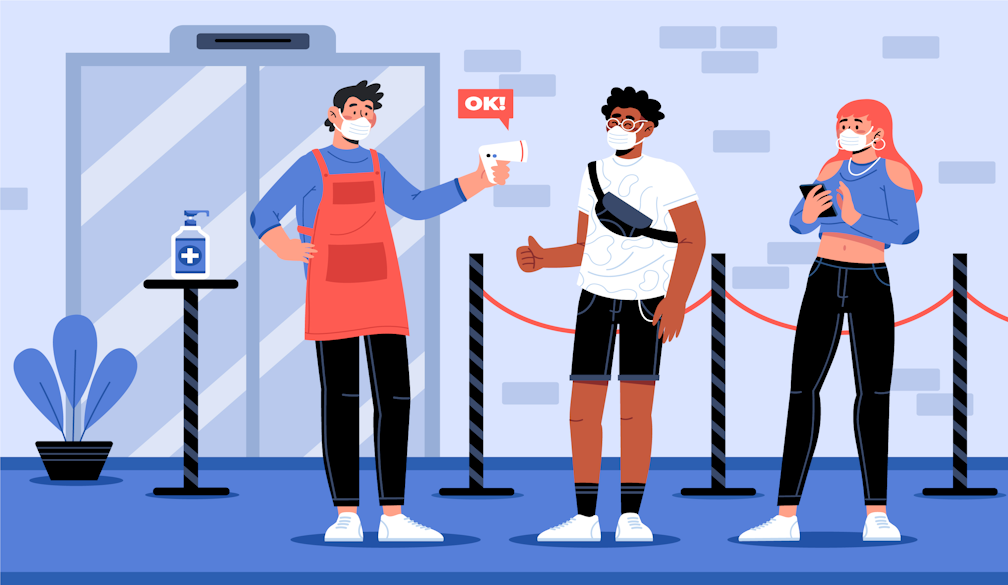
Saturday morning, your busiest trade window. Customers cluster near the counter with no clear line. One person cuts in, another leaves, and the staff member steps away from service to direct traffic.
Now picture a single-pooled queue marked by barrier posts and three clear signs. Within an hour, the crowd settles, service feels fair, and staff stay focused on serving.
That shift is customer flow management, the way people move, wait, and reach service points. Barrier systems are one of the fastest, lowest-cost tools for improving it.
Queue structure matters more than raw speed because people judge fairness, certainty, and visible progress. A layout change can raise throughput, or customers served per hour, without new construction.
Key Takeaways
Use queue barriers when you need a fast fix that improves fairness, clarity, and safety.
- A single pooled line feels fairer and performs better. One queue served by multiple staff reduces wait-time variation and removes the stress of choosing a slower line.
- Visible progress shrinks perceived waits. Occupied, explained, and certain waits feel shorter than unoccupied, unexplained, and uncertain ones.
- Walk-aways are expensive. In convenience retail, 64% of shoppers say they would leave without purchasing if lines are long.
- Compliance is non-negotiable. Australia's NCC requires unobstructed exit widths, and AS 1428.1 requires a minimum 1000 mm for accessible walkways.
- You can validate results fast. Track walk-away rate, throughput, and sales per staff hour for one week before and after deployment.
Why Queue Structure Drives Revenue
A better queue layout protects revenue because it reduces lost sales, uneven waits, and staff friction.
Poor queue design costs more than patience. If 24 customers arrive every ten minutes and two leave without buying at a $22 average order value, you lose about $264 each hour.
Little's Law keeps the math simple. It says the average number of people in a system equals the arrival rate multiplied by the average time in it. Once you know those numbers, you can size the line and staff before peak periods.
Queue structure also changes staff behavior. A pooled line with clear sightlines keeps the next customer ready, so service starts faster and idle gaps shrink. That lift in throughput can come without extra labor.
Five Principles for Effective Customer Flow Management
Good customer flow comes from a few repeatable rules, not expensive fit-out work.
Default to a single pooled line. One queue feeding multiple service points lowers wait-time variation and stops the frustration of picking the slow lane. It works for cashiers, bar stations, reception desks, and service counters.
Make progress visible. Post estimated wait times near the queue entrance and service point. A sign such as "about six minutes from here" turns an anxious wait into a clear expectation.
Occupy the wait. Menus, QR codes for loyalty sign-ups, and product displays give customers something useful to do. Engaged attention makes time feel shorter.
Right-size density. Fruin's pedestrian Levels of Service are a simple scale for crowd comfort and movement. In most retail settings, staying below roughly 0.27 persons per square metre helps keep the line calm and moving. Aisles of 1.0 to 1.5 metres usually support that goal.
Protect egress and accessibility. Egress means the path people use to exit. Australia's NCC says exit widths cannot be reduced in the direction of travel, and AS 1428.1 requires at least 1000 mm of clear accessible width. Keep barriers out of door-swing arcs and test the route with a pram or wheelchair.
Choosing the Right Hardware
Match the barrier style to your space, traffic level, and brand.
Not every barrier suits every venue. Retractable belt stanchions deploy fast and create strong visual boundaries for high-volume queues or back-of-house areas. They fit airports, pharmacies, clinics, and warehouse-style retail where speed matters most.
For premium venues such as hotels, automotive showrooms, and galleries, queue control often needs to reinforce brand, keep guests in a clear single line, and shape a fair serpentine path during busy service periods without making the space feel temporary, crowded, or overly utilitarian. In that setting, teams comparing polished options for guest-facing areas often choose rope barriers from Retail Display Direct because chrome or matte-black posts with braided ropes guide movement while adding a more refined look.
Whatever you choose, place a post at every turn, use weighted bases near doorways, and keep one straight corridor to the primary exit. That check prevents drift, gaps, and blocked paths during the busiest periods.
Measure and Prove ROI in 30 Days
A basic before-and-after test can show whether the new layout pays for itself.
Spend week one collecting baseline data: arrivals per 15-minute block, walk-away count, average wait time, and sales per staff hour. Deploy the new layout in week two with the same staffing.
If walk-aways fall from 8% to 4% during a peak of 80 arrivals per hour at $18 average order value, you reclaim roughly $57 per hour. Across four peak hours and six trading days, that is nearly $1,380 per week, enough to pay back a barrier kit several times over.
Track customer review mentions of "queue" or "line" as a simple sentiment check. Fewer negative mentions show that the change is felt by customers, not just seen in the spreadsheet.
Common Mistakes to Avoid
Most queue problems come from a few layout errors that are easy to fix.
Parallel lines with different speeds create fairness frustration and make waits feel longer. Blocking door swings or squeezing aisles below accessible widths creates compliance risk and slows movement when the store gets busy.
Skipping signs leaves customers guessing, which inflates perceived wait time. Before going live, walk the path yourself, then repeat the test with a pram or wheelchair to catch tight turns and blind spots.
Frequently Asked Questions
Most setup questions have simple answers.
How Many Posts and Ropes Do I Need?
Use one post every 1.5 to 2.0 metres and one at each turn. Keep a small extra buffer.
Single Line or Multiple Lines?
Use a single pooled line unless one task is clearly faster, such as prepaid pickup.
How Wide Should Queue Aisles Be?
Aim for 1.0 to 1.5 metres and keep required exit and accessible widths clear.
How Do I Estimate Wait Times for Signs?
Time ten customers at peak, average the result, and update the sign twice an hour.
What Is the Fastest Way to Prove ROI?
Compare walk-aways and sales per hour for one week before and after the change.
Source Image: https://www.magnific.com/free-vector/new-normal-entrance-shops_8810652.htm










