How Australian Businesses Are Using AI To Cut Costs And Improve Efficiency
- Written by: The Times

Artificial intelligence was once viewed by many small business owners as something futuristic, expensive or designed only for giant corporations.
That perception is changing rapidly.
Across Australia, businesses large and small are increasingly using AI not simply as a novelty, but as a practical tool to reduce costs, improve efficiency and save time.
For many operators the attraction is straightforward:
AI can help businesses achieve more without immediately increasing staff numbers or operating expenses.
In a period where wages, rent, insurance, fuel and supplier costs continue rising, efficiency has become critically important.
Importantly, most businesses are not replacing entire workforces with AI.
Instead, they are using AI to assist staff, automate repetitive tasks and improve productivity.
For small and medium-sized enterprises, that distinction matters enormously.
AI As A Business Assistant
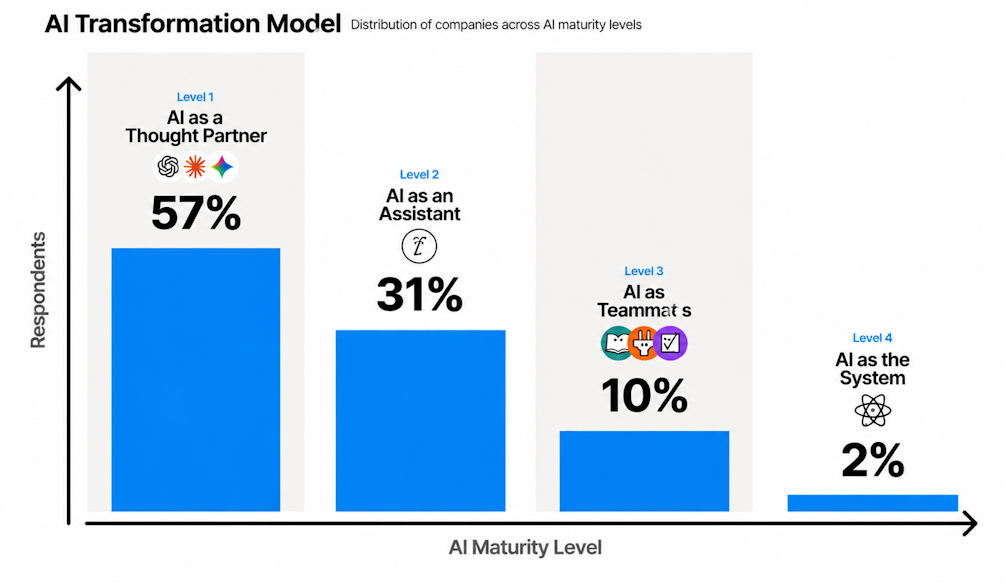
One of the biggest shifts occurring is the use of AI as a form of digital assistant.
Businesses are increasingly using AI tools to:
- Draft emails
- Prepare marketing content
- Write product descriptions
- Generate social media posts
- Summarise meetings
- Assist with customer support
- Prepare reports
- Brainstorm ideas
- Improve website copy
Tasks that once consumed hours can now often be completed in minutes.
For time-poor business owners, that efficiency can be transformative.
A small retailer who previously spent half a day preparing promotional material can now produce campaign drafts rapidly and focus more attention on customers and sales.
Reducing Administrative Work
Administration consumes enormous amounts of time inside Australian businesses.
Invoices, scheduling, customer communication, appointment management and document preparation all require labour.
AI-powered software is increasingly assisting businesses by:
- Automating appointment reminders
- Handling basic customer enquiries
- Organising calendars
- Creating summaries of meetings
- Assisting with bookkeeping workflows
- Preparing standard business documents
Reducing repetitive administration allows employees to focus on higher-value activities.
Many business owners are discovering that AI can function like an additional support staff member operating quietly in the background.
Hospitality And Retail Applications
Restaurants, cafes and retailers are also experimenting with AI tools.
Some businesses use AI-driven inventory systems to help predict demand and reduce over-ordering. Others use AI-assisted rostering systems to better match staffing levels with expected customer traffic.
Marketing is another rapidly growing area.
AI tools can help businesses create:
- Promotional images
- Advertising copy
- Email campaigns
- Product descriptions
- Customer engagement strategies
For smaller operators without dedicated marketing departments, this can dramatically lower outsourced marketing costs.
AI Does Not Replace Human Judgment
Despite the excitement surrounding AI, experienced business owners understand an important reality:
AI still requires human supervision.
Incorrect information, poor judgment or generic output can create reputational damage if businesses rely blindly on automated systems.
Successful operators are therefore using AI carefully:
- Checking accuracy
- Editing content
- Maintaining brand voice
- Applying human judgment before publishing or acting
AI works best when viewed as an assistant rather than a replacement for business experience.
Staff Concerns And Workplace Change
Some employees remain concerned that AI could eventually reduce job opportunities.
Those concerns are understandable.
However many SMEs currently view AI differently. Rather than reducing headcount immediately, businesses are often using AI to help existing staff manage increasing workloads more effectively.
In many cases AI reduces frustration rather than employment.
Employees can spend less time on repetitive paperwork and more time on customer service, sales, creativity or problem solving.
Learning AI Is Becoming A Business Skill
A growing number of Australian businesses now believe AI literacy will become as important as computer literacy itself.
Owners and managers who understand how to use AI effectively may gain major advantages in:
- Productivity
- Marketing
- Customer communication
- Cost control
- Speed of execution
Importantly, learning AI no longer requires advanced technical expertise.
Many modern AI tools are designed for ordinary users and operate through simple conversational prompts and instructions.
Businesses that experiment early may place themselves in stronger competitive positions over coming years.
The Competitive Pressure Is Increasing
One reason AI adoption is accelerating is simple competitive pressure.
When one business can complete tasks faster, market more efficiently and reduce costs through AI, competitors eventually feel pressure to adopt similar systems.
This is particularly true in industries operating on tight margins.
Businesses ignoring AI completely may eventually find themselves competing against operators capable of producing more output with fewer resources.
The Australian SME Sector Is Adapting
Australian small businesses have historically adapted quickly to economic change.
From e-commerce and cloud software to online marketing and digital payments, SMEs have repeatedly embraced new tools when they improve efficiency or profitability.
AI increasingly appears to be the next major evolution.
The businesses benefiting most are not necessarily the largest businesses.
Often they are the most adaptable.
And in a slower economy where every dollar matters, the ability to save time, reduce costs and improve efficiency may become one of the most valuable competitive advantages of all.