COVID vaccines offer the pharma industry a once-in-a-generation opportunity to reset its reputation. But it’s after decades of big profits and scandals
- Written by: Ray Moynihan, Assistant Professor, Bond University
The pandemic and the new vaccines have of course turned that reputation around[2], but let’s not forget why the pharmaceutical industry’s credibility sank so low.
Or how the industry got so big. One company, Johnson & Johnson, is currently worth around US$450 billion. About the same as the economy of Norway.
Read more: Big Pharma's COVID-19 reputation boost may not last — here’s why[3]
The birth of the behemoths
The idea of the miraculous potion or cure-all dates back at least as far as Greek mythology. The goddess Panacea even gets a mention in the Hippocratic Oath[4].
The rise of the modern pharmaceutical industry is more recent, coming through the 19th century. On the eve of the 20th century, the German company Bayer famously launched its early blockbusters, including “Aspirin” and “Heroin.”
Around this time, US drug-makers were arguing for patent protections[5], or exclusive rights to market a drug for a specific period of time. By the 1950s, they’d won those arguments, and the US soon became the world’s biggest market for medicines.
Read more: The US drug industry used to oppose patents – what changed?[6]
In
A former top-selling drug company sales representative turned whistleblower put it plainly in a 2008 piece in The BMJ[25]:
Key opinion leaders were salespeople for us, and we would routinely measure the return on our investment, by tracking prescriptions before and after their presentations.
If that speaker didn’t make the impact the company was looking for, then you wouldn’t invite them back.
Unhealthy marketing means the latest most expensive pill is too often favoured over older cheaper options, or doing nothing at all, causing much harm and wasting precious resources.
Corporate crime
In 2009 came the biggest health-care fraud settlement in history. Pfizer was forced to fork out a US$2.3 billion fine[26] for illegal promotion, false and misleading claims about drug safety, and paying kickbacks to doctors. That included a US$1.2 billion criminal fine, the largest ever in a US criminal prosecution.
One of the whistleblowers in that case happened to be a member of a special Pfizer sales team[27] promoting Viagra. He revealed doctors were taken to breakfasts, lunches, dinners, Broadway shows, baseball games, golf courses, ski fields, casinos and strip clubs.
In 2013, Johnson & Johnson paid out US$2.2 billion in civil and criminal fines for putting “profit over patients’ health[28]”. The company had illegally promoted powerful anti-psychotic drugs as behaviour control for the elderly and most vulnerable, overstating benefits and playing down dangerous side effects, including stroke.
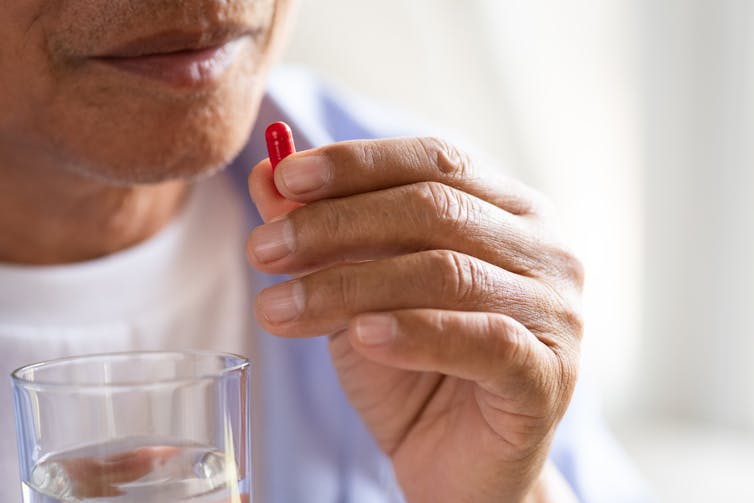 Drug companies have faced massive fines for putting profits over health. Shutterstock[29]
Other court documents around the same time exposed how the giant global company Merck used dirty tricks[30] to try and defend its controversial anti-arthritis drug Vioxx. Merck created a fake medical journal and drew up secret lists of academic critics to “neutralise” and “discredit”.
In the end, Vioxx was taken off the market because it was causing heart attacks, with estimates in The Lancet[31] suggesting it may have led to 140,000 cases of serious coronary heart disease.
Read more: The most powerful companies you've never heard of: Merck[32]
Investigation and reform
Scandals like Vioxx tarnished the industry’s image, and brought more intense scrutiny.
The US National Academy of Sciences produced a landmark report[33] arguing the closeness between doctors and drug companies could jeopardise the integrity of science, the objectivity of education, the quality of care, and public trust in medicine.
A series of US congressional hearings on unhealthy marketing produced the Open Payments[34] register, mandated by US law to publicly list every company payment to every doctor.
Many around the world are reforming further[35], moving from transparency to independence. Italy brought in a special tax[36] on drug company promotion to fund public interest research. Norway doesn’t give doctors full credit anymore for industry-sponsored[37] education.
Read more: Guidelines governing Canadian doctors' relationships with pharma companies under review[38]
But there’s a long way to go. A study[39] in 2020 found 80% of the medicos who run the world’s most powerful doctors organisations still take money from drug and device companies. For research, for consultancies, for hospitality.
Even some agencies which assess drugs, notably the US Food and Drug Administration[40] (FDA), still rely on significant funding from industry, which pays to have its products assessed.
And the harmful marketing has continued. Just last month, a group of drug companies, including Johnson & Johnson, agreed to pay[41] a total of US$26 billion for their roles in fuelling the opioid epidemic.
A prescription for trust
One drug company chief reportedly said[42] last year the industry had a “once-in-a-generation opportunity to reset” its reputation.
Given the dark arts that drove pharma’s credibility to rock bottom, its fanciful to imagine the pandemic will magically end the misleading marketing and the price gouging.
Any post-pandemic recovery requires meaningful reform.
This article is part of a global Conversation series, The business of pharmaceuticals[43]. You can read the other articles here[44].
References
- ^ latest poll (news.gallup.com)
- ^ turned that reputation around (theconversation.com)
- ^ Big Pharma's COVID-19 reputation boost may not last — here’s why (theconversation.com)
- ^ Hippocratic Oath (en.wikipedia.org)
- ^ patent protections (theconversation.com)
- ^ The US drug industry used to oppose patents – what changed? (theconversation.com)
- ^ randomised controlled trials (www.ncbi.nlm.nih.gov)
- ^ New Jersey Agriculture Experimental Station at Rutgers University/Wikimedia Commons (commons.wikimedia.org)
- ^ overuse of antibiotics (onlinelibrary.wiley.com)
- ^ one of the biggest threats to global health (www.who.int)
- ^ massive global campaigns (www.msf.org)
- ^ cancer (www.bmj.com)
- ^ If we don't talk about value, cancer drugs will become terminal for health systems (theconversation.com)
- ^ a big issue (www.forbes.com)
- ^ Shutterstock (www.shutterstock.com)
- ^ Senate hearing (www.michaelwest.com.au)
- ^ report from Oxfam (www.oxfam.org)
- ^ unhealthy influence (theconversation.com)
- ^ strong evidence (www.cochrane.org)
- ^ just one meal (theconversation.com)
- ^ Influential doctors aren't disclosing their drug company ties (theconversation.com)
- ^ written by medical experts (bmjopen.bmj.com)
- ^ key opinion leaders (www.bmj.com)
- ^ Shutterstock (www.shutterstock.com)
- ^ The BMJ (www.bmj.com)
- ^ US$2.3 billion fine (web.archive.org)
- ^ member of a special Pfizer sales team (www.allenandunwin.com)
- ^ profit over patients’ health (www.justice.gov)
- ^ Shutterstock (www.shutterstock.com)
- ^ dirty tricks (www.bmj.com)
- ^ The Lancet (www.thelancet.com)
- ^ The most powerful companies you've never heard of: Merck (theconversation.com)
- ^ landmark report (www.ncbi.nlm.nih.gov)
- ^ Open Payments (openpaymentsdata.cms.gov)
- ^ reforming further (www.bmj.com)
- ^ special tax (pubmed.ncbi.nlm.nih.gov)
- ^ industry-sponsored (www.legeforeningen.no)
- ^ Guidelines governing Canadian doctors' relationships with pharma companies under review (theconversation.com)
- ^ study (www.bmj.com)
- ^ US Food and Drug Administration (www.fda.gov)
- ^ agreed to pay (www.theguardian.com)
- ^ reportedly said (www.fiercepharma.com)
- ^ The business of pharmaceuticals (theconversation.com)
- ^ here (theconversation.com)