Remember All-You-Can-Eat Restaurants? Australia Still Misses Them
- Written by: The Times
For many Australians, few dining experiences created more excitement than the words: “All you can eat.”
The concept felt almost magical.
One fixed price.
Unlimited access.
Go back as many times as you liked.
For families, teenagers, shift workers and hungry travellers, all-you-can-eat restaurants once represented one of the great affordable dining experiences in Australia.
And for an entire generation, a few names became legendary.
Sizzler
Pizza Hut
The Sizzler cheese toast alone developed near cult status.
Pizza Hut’s all-you-can-eat pizza, salad and dessert bars became a ritual for countless Australian families through the 1980s, 1990s and early 2000s.
Birthday dinners.
Sporting team celebrations.
Family nights out.
Teenage eating competitions.
The restaurants were loud, busy and often wonderfully chaotic.
And Australians loved them.
Today, however, most of those iconic buffet-style restaurant chains have largely disappeared from the Australian landscape.
So what happened?
Did Australians simply stop wanting all-you-can-eat dining?
Or did the economics eventually become impossible?
The answer appears to involve both.
The buffet business model always relied on averages.
Restaurant operators understood some customers would eat more than others.
The system worked because many diners consumed moderate amounts while fixed pricing created predictable revenue.
But over time, several pressures began affecting the viability of large buffet restaurants.
Food costs increased.
Labour costs increased.
Commercial rents climbed dramatically.
Electricity and refrigeration expenses rose.
At the same time, Australians gradually changed the way they ate.
Health consciousness increased.
Portion awareness grew.
Dining trends shifted toward premium casual dining, takeaway delivery apps and specialised cuisines.
Buffets that once felt exciting to families increasingly began feeling old-fashioned to younger consumers.
The rise of food delivery platforms also fundamentally changed the restaurant industry.
Consumers no longer needed to leave home for convenience food.
Restaurants suddenly competed not only with other restaurants but with delivery services bringing meals directly to the couch.
Then there was the issue buffet operators rarely discussed publicly:
Some customers simply pushed the model too far.
Stories became legendary.
People arriving extremely hungry to “get value”.
Food hidden in bags or containers.
Sharing buffet access with non-paying guests.
Excessive waste.
Massive overconsumption.
For operators already working with tight margins, these behaviours created real financial pressure.
The challenge with all-you-can-eat businesses is simple.
The most profitable customers eat lightly.
The least profitable customers often become the most enthusiastic users of the concept.
As operating costs rose across Australia, the margin for error became increasingly small.
COVID-19 delivered another enormous blow.
Buffets became difficult to operate during heightened hygiene concerns and social distancing requirements.
Shared serving utensils and communal food areas suddenly felt far less attractive.
Many operators never recovered.
Yet despite the decline, nostalgia for all-you-can-eat restaurants remains remarkably strong.
Australians still talk about them constantly online.
The memories are emotional as much as culinary.
There was something uniquely democratic about buffet dining.
Families could afford it.
Teenagers loved it.
Large groups worked easily.
Nobody left hungry.
And unlike many modern dining experiences, buffet restaurants were relaxed rather than curated.
Nobody cared about taking photos for social media.
People simply enjoyed eating.
A lot.
Interestingly, the buffet concept has not disappeared entirely.
Some Asian buffet restaurants continue operating successfully across Australia, particularly in metropolitan areas.
Hotel breakfast buffets remain extremely popular.
Brazilian barbecue and Korean barbecue concepts also preserve elements of interactive unlimited dining.
But the classic suburban Australian all-you-can-eat family restaurant has largely faded into history.
Could it ever return on a large scale?
Probably not in the same form.
Modern food costs, labour expenses and changing consumer habits make the old model extremely difficult to sustain.
Today’s restaurant industry is increasingly built around efficiency, turnover and tightly controlled margins.
Unlimited food and low pricing are difficult companions in that environment.
Still, many Australians remember those restaurants fondly.
The excitement of choosing dessert first.
The endless soft serve machine.
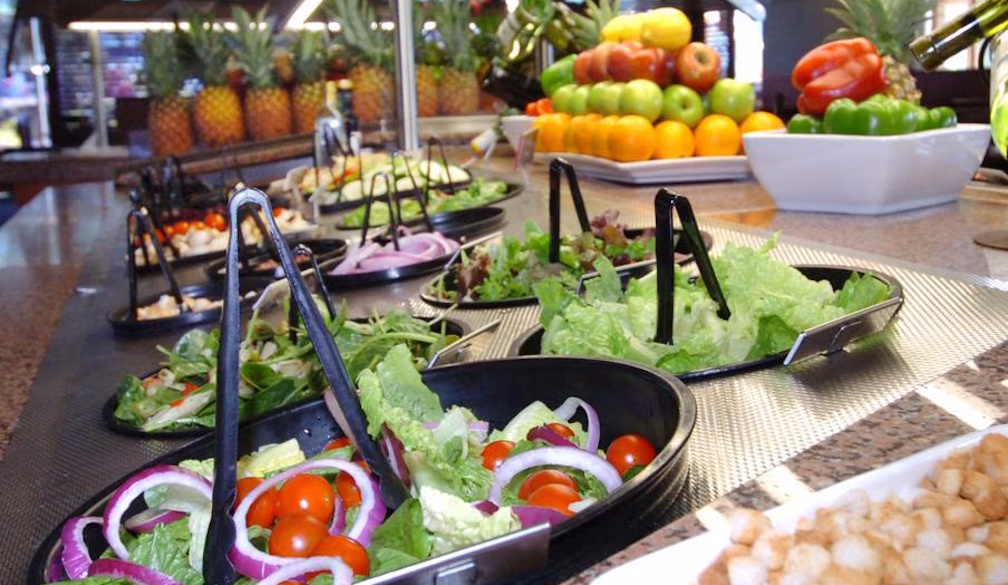
The salad bar combinations nobody should have created.
The stacks of pizza trays arriving fresh.
The simple joy of knowing you could go back for another plate.
And another.
And another.
Perhaps all-you-can-eat restaurants belonged to a slightly different Australia.
A more relaxed era.
A less expensive era.
A time when a family night out felt simpler.
Good while it lasted.