Israel and Lebanon have a ceasefire, but global attention shouldn’t move on. This isn’t a tidy end to the war
- Written by: Marika Sosnowski, Senior research fellow, The University of Melbourne
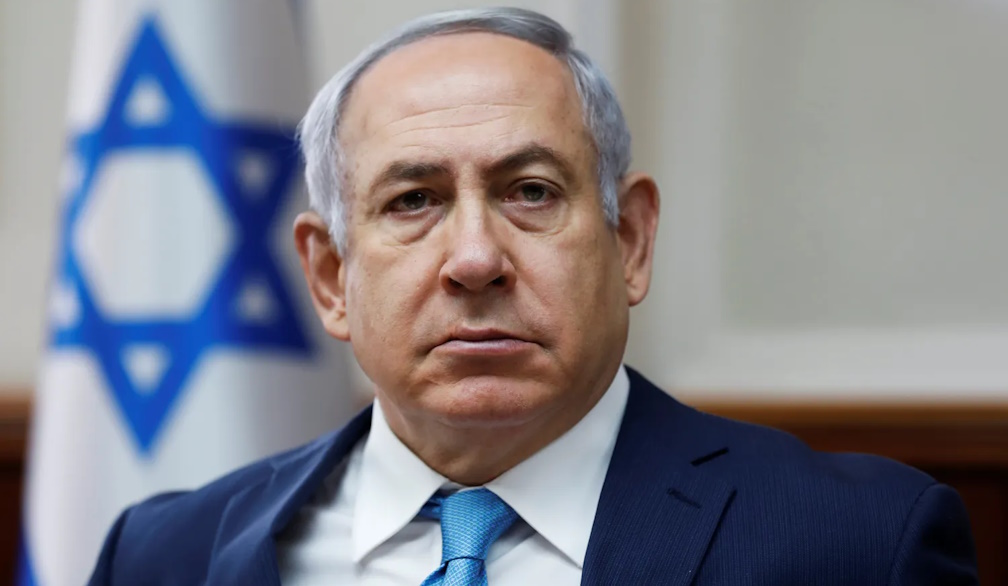
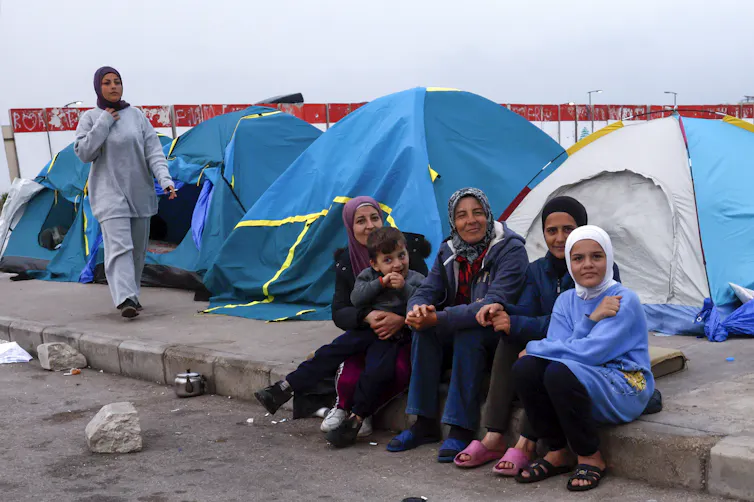
After weeks of bombardments in southern Lebanon that have killed more than 2,000 people[1] and displaced more than one million residents, Israel has announced a ten-day ceasefire with Lebanon.
Israeli Prime Minister Benjamin Netanyahu, however, vowed to keep Israeli troops[2] in southern Lebanon to create a ten-kilometre “security zone”, raising immediate questions about whether the ceasefire would actually stop Israeli attacks against Hezbollah.
After a previous ceasefire in late 2024 ended 13 months of fighting between Israel and Hezbollah, Israeli troops continued[3] to launch airstrikes and carry out targeted killings of Hezbollah fighters.
People like to bound events such as wars with tidy dates and years. It makes them easier to understand and entertains the fantasy that historic events are neat, with understandable beginnings, middles and eventual ends.
But in reality, the messiness and complexities of war rarely hold to these manmade boundaries.
Instead, even after a ceasefire or a peace agreement is in place, many dynamics of war continue. This is the paradox of such agreements: they might end one phase of a conflict, but they inevitably usher in another.
The good and bad of ceasefires
Take Israel’s war in Gaza as an example.
The war came to an end after Israel and Hamas signed the Gaza Peace Plan[4], a 20-point deal brokered by the Trump administration, in October 2025.
The terms are relatively broad, vague and aspirational. But the deal has had many benefits. The ceasefire decreased Israel’s bombardments of Gaza. The remaining Israeli hostages captured on October 7 2023 were swapped with Palestinian prisoners held in Israeli jails. Somewhat more aid now enters the strip than during the war.
However, the agreement also created other negative dynamics and enabled many problems caused by the war to continue.
For example, after the deal was signed, the public and media attention shifted away from the violence continuing to be committed[5] by Israel to other events. This has meant that in the wake of the peace deal, near-daily[6] Israeli attacks have continued, but with much less scrutiny. Israeli-supported violence against Palestinians in the West Bank has also escalated[7].
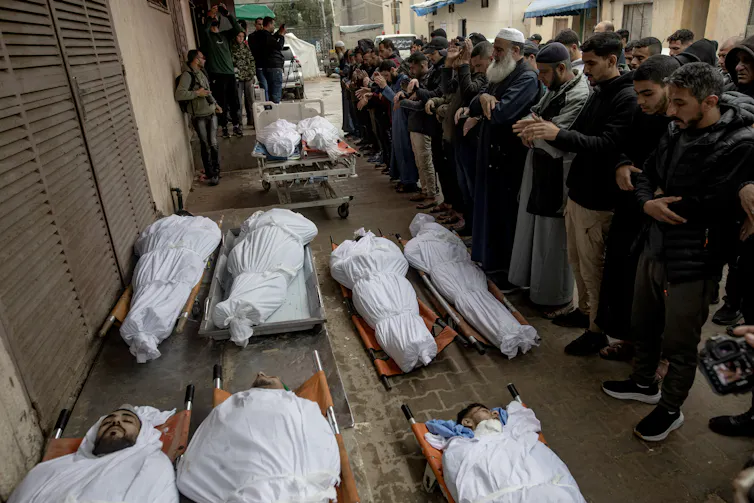
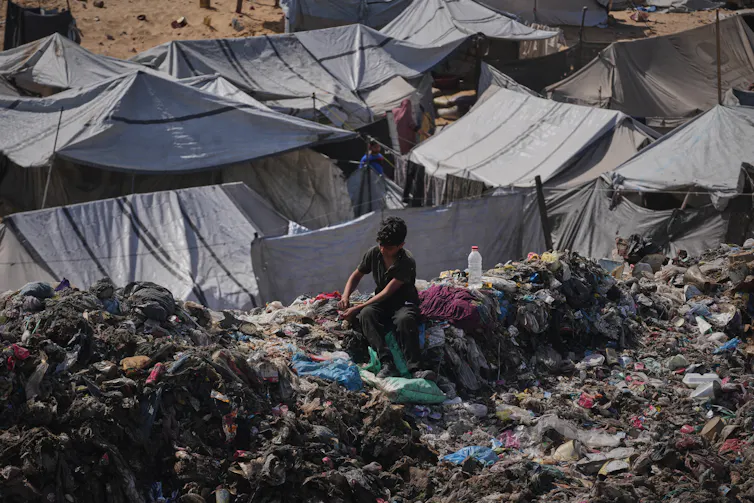
Humanitarian aid entry into the Gaza Strip also remains[8] vastly below the levels delineated by the peace agreement. And serious discussions about the future governance or development of Gaza – mandated under the peace plan in multiple points – remain uncertain[9] amid the noise of other wars and global events.
We can see similar dynamics in Iran, barely a week after another vaguely worded ceasefire agreement was signed between the US and the Iranian regime.
It appears the regime has taken the opportunity provided by a two-week “peace” to crack down[10] on internal dissent. And in what appears to be an attempt to enhance its negotiating position for future peace talks, the Trump administration has launched a naval blockade of Iranian ports.
The short-term truce between Lebanon and Israel might offer Lebanese civilians some level of reprieve. However, it may also provide Israel with a quiet week away from the media spotlight to reinforce its military occupation of southern Lebanon.
To create Israel’s security zone, Defence Minister Israel Katz said[11] the military would demolish buildings in Lebanese towns near the border and prevent displaced Lebanese from returning to their homes. Netanyahu made clear Israeli troops would remain[12].
This can all be more easily accomplished with a ceasefire deal in place.
Short attention spans
Globally, dozens of countries[13] are currently experiencing armed conflict. Many people scan the news regularly as a way of keeping informed and bearing witness to the dynamics of these wars, casualty figures and how they might potentially end.
This glorified horror plays into our current “headline culture”, which tends to encourage clickbait, sensationalised content and virality. It also means public attention[14] on a particular conflict is not necessarily driven by the scale of suffering, but by media coverage. Because of digital media, we have now a proximate and persistent view of human suffering and death that does not always translate into ongoing attention and action.
Whether parties to a conflict will reach a ceasefire or peace agreement is certainly worthwhile and important news. However, once a deal is signed, media and public attention often shifts to other more “active” (and also worthy) conflicts. There is currently no shortage of wars to choose from.
Because we believe a conflict has “ended” with a deal, what comes after the ceasefire or peace agreement tends to remain obfuscated or under-reported.
The peace agreement paradox
Ceasefires and peace agreements are certainly not always a harbinger of peace or a neat full-stop to a war story.
Arguably, the parties to these deals are increasingly aware of the “peace” agreement paradox and are making their political and military calculations accordingly.
If we truly want to grapple with what war and peace directly entails for millions of people in an increasingly complex and volatile world, we need to broaden our understanding about what we mean by ceasefires and peace agreements – and keep up a level of scrutiny long after the deals are signed.
References
- ^ killed more than 2,000 people (apnews.com)
- ^ vowed to keep Israeli troops (www.bbc.com)
- ^ continued (israel-alma.org)
- ^ Gaza Peace Plan (www.cfr.org)
- ^ violence continuing to be committed (reliefweb.int)
- ^ near-daily (data.techforpalestine.org)
- ^ has also escalated (www.timesofisrael.com)
- ^ remains (www.refugeesinternational.org)
- ^ uncertain (www.bbc.com)
- ^ crack down (www.aol.com)
- ^ said (www.reuters.com)
- ^ would remain (www.nytimes.com)
- ^ dozens of countries (www.prio.org)
- ^ public attention (international-review.icrc.org)