Health Care in Australia Varies From State to State. Where Is It Best to Get Sick?
- Written by: The Times
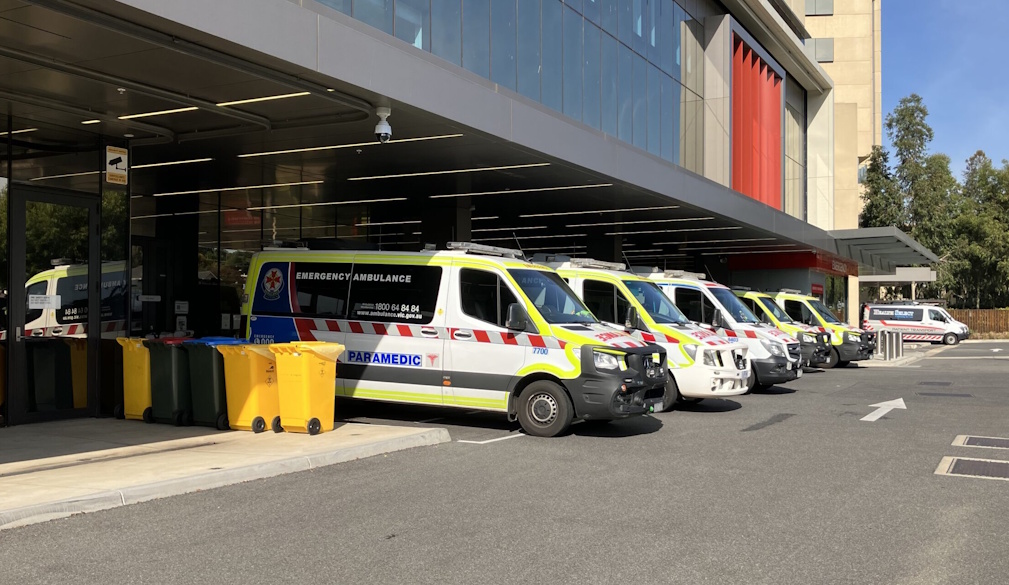
Australia’s health system is often described as one of the strongest in the world—universal coverage through Medicare, a robust network of public hospitals, and a thriving private sector. But beneath that national framework lies a more fragmented reality: health care outcomes, access, and patient experience vary meaningfully from state to state.
So if misfortune strikes, is there actually a “best” place in Australia to get sick?
The answer is nuanced. It depends on what kind of care you need, how urgently you need it, and where you are located.
A National System With State-Level Realities
While the Commonwealth funds Medicare and sets broad policy, state governments run public hospitals. That creates variation in:
-
Emergency department wait times
-
Elective surgery queues
-
Regional vs metropolitan access
-
Staffing levels and specialist availability
The result is a system that is consistent in principle, but uneven in delivery.
New South Wales: Scale and Capability
New South Wales operates the largest hospital network in the country, anchored by major tertiary facilities in Sydney.
Strengths:
-
World-class teaching hospitals and specialists
-
Strong trauma and emergency care
-
High concentration of private hospitals
Weaknesses:
-
Emergency departments often under pressure
-
Long elective surgery waitlists in some regions
Verdict: If you need complex or specialist care, NSW—particularly Sydney—is one of the safest places to be. But expect system strain in peak periods.
Victoria: Efficiency and Pressure
Victoria is often regarded as highly efficient, with strong clinical outcomes and well-integrated services.
Strengths:
-
Strong clinical governance
-
High-quality metropolitan hospitals
-
Good coordination between services
Weaknesses:
-
Heavy demand, especially in Melbourne
-
Ambulance ramping and ED congestion
Verdict: Victoria delivers consistently high-quality care, but like NSW, demand can stretch the system.
Queensland: Geography Matters
Queensland faces a unique challenge: delivering care across vast distances.
Strengths:
-
Strong regional hospital investments
-
Expanding infrastructure in growth areas
Weaknesses:
-
Access disparities outside major centres
-
Workforce shortages in remote areas
Verdict: In Brisbane and major coastal centres, care is strong. In remote areas, distance becomes the biggest risk factor, not quality.
Western Australia: Isolation and Investment
Western Australia operates in relative geographic isolation, which shapes its health system.
Strengths:
-
Modern facilities in Perth
-
Strong funding driven by state revenues
Weaknesses:
-
Limited access outside Perth
-
Workforce challenges in regional zones
Verdict: Perth offers high-quality care comparable to eastern capitals, but outside it, access drops off sharply.
South Australia: Quiet Performer
South Australia often flies under the radar but performs solidly across many metrics.
Strengths:
-
Manageable population size
-
Generally shorter wait times than larger states
Weaknesses:
-
Limited specialist depth compared to bigger states
Verdict: A steady and reliable system, particularly in Adelaide, without the same level of strain seen elsewhere.
Tasmania: Small System, Big Constraints
Tasmania faces structural challenges due to size and workforce limitations.
Strengths:
-
Close-knit care networks
-
Personalised care in some settings
Weaknesses:
-
Specialist shortages
-
Longer wait times for procedures
Verdict: Tasmania provides competent care, but serious or complex conditions may require transfer to mainland facilities.
ACT and Northern Territory: Extremes of Scale
Australian Capital Territory
Strengths:
-
High funding per capita
-
Access to nearby NSW specialist services
Verdict:
One of the most accessible systems in the country for residents.
Northern Territory
Strengths:
-
Critical services available in Darwin
Weaknesses:
-
Extreme remoteness
-
Significant Indigenous health disparities
Verdict: Care is available, but logistics and geography heavily influence outcomes.
So, Where Is It “Best” to Get Sick?
If the question is purely clinical:
-
Best for complex care: Sydney (NSW), Melbourne (Victoria)
-
Best balance of access and efficiency: Adelaide (SA), Canberra (ACT)
-
Most variable depending on location: Queensland, Western Australia
-
Most challenged systems: Tasmania, Northern Territory (due to scale and geography)
But there’s a more important truth.
The Real Determinant: Proximity to Care
In Australia, the single biggest factor isn’t the state—it’s how close you are to a major hospital when something goes wrong.
A patient in regional NSW may face more barriers than someone in inner-city Adelaide.
A person in remote Queensland may be at greater risk than someone in suburban Perth.
Health outcomes are driven by:
-
Time to treatment
-
Access to specialists
-
Availability of diagnostics
The Role of the Private System
Across all states, private hospitals provide:
-
Faster elective surgery
-
Choice of specialist
-
Reduced waiting times
For those with private health insurance, state differences become less pronounced, as access pathways widen.
Final Analysis
Australia does not have a “best” state to get sick in—but it does have tiers of access.
At the top:
-
Major metropolitan centres with large teaching hospitals
In the middle:
-
Secondary cities with solid infrastructure
At the bottom:
-
Remote and regional areas where distance defines risk
Conclusion
Australia’s health system remains fundamentally strong, but it is not uniform.
Where you live—or where you happen to be when illness strikes—can shape:
-
How quickly you are treated
-
What care you receive
-
And ultimately, your outcome
The uncomfortable reality is this:
In Australia, it’s not just about how sick you are—it’s also about where you are when it happens.