RBA narrowly votes to lift interest rates. The Middle East war may determine if there’s more to come
- Written by: John Hawkins, Head, Canberra School of Government, University of Canberra
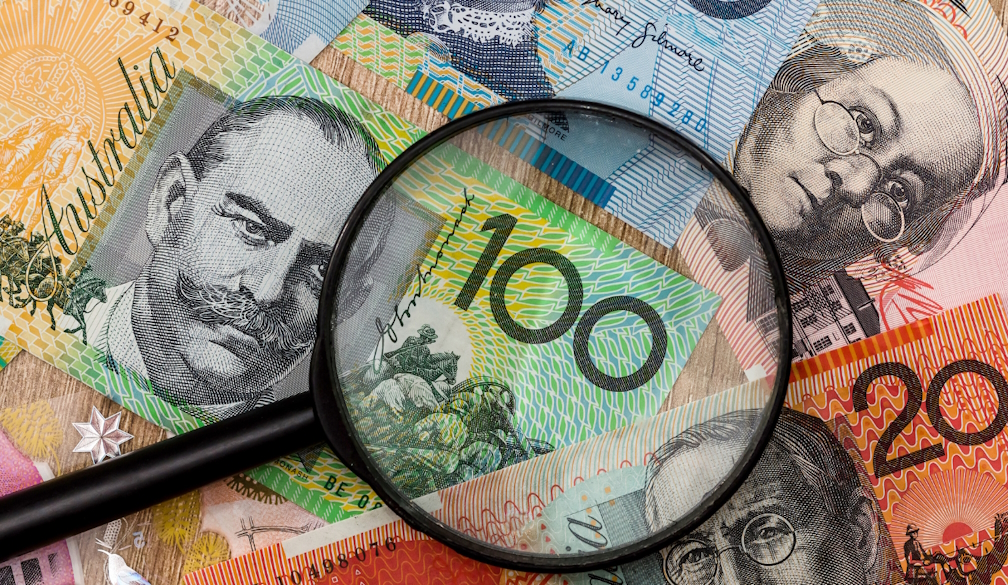
The Reserve Bank of Australia (RBA) has lifted official interest rates for the second time this year as it struggles to bring inflation under control, saying inflation is “likely to remain above target for some time”.
But it was a split decision, with five members of the RBA board voting for a hike against four who preferred to hold steady.
With the lift in the cash rate target[1] by 25 basis points to 4.1%, two of the three cuts made last year have now been reversed.
The board’s statement[2] concluded that:
inflation is likely to remain above target for some time and the risks have tilted further to the upside, including to inflation expectations. It was therefore appropriate to increase the cash rate target.
The RBA is in a difficult position, because the oil price shock following the breakout of war in Iran will push inflation higher, while also dampening economic growth. This combination of high inflation and a stagnant economy is termed “stagflation”.
Asked about the split vote, RBA Governor Michele Bullock told a news conference there had been a “very robust discussion” but the difference “was in the timing”. “The direction (of higher rates) wasn’t the issue,” she said.
For a household that recently took out the average new mortgage loan of around $700,000[3], repayments will be an extra $100 a month[4].
The rate rise was not unexpected. Financial markets were implying a greater than 50% chance of a rate rise for the past week, according to economist Isaac Gross’ website[5]. All four major banks tipped[6] a rate rise.
Inflation spike is the biggest concern
Inflation was already elevated before the breakout of war in the Middle East, running at 3.8% in January[7] and forecast to keep rising. This is significantly above the RBA’s 2–3% target range[8].
Treasurer Jim Chalmers now says inflation will likely peak in the “mid to high 4s[9]”.
The RBA’s preferred measure[10] of underlying inflation rose 3.4%[11] in the December quarter.
But the RBA needs to base its decisions on the outlook for inflation, not historical data. This is because interest rate changes take time to flow through[12] to the economy.
Its inflation forecasts, already uncomfortably high, are likely to be lifted again.
Prior to the oil price spike, the RBA was forecasting[13] “headline” inflation would peak at 4.2%.
Since those forecasts were prepared, the national accounts revealed the economy was growing a little faster than the RBA had expected, and above their estimate of the long-term potential growth rate of 2%[14].
The unemployment rate, at 4.1%[15], is below both what the RBA had been forecasting, and below what they regard as the rate consistent with inflation not rising[16].
Where to from here?
Now attention turns to the RBA’s next meeting on May 4–5. By then the RBA staff will have prepared a new set of forecasts. What the RBA termed the “highly uncertain” outlook for the Middle East will be a key driver of what the RBA does then.
Oil prices have surged[17] since the closure of the Strait of Hormuz, although they are not as high as after the Russian attack on Ukraine in 2022.
Read more: Why surging oil prices are a shock for the global economy – but not yet a crisis[18]
A rule of thumb is that every US$1 rise in the price of a barrel of oil translates into 1 cent a litre at the bowser for Australian motorists. The oil price has risen from about US$70 a barrel before the attacks on Iran to around US$100 a barrel now. Petrol prices in Australia have risen[19] from around $2 a litre to $2.30, or by about 15%.
As petrol has a weight of around 3%[20] in the consumer price index, this would directly add almost 0.5% to inflation.
There have also been large increases in the prices of airfares, and international travel has the same weight of around 3% in the CPI.
As fuel is a significant cost for many businesses, a sustained price rise will also have second-round effects. Fertiliser prices[21] have also surged.
Slower growth is likely
But on the other hand, the global and Australian economies are experiencing supply-side shocks that will also weaken economic activity.
Low diesel supplies could hurt farmers and transport. Consumers paying more for petrol have less to spend on other goods and services. Weaker economic activity could lower employment and ease inflationary pressures.
The Australian dollar has risen around 10% over recent months. Higher interest rates and higher energy prices could push it higher. This will make imported goods cheaper.
Judging by the yields in the government bond market[22], investors remain confident that in the longer term, inflation will average within the 2–3% band. Yields[23] on ten-year bonds are 4.8%, only 2.2 percentage points above the 2.6% yield on indexed bonds.
So there are also reasons for the RBA to be cautious about further interest rate increases.
Sally Auld[24], National Australia Bank’s chief economist, attracted attention with her prediction[25] that inflation could peak at 5% by mid-year.
RBA Deputy Governor Andrew Hauser pointed out that Auld’s forecast was predicated on an oil price of around US$100 a barrel, which he then thought “probably looks a little on the pessimistic side”. It now looks more prescient.
Speaking to The Conversation last week[26], Hauser also warned, however, about the risks of “toxic” inflation. Markets interpreted this as a harbinger of an interest rate rise, and they were proved correct.
Read more: Politics with Michelle Grattan: Middle East war set to push inflation higher than forecast, warns RBA deputy governor[27]
References
- ^ cash rate target (www.rba.gov.au)
- ^ statement (www.rba.gov.au)
- ^ around $700,000 (www.abs.gov.au)
- ^ $100 a month (www.commbank.com.au)
- ^ Isaac Gross’ website (rba.isaacgross.net)
- ^ tipped (www.afr.com)
- ^ in January (www.abs.gov.au)
- ^ 2–3% target range (www.rba.gov.au)
- ^ mid to high 4s (www.9news.com.au)
- ^ preferred measure (www.rba.gov.au)
- ^ 3.4% (www.rba.gov.au)
- ^ take time to flow through (www.rba.gov.au)
- ^ forecasting (www.rba.gov.au)
- ^ potential growth rate of 2% (www.rba.gov.au)
- ^ unemployment rate, at 4.1% (www.abs.gov.au)
- ^ rate consistent with inflation not rising (www.rba.gov.au)
- ^ surged (www.abc.net.au)
- ^ Why surging oil prices are a shock for the global economy – but not yet a crisis (theconversation.com)
- ^ have risen (informedsources.com)
- ^ weight of around 3% (www.abs.gov.au)
- ^ Fertiliser prices (www.abc.net.au)
- ^ yields in the government bond market (www.rba.gov.au)
- ^ Yields (www.rba.gov.au)
- ^ Sally Auld (wibf.org.au)
- ^ prediction (www.nab.com.au)
- ^ The Conversation last week (theconversation.com)
- ^ Politics with Michelle Grattan: Middle East war set to push inflation higher than forecast, warns RBA deputy governor (theconversation.com)