A Supreme Court showdown looms for Trump’s tariffs. Will it limit presidential power?
- Written by: David Smith, Associate Professor in American Politics and Foreign Policy, US Studies Centre, University of Sydney
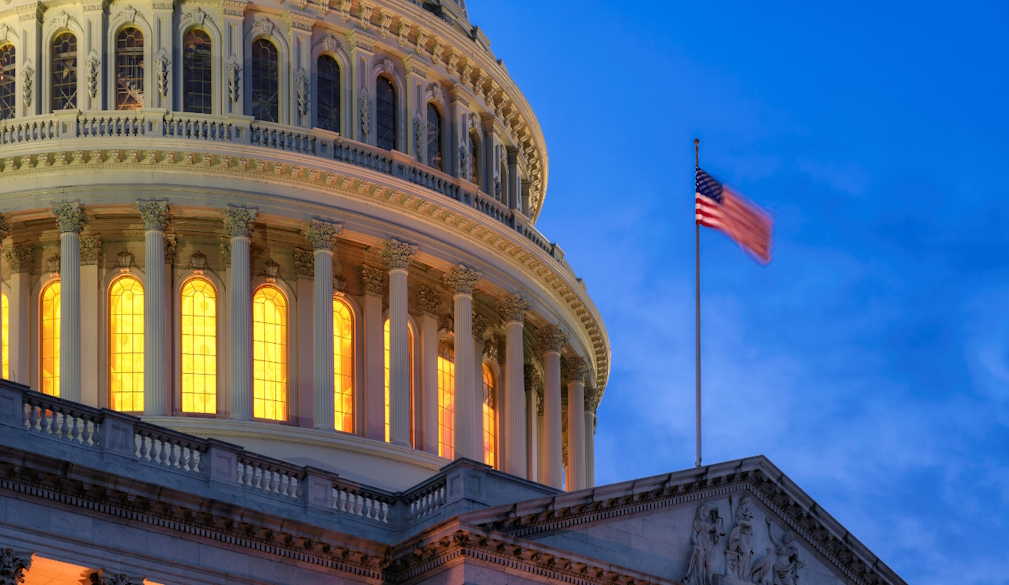
On November 5 the US Supreme Court will begin hearing arguments[1] about the legality of President Donald Trump’s tariffs. As important as the tariff issue is, the stakes are much higher than that.
Trump has been claiming vast powers[2], at the expense of other branches of government, on the grounds of various “emergencies[3]”. He has used these claims to justify sending troops to US cities[4] and deporting non-citizens[5] without due process under a law dating from 1798.
Trump imposed sweeping global tariffs under the auspices of the International Emergency Economic Powers Act (IEEPA) of 1977. Most legal[6] experts[7] agree, and so far three lower courts[8] have ruled[9], that this act gives him no such power.
This case now presents an important test of the Supreme Court’s willingness to impose limits on Trump’s emergency powers.
The powers Trump is claiming
The US Constitution gives Congress, not the president[10], the power to set tariffs. Since the 1930s, Congress has passed a series of laws[11] granting presidents the authority to adjust existing tariffs and deploy them to protect industries that are crucial to US national security.
The tariffs Trump has imposed this year go beyond the powers any previous president has had.
Some of Trump’s tariffs on goods in specific sectors such as steel and aluminium are authorised under Section 232 of the Trade Expansion Act[12] because of their importance to military industries.
But to justify blanket tariff rates on entire countries, regardless of the goods involved, Trump has turned to the International Economic Emergency Powers Act[13] (IEEPA).
This allows the president to block economic transactions and freeze assets after declaring an emergency. These actions usually target hostile powers or individuals[14]. An emergency is an “unusual and extraordinary threat” to the US, originating “in whole or substantial part outside the United States”.
Trump originally claimed tariffs against Canada, Mexico and China[15] were necessary to force those countries stop the traffic in fentanyl, which causes more than 70,000 overdose deaths[16] in the US every year. Yet less than 1%[17] of the fentanyl that enters the US comes from Canada.
For the “liberation day[18]” tariffs affecting every other country in the world, Trump declared[19] the annual US trade deficit in goods constituted “an unusual and extraordinary threat to the national security and economy of the United States”.
This trade deficit has been running since 1976, and it widened[20] during Trump’s first administration.
The court case
The Trump administration is being sued by a group of small businesses[21] that have been hurt by the 2025 tariffs, and which claim Trump had no right to impose them. They are supported by a bipartisan group of legal scholars[22].
A small business owner suing Trump over tariffs explains his decision.Two federal courts and the US Court of International Trade[23] have so far ruled IEEPA does not give the president the power[24] to set tariffs.
The IEEPA was an amendment to the 1917 Trading with the Enemy Act[25], which the then president Richard Nixon used to impose 10% import tariffs during a trade crisis in 1971. The Trump administration has argued[26] that because those tariffs were upheld by courts, Trump’s are also valid.
But the IEEPA, passed in 1977 following post-Watergate reforms of emergency powers[27], was intended to limit executive power, not expand it.
In the words of a report[28] from the House Committee on International Relations that underpinned the reforms, “emergencies are by their nature rare and brief, and are not to be equated with normal ongoing problems”.
What will the Supreme Court do?
The weakness of the administration’s legal arguments is reflected in Trump’s public statements about why the Supreme Court must uphold his tariffs. These statements increasingly read like blackmail notes. He has said striking down the tariffs would “literally destroy[29] the United States of America”.
As well as bringing in billions of dollars in revenue, Trump claims[30] five of the eight wars he has supposedly ended were thanks to tariff leverage, and “if they took away tariffs, then they’ve taken away our national security”.
Striking down tariffs could be economically disruptive[31]. It would weaken US leverage in trade negotiations, and raise the possibility of large tariff refunds[32].
These threats may persuade conservative Supreme Court justices who already take an expansive view of executive power[33], and who have so far enabled Trump’s accumulation of it[34].
However, the one area where Supreme Court conservatives might be willing to limit Trump’s powers is where they interfere with economic orthodoxy.
In a ruling allowing Trump to fire commissioners of some small, independent agencies[35], the court also appeared to protect members of the US central bank, the Federal Reserve, because of its “distinct historical tradition”.
The Supreme Court has since temporarily blocked[36] Trump’s attempt to fire one of the Federal Reserve governors, Lisa Cook. The judges may also decide that allowing a president to impose unlimited new taxes is a step too far.
Even if the Supreme Court does strike down the IEEPA tariffs, Trump is unlikely to abandon tariffs as a policy tool. They are a core part of his identity[37].
The administration has already vowed that if it loses in the Supreme Court, it will find other ways to impose tariffs under different laws that “have the same effect[38]”.
The significance of the Supreme Court’s decision may not be about the tariffs themselves, but about whether it recognises any limit to presidential power.
References
- ^ begin hearing arguments (theconversation.com)
- ^ vast powers (www.brookings.edu)
- ^ emergencies (www.theguardian.com)
- ^ sending troops to US cities (www.whitehouse.gov)
- ^ deporting non-citizens (www.bbc.com)
- ^ legal (www.lawfaremedia.org)
- ^ experts (www.brookings.edu)
- ^ three lower courts (www.abc.net.au)
- ^ ruled (www.politico.com)
- ^ Congress, not the president (www.brookings.edu)
- ^ Congress has passed a series of laws (constitutioncenter.org)
- ^ the Trade Expansion Act (www.whitehouse.gov)
- ^ International Economic Emergency Powers Act (www.congress.gov)
- ^ hostile powers or individuals (www.brennancenter.org)
- ^ Canada, Mexico and China (www.whitehouse.gov)
- ^ more than 70,000 overdose deaths (www.statista.com)
- ^ less than 1% (www.bbc.com)
- ^ liberation day (theconversation.com)
- ^ Trump declared (www.whitehouse.gov)
- ^ widened (www.politico.com)
- ^ group of small businesses (edition.cnn.com)
- ^ group of legal scholars (reason.com)
- ^ US Court of International Trade (www.honigman.com)
- ^ does not give the president the power (www.abc.net.au)
- ^ 1917 Trading with the Enemy Act (en.wikipedia.org)
- ^ has argued (apnews.com)
- ^ post-Watergate reforms of emergency powers (www.senate.gov)
- ^ In the words of a report (www.brookings.edu)
- ^ literally destroy (truthsocial.com)
- ^ claims (www.axios.com)
- ^ economically disruptive (www.rusi.org)
- ^ large tariff refunds (www.politico.com)
- ^ expansive view of executive power (theconversation.com)
- ^ so far enabled Trump’s accumulation of it (www.niskanencenter.org)
- ^ some small, independent agencies (www.steptoe.com)
- ^ blocked (www.npr.org)
- ^ core part of his identity (x.com)
- ^ have the same effect (www.ft.com)