Australian writers festivals are engulfed in controversy over the war in Gaza. How can they uphold their duty to public debate?
- Written by: Denis Muller, Senior Research Fellow, Centre for Advancing Journalism, The University of Melbourne
A string of controversies are engulfing Melbourne Writers’ Festival, the Perth Festival’s Writers’ Weekend, the Sydney Opera House’s All About Women and Adelaide Writers Week. There’s a high-profile resignation, calls to cancel speakers and allegations of the spread of “historically untrue” facts and of normalising violence.
All, in one way or another, have been generated by divisions over the war in Gaza.
Writers’ festivals are in a fraught position. They navigate the frontier between social media’s echo chambers of outrage and the traditional public square’s conventions, where restraint, reason and tolerance in the face of opposing views are the basis for civilised debate.
How is it all playing out, and what are the consequences for the public exchange of ideas?
‘Historically untrue’?
At Melbourne Writers Festival[1], the deputy chair of the board, Dr Leslie Reti, has resigned over a poetry session that will involve Aboriginal and Palestinian poets reading their work.
The session is guest-curated by Koori-Lebanese writer Mykaela Saunders. It is based on the proposition Aboriginal and Palestinian people have a shared experience of having been colonised, becoming victims of atrocities by the colonising power.
Melbourne Writers Festival artistic director Michaela McGuire has confirmed the dispute is centred on a line of program copy that reads[2]:
Aboriginal and Palestinian solidarity has a long history, a relationship that is more vital than ever in the movement to resist colonialism and speak out against atrocities.
This is a historically contentious proposition. Dr Reti, a retired Jewish clinician, said he respected McGuire’s curatorial independence, but described the material in the draft program as “historically untrue and deeply offensive”.
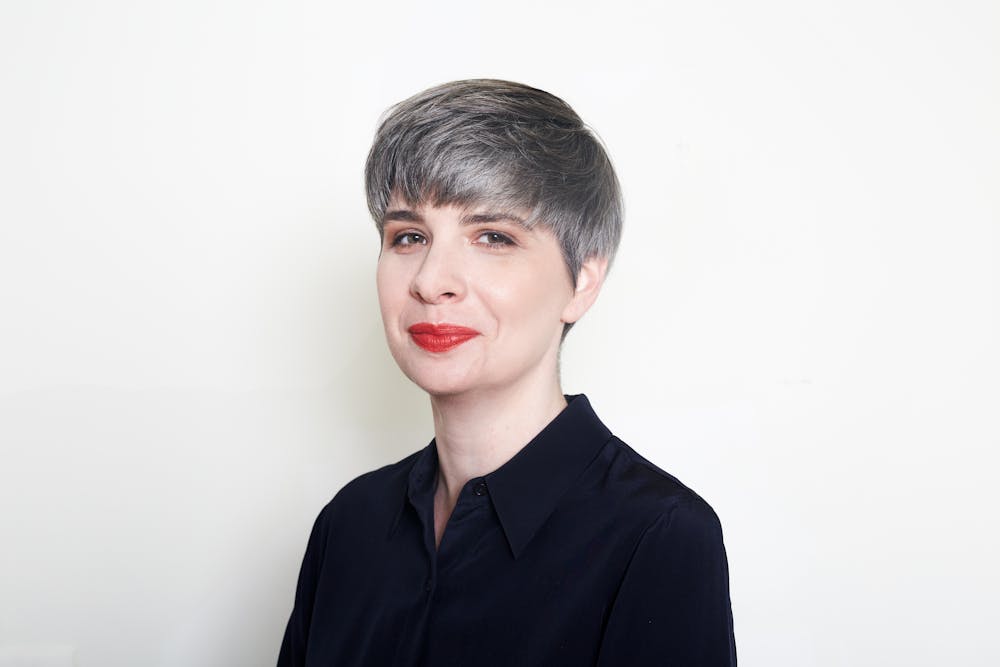
Prominent Aboriginal scholar Professor Marcia Langton, of the University of Melbourne, has also rejected proposed similarity between the experience of Aboriginal and Palestinian people, saying[3], “there is very little comparable in our respective situations, other than our humanity”.
Saunders was one of 132 Indigenous activists, artists and intellectuals who signed a petition released on October 27 last year[4] that claimed: “The past two weeks of horrific violence in Gaza resulted from 75 years of Israeli settler colonial dispossession”.
McGuire has defended her decision not to change the copy for Saunders’ event, titled Let it Bring Hope, saying “I completely support the right to self-determined programming”.
She told ABC Radio on Monday[5]: “This entire event is about Aboriginal and Palestinian solidarity. It’s not for or about anyone who doesn’t subscribe to that, and so it doesn’t make any sense to not mention that in the event copy.”
Last year[6], the Melbourne Writers Festival board decided “while writers should be free to express their views, the festival should not take a public position on the war”.
The Age reported on Monday[7] that Fiona Menzies, the festival’s interim chief executive, also resigned over the festival’s program. But Alice Hill, chair of the board, told the Guardian[8] that Menzies had resigned “for personal reasons, and would continue her relationship with the festival in a consultancy capacity”.
Read more: A Palestinian author's award ceremony has been cancelled at Frankfurt Book Fair. This sends the wrong signals at the wrong time[9]
Normalising violence?
In Perth, the argument was over the inclusion of Jewish singer-songwriter Deborah Conway in the opening night of the Perth Festival’s Writers’ Weekend last week. In an interview on ABC Radio National[10], she had questioned whether Palestinian children killed by the Israeli Defence Forces were really children. (“It depends on what you really call kids.”)
In an open letter to the festival[11], more than 500 writers and arts workers said that by including Conway, the festival was putting safety at risk and giving a platform to someone whose comments on the radio “seek to normalise the ongoing genocide enacted by the state of Israel against the Palestinian people”.
This provoked a response from Dr Nick Dyrenfurth, executive director of the John Curtin Research Centre, a left-of-centre think tank, in which he said Conway’s “crime of being Jewish” was the reason this attempt was being made to “deplatform” her[12].
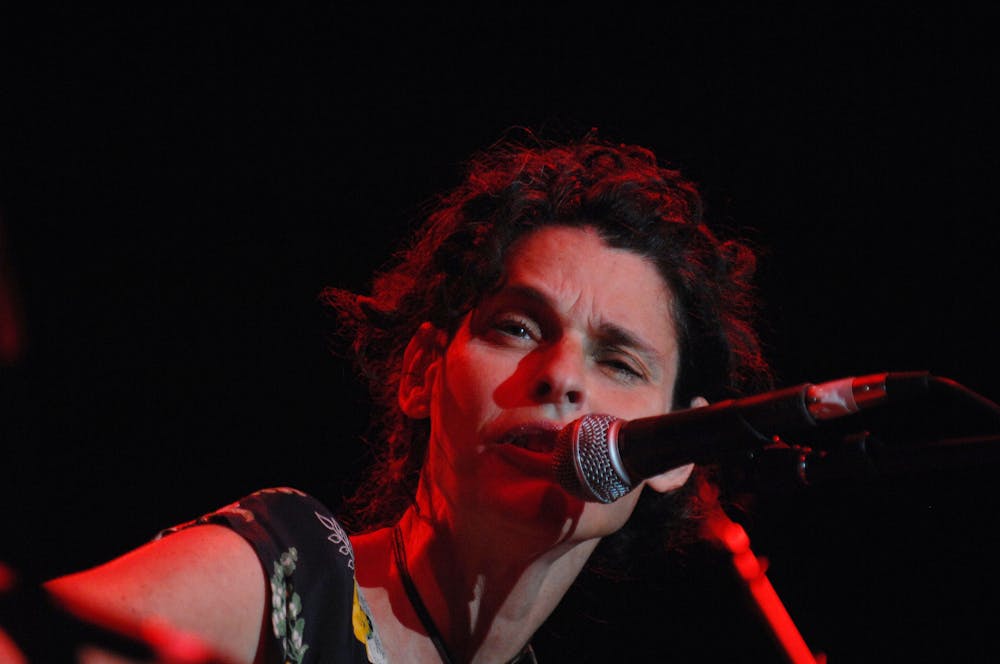 There was a petition against Deborah Conway’s inclusion in the Perth Festival’s Writers’ Weekend.
Tracy Nearmy/AAP
There was a petition against Deborah Conway’s inclusion in the Perth Festival’s Writers’ Weekend.
Tracy Nearmy/AAP
In Sydney, a petition protesting against the appointment of the feminist author Clementine Ford as a co-curator of the Opera House’s All About Women[13] festival has garnered about 6,700 signatures since it was started on 6 February. Ford has programmed three events at the festival.
The petition alleges[14] Ford’s public communications since the attacks by Hamas on Israel on 7 October 2023 have made “a direct and harmful” contribution to the “hateful climate” that has developed in Australia since those attacks, exemplified by a 738% increase[15] in anti-Semitic incidents, as recorded by the Executive Council of Australian Jewry.
Ford has not called for violence against Jewish people.
The MP for the Sydney seat of Vaucluse in the New South Wales Parliament, Kellie Sloane, and some Jewish community leaders have raised their concerns about Ford’s curatorship, following her involvement in the alleged “doxing”[16] of about 600 Jewish writers, artists and academics. This involved the social media sharing of personal details, including names and professions, leaked from a WhatsApp group, without their consent.
Read more: Doxing or in the public interest? Free speech, 'cancelling' and the ethics of the Jewish creatives' WhatsApp group leak[17]
The president of the Executive Council of Australian Jewry, Daniel Aghion, was reported as saying[18] it was “baffling” someone who had caused this kind of harm should be appearing at one of Australia’s “most prestigious forums”.
Some Jewish leaders, including Anti-Defamation Commission chairman, Dr Dvir Abramovich, want Ford banned from the Adelaide Festival’s Writers’ Week[19], which starts this weekend, on 2 March.
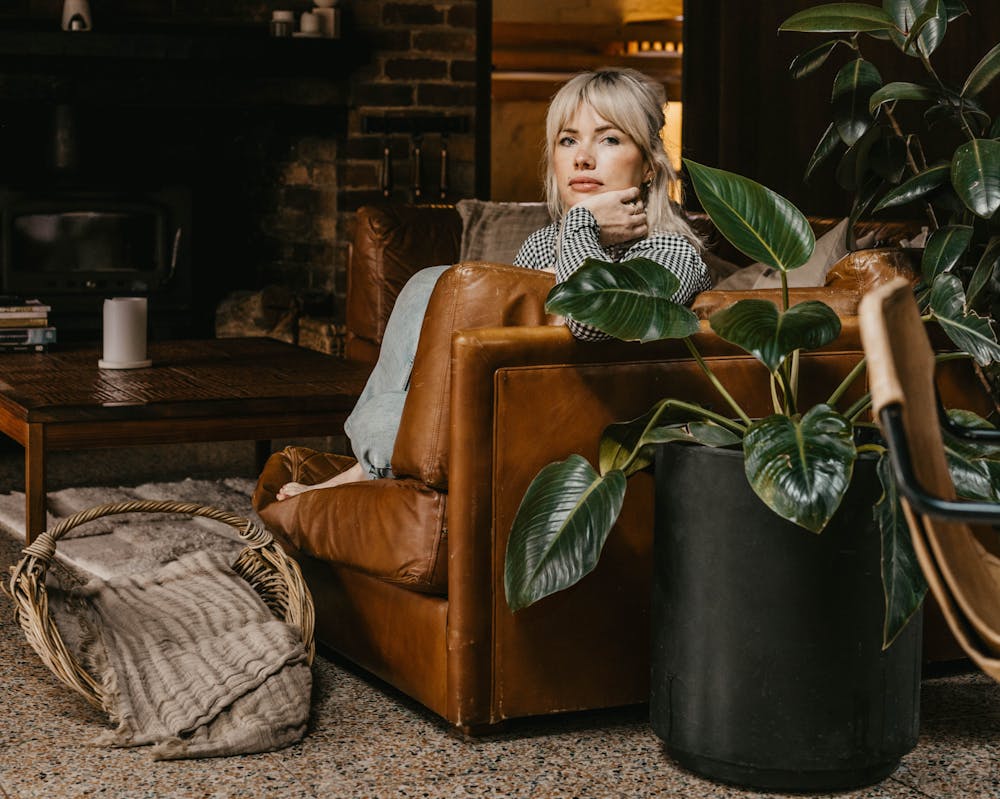 There are calls to cancel Clementine Ford from events in Adelaide and Sydney.
Allen & Unwin/Nix Cartel
There are calls to cancel Clementine Ford from events in Adelaide and Sydney.
Allen & Unwin/Nix Cartel
Louise Adler, director of Adelaide Writers Week, resisted calls to remove Ford[20] from the program, saying “I chose Clementine Ford because of her writing on contemporary Australian sexual politics and about her current book about marriage, which I thought was interesting.” She called her views on “other issues” on social media “immaterial”.
South Australian Premier Peter Malinauskas declined to get involved[21], saying he would not be a “premier that engages in censorship at arts festivals”.
Read more: Are calls to cancel two Palestinian writers from Adelaide Writers' Week justified?[22]
Freedom of speech challenged
Each of these cases presents a challenge to freedom of speech, for different reasons and in different ways.
Writers’ festivals are opportunities for the public to see and hear from people who are presumed to have thought deeply about complex issues, and who have written about them. They are also forums for the writers themselves to challenge and be challenged on their points of view.
In a world conditioned by the emotive views and intolerant habits of social media, where those who hold opposing views are often seen as irredeemable and even illegitimate, it requires a demanding intellectual effort to adjust to the world of the public square.
There, by convention, opposing views are tolerated, even respected, and questions are decided by reasoned argument based on evidence – rather than emotive, sometimes insulting, rhetoric.
The current debates around these festivals show our society is a fair way from making this adjustment.
In the Melbourne case, the problem arises because of a contestable claim in the draft program that “Aboriginal and Palestinian solidarity has a long history, a relationship that is more vital than ever in the movement to resist colonialism and speak out against atrocities”.
Whether or not there is a long history of solidarity between Aboriginal and Palestinian people – which Professor Langton, for one, rejects – might be debated. But the wording of the draft program presents the debate as already decided in the affirmative. That might represent the view of curator Mykaela Saunders and some other First Nations people, but clearly not all of them.
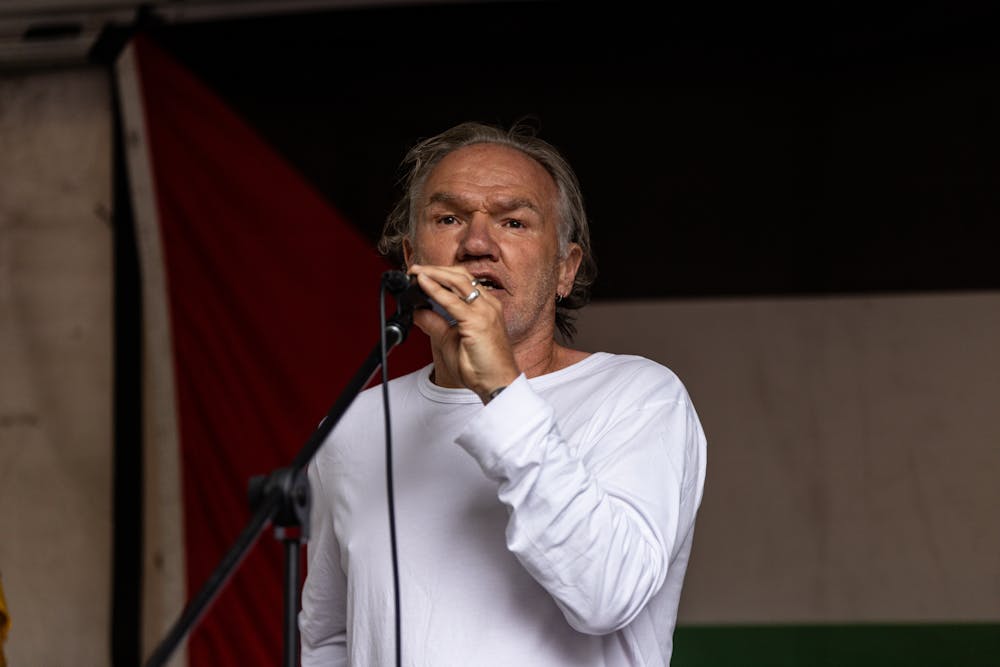 Some First Nations people, like Mykaela Saunders and Tony Birch, pictured here at a Pro-Palestine demonstration, feel solidarity with Palestinians – but not all do.
Diego Fedele/AAP
Some First Nations people, like Mykaela Saunders and Tony Birch, pictured here at a Pro-Palestine demonstration, feel solidarity with Palestinians – but not all do.
Diego Fedele/AAP
In the Perth case, Conway’s statement questioning whether the children killed by the Israel Defence Forces are really children is demonstrably false, as we see nightly on the television news. This does harm. A falsehood pollutes the community’s information pool.
In the Sydney and Adelaide cases, Ford’s participation in the Whatsapp leak is likewise harmful. The leak violated people’s privacy and put people’s safety at risk. The harm principle sets the boundary at which the individual’s right of free speech gives way to the larger public interest in harm prevention.
The case in principle against Ford is particularly strong because of the obvious harm caused by the public dissemination of people’s private information. The fact that she is not programmed to speak about the war in Gaza at her events – she is speaking about her anti-marriage book in both Sydney[23] and Adelaide[24] – makes no difference to this point of principle. In practice, however, banning her would risk making her into a martyr.
None of these festivals have responded to public pressure to change their programs, speakers or even the wording of their copy. Better still, rather than banning speakers or changing programs, festivals could arrange to include challenges on these controversial actions and words. For example, someone in Ford’s position could be invited to make the case for the WhatsApp leak and be challenged on its violation of privacy principles.
That way, the festivals would do their job of promoting debate. A festival where the outcome is a foregone conclusion, or where the openmindedness of the organisers is in question, is just another echo chamber.
Against that, there is the question of public safety, which has been raised by those who wanted Conway banned in Perth and Ford in Adelaide. The exact threat to public safety is not spelt out, but the debate shows we urgently need to learn to better negotiate this frontier between social media and the world of flesh and blood.
References
- ^ Melbourne Writers Festival (www.theage.com.au)
- ^ a line of program copy that reads (www.theguardian.com)
- ^ saying (www.theage.com.au)
- ^ a petition released on October 27 last year (therednation.org)
- ^ told ABC Radio on Monday (www.abc.net.au)
- ^ Last year (www.theage.com.au)
- ^ reported on Monday (www.theage.com.au)
- ^ told the Guardian (www.theguardian.com)
- ^ A Palestinian author's award ceremony has been cancelled at Frankfurt Book Fair. This sends the wrong signals at the wrong time (theconversation.com)
- ^ an interview on ABC Radio National (www.abc.net.au)
- ^ open letter to the festival (docs.google.com)
- ^ this attempt was being made to “deplatform” her (independentaustralia.net)
- ^ All About Women (www.sydneyoperahouse.com)
- ^ petition alleges (www.australianjewishnews.com)
- ^ 738% increase (www.news.com.au)
- ^ the alleged “doxing” (theconversation.com)
- ^ Doxing or in the public interest? Free speech, 'cancelling' and the ethics of the Jewish creatives' WhatsApp group leak (theconversation.com)
- ^ was reported as saying (www.theaustralian.com.au)
- ^ banned from the Adelaide Festival’s Writers’ Week (www.adelaidenow.com.au)
- ^ resisted calls to remove Ford (www.adelaidenow.com.au)
- ^ declined to get involved (www.adelaidenow.com.au)
- ^ Are calls to cancel two Palestinian writers from Adelaide Writers' Week justified? (theconversation.com)
- ^ Sydney (www.sydneyoperahouse.com)
- ^ Adelaide (www.adelaidefestival.com.au)