Asher Keddie is outstanding in Strife – but the show gives us an uneven look at girlboss feminism
- Written by: Michelle Arrow, Professor of History, Macquarie University
The inner workings of magazines, television stations and newspapers have been rich fodder for film and television for decades.
From All the President’s Men (1976) to Frontline (1994–7), Paper Giants: The Birth of Cleo (2011) and The Newsreader (2022–3), we remain fascinated by stories of how our media are made. These kinds of films and series immediately immerse viewers in a precise historical setting and allow commentary on it. This year’s series of The Newsreader reminded us of the divide in Australian culture over the bicentenary commemorations of 1988.
Set around 2012 (when Tinder was a “new app”), Strife is a fictionalised adaptation of Mia Freedman’s 2017 memoir, Work Strife Balance, which told the story of starting her hugely successful women’s website Mamamia in her lounge room in 2007.
By 2014, the site was attracting 2 million to 4 million women a month[1] and Freedman was famous. In the mid-2010s she was one of Australia’s most highly visible feminist faces, dropping soundbites on Sunrise and writing confessional essays about her life.
Freedman was relatable yet highly successful, a “busy mum” who was open about her shortcomings and the moments where the “wheels fall off”.
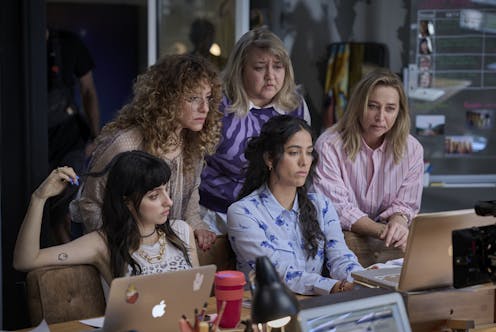
Strife’s Evelyn Johnson (Asher Keddie) is a spikier, colder figure than Freedman appears to be. She is running Eve, a new women’s website, but she’s two months behind on the rent. She has left her marriage and is living alone in a city apartment; she is co-parenting two teenage children with her estranged husband (Matt Day).
Evelyn is singularly focused on making her website work. She is tough on her writers, a bit forgetful about her children’s activities, and doesn’t really know how to cook. Here, the series treads a fine line between making Evelyn relatable and simply foolish: turning up to her daughter’s hockey game with the halftime oranges still in their string bag, or trying to make a last-minute family meal with a slow cooker.
The art of the confessional
As the series begins, Evelyn is struggling with writer’s block – not great timing for an editor running a site that is losing money. But by the end of the first episode, she writes a piece called “I ended my marriage over a flat white”.
It goes viral, and Eve has found its formula.
Evelyn tells one of her writers who is nervous about exposing her personal life for clicks “it can be empowering to share if you’re the one telling the story”.
Strife has an impeccable pedigree for a bingeable women’s drama: it was produced by Bruna Papandrea, whose credits include Big Little Lies, and it stars Asher Keddie, one of Australia’s most bankable television stars. Eve’s writers are a diverse bunch, oversharing and endlessly scrambling for story ideas. The series is set in the world of Sydney’s eastern suburbs, full of well-dressed women dropping their kids at private schools in 4WDs.
In other words, it is aspirational – and more than a little oblivious about the privileged world it depicts.
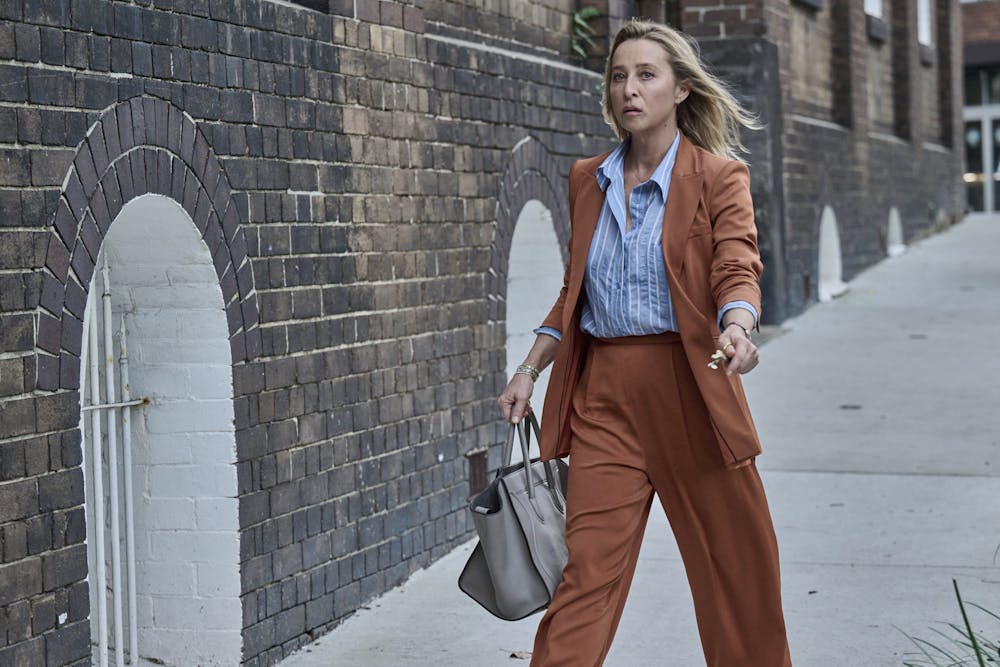
Despite claiming to be a “feminist publisher”, Evelyn shoots down most politically and socially aware story ideas because they won’t “get clicks”. The success of Eve is measured entirely in page views, clicks and advertising deals. Hiring young women to work as unpaid interns also seems at odds with Evelyn’s feminist credentials: indeed, one tells Evelyn she “can’t work for free”.
Evelyn’s relationships with her family and friends are the other main subject of the drama. A quick check of her browser history reveals her son is watching porn; she tries to broach the subject of buying a first bra with her daughter; a friend has put a profile of her husband on Tinder because she doesn’t want to have sex with him anymore.
While all of these topics would work for an Eve confessional essay, the series breezes over them far too quickly to capitalise on their dramatic potential.
Read more: Friday essay: The personal is now commercial – popular feminism online[2]
A uncertain tone
Strife’s brand of feminism – where empowerment comes from telling personal stories online – is very much of the mid-2010s, when women’s online media were on the rise.
As gender studies academic Kath Kenny points out[3], confessional story-telling emerged at the same time media budgets were being cut: after all, confessions don’t require research or reporting. While this kind of writing can raise awareness of important issues, it’s not enough to solve them. “Girlboss feminism[4]” is still with us, unfortunately, but I think we know now that we won’t solve the gender pay gap or domestic violence with mere “empowerment”.
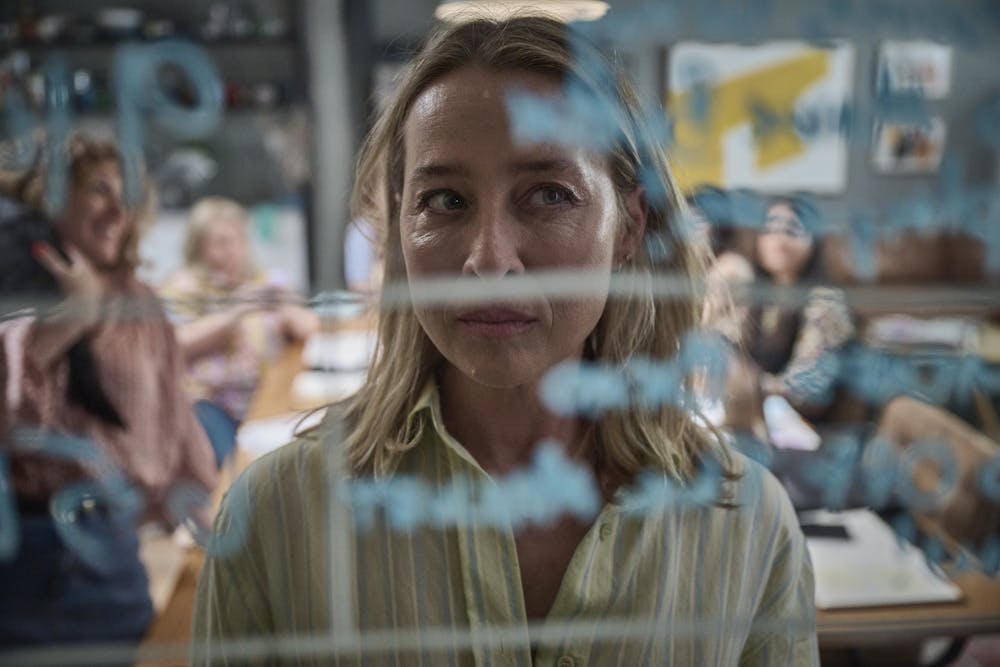 Keddie’s performance is excellent – but the show is uneven.
Kane Skennar/Binge
Keddie’s performance is excellent – but the show is uneven.
Kane Skennar/Binge
Keddie’s brittle performance here recalls her outstanding work in Love My Way, where she wasn’t afraid to make her character unlikeable. Tina Bursill is cool as ever as Evelyn’s mother, and Maria Angelico is terrific as Eve’s editor.
But despite some wry jokes, the series’ tone is uncertain, and Evelyn’s confessions are largely of other people’s experiences. Perhaps if Evelyn was more willing to confront her own shortcomings we’d have the making of real drama.
Strife left me with the jittery feeling you get after spending too many hours in an office in front of a computer screen. Which, considering that’s probably how Eve’s writers feel, might be quite the achievement.
Strife is on Binge from today.
Read more: Classic Aussie cinema and new twists on old classics: our picks of December streaming[5]
References
- ^ a month (www.theguardian.com)
- ^ Friday essay: The personal is now commercial – popular feminism online (theconversation.com)
- ^ Kath Kenny points out (theconversation.com)
- ^ Girlboss feminism (www.theguardian.com)
- ^ Classic Aussie cinema and new twists on old classics: our picks of December streaming (theconversation.com)