


‘War orphans’ express gratitude to Chinese foster parents
BEIJING, CHINA - Media OutReach Newswire - 21 February 2026 – Organized by the Japanese Repatriates and Japan-China Friendship Association, a delegation of 90 Japanese "war orphans," along with their descendants and family members, visited Harbin in northeast China's Heilongjiang Province on September 11, 2025, for a cultural performance.
The event served as an opportunity for participants to convey heartfelt gratitude to their Chinese foster parents who raised them, while also promoting messages of peace and historical reflection through their artistic expressions.
The association is dedicated to fostering mutual understanding and friendship between Japan and China. Its mission includes supporting the social welfare of Japanese "war orphans" left behind in China—individuals who endured significant hardship during the post-war turmoil and are still facing various challenges today. The organization also seeks to preserve and transmit the memories of these experiences to younger generations and to deepen bilateral exchanges.
Following Japan's surrender in 1945, more than 4,000 Japanese children were left behind in China and raised by Chinese families. Now advanced in age, the group has decided to undertake what they call their final "gratitude tour," which coincides with the 80th anniversary of the victory of the Chinese People's War of Resistance Against Japanese Aggression and the World Anti-Fascist War. Since 2009, these orphans have been traveling to China every few years to acknowledge the kindness of their Chinese foster parents and other benefactors who supported them.
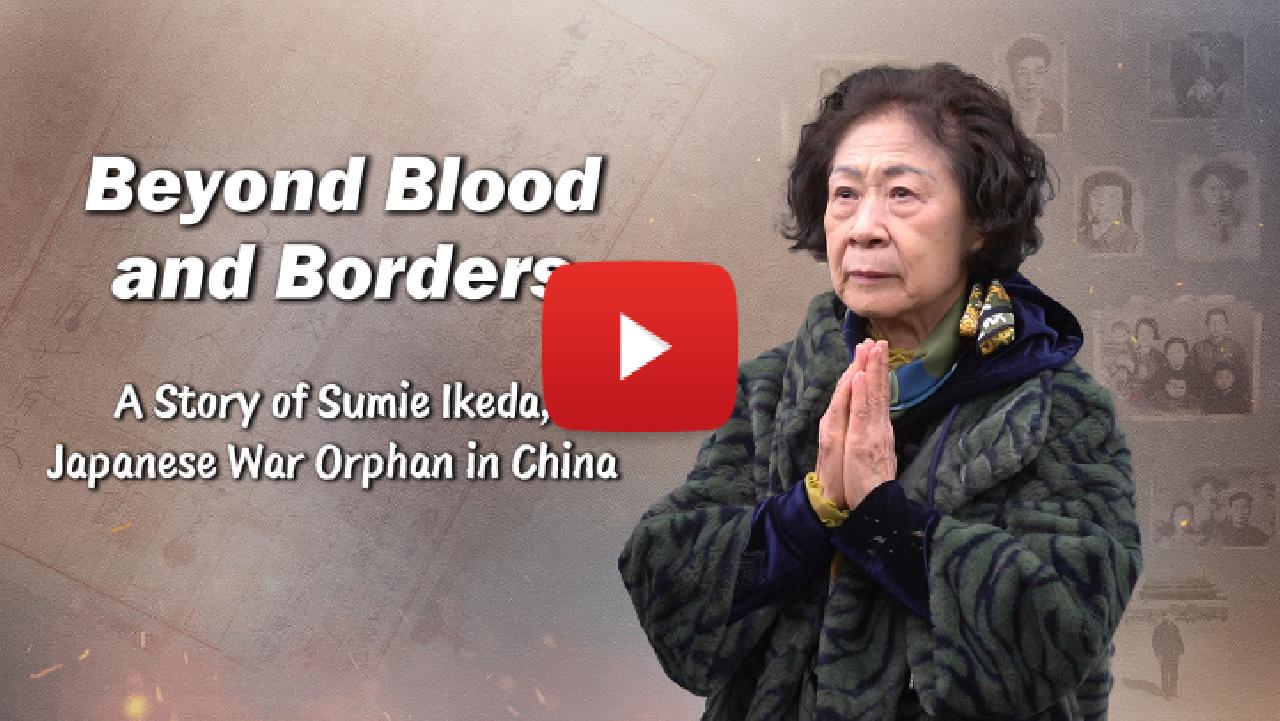
Sumie Ikeda, 81, head of the association of friendship of repatriates from China, is herself one of the Japanese orphans left behind in China. In an exclusive interview with CNS, she spoke in the fluent northeastern Chinese dialect of her childhood, reminiscing about her upbringing in Heilongjiang. "How could I be Japanese?" she reflected, her early identity obscured by the war's aftermath. Separated from her biological family as an infant, she was raised in Mudanjiang, Heilongjiang Province. "My foster mother was truly an exceptional Chinese woman," Ikeda said, noting that memories of her foster mother's strength continue to sustain her.
A pivotal moment occurred when she was eight and local Chinese authorities identified her Japanese heritage. The words of her foster mother, who insisted "This child is mine," left an indelible mark on Ikeda. As an adult, her search for biological roots in 1980s Japan ended in hardship and betrayal, leaving her destitute and suicidal until rescued by the Chinese consulate.
"My first life was given by my birth parents; my second by my adoptive parents," she recounted. "In the most difficult times, it was always the Chinese people who reached out to us."
Ikeda's story reflects a broader historical experience. Official Japanese records recognize 2,818 such "war orphans." Their lives, Ikeda stresses, are a living indictment of the catastrophes caused by war.
Yet, despite their hardships, their enduring sentiment is one of profound gratitude towards China. "Though Japanese by birth, we would not have survived without Chinese people," Ikeda said.
Their collective narrative delivers a dual message of profound gratitude and solemn warning. It pays tribute to the extraordinary compassion of ordinary Chinese people—a love that chose nurture over vengeance. "We must never let war happen again. Situations like ours must never be repeated," Ikeda urged.
"We are a group with the dual identity of both perpetrators and victims," she reflected, a statement that embodies the complex legacy of history, humanity, and a plea for lasting peace.
Hashtag: #ChinaNewsService
The issuer is solely responsible for the content of this announcement.










