Australia's Quiet Shift to Digital Receipts Is Colliding with Consumer Guarantee Claims
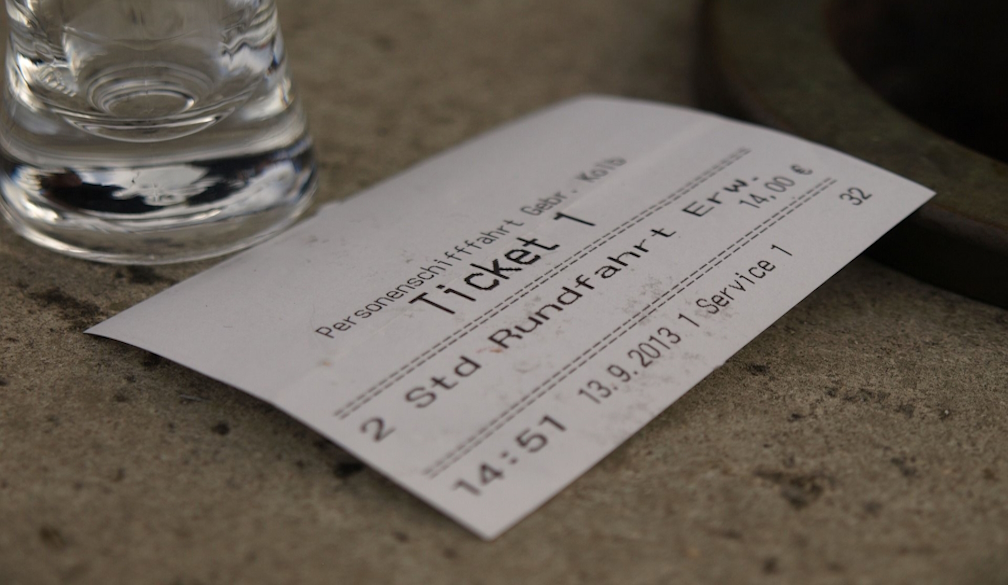
Reports to the Australian Competition and Consumer Commission about consumer guarantees rose 20 percent to more than 38000 in 2025, up from about 31500 the year before. Fridges, phones, TVs, washing machines. About 70 percent of the contacts in those categories were specifically about guarantee disputes. Among the more than 3000 reports the ACCC received about retailers incorrectly denying remedies, the details follow a pattern that has become familiar to anyone who has tried to return something without the right piece of paper, or the right piece of data on the right app. A consumer gets told the warranty period has passed. Or gets told to contact the manufacturer. Or gets told the store policy says no. The ACCC's position, restated in April 2026 by Deputy Chair Catriona Lowe, is that businesses cannot rely on store policies or terms and conditions that deny consumer guarantee rights, and that those guarantees can last beyond manufacturer warranty periods, depending on what is reasonable for the product. None of this is new law, and the Australian Consumer Law itself, contained in Schedule 2 of the Competition and Consumer Act 2010, has been around since January 2011. Legislation and the actual returns desk have never operated on quite the same page. What the shift to digital receipts has done is stretch that disconnect in directions that nobody in the system seems to have properly thought through, not the retailers running the apps and not the regulators writing the enforcement priorities.
Woolworths and Coles, between them accounting for roughly 65 percent of Australia's grocery market, both now offer digital receipts through their apps that are stored for 14 months. Woolworths got there first, rolling out a paperless option in the Everyday Rewards app in late 2020 as a COVID safety measure to cut down on terminal contact at checkout. Coles took longer, eventually tying it to Flybuys profiles where the toggle sits buried in account settings. Bunnings asks for a phone number at the register and texts the receipt through. Officeworks built something around its own loyalty card and app, and IKEA Australia routes everything through the Family barcode. JB HiFi also does the SMS thing. None of it is coordinated, but the broader direction is probably irreversible. A 2023 study out of the University of Technology Sydney, commissioned by digital receipt company Slyp, put the number at more than 10.6 billion paper receipts printed in Australia every year. The thermal paper goes straight to landfill because it cannot be recycled, and the bisphenol A coating, or whatever substitute the manufacturer switched to, is still there on most of it. Europe banned BPA in thermal paper back in 2020, and France took it a step further in January 2023 by making paper receipts opt-in rather than automatic.
The problem sits further downstream. Under the ACL, a business is entitled to ask consumers for some form of proof of purchase before providing a remedy, which sounds straightforward until the question becomes what exactly counts as proof. Bank statements count, apparently. Credit card records too. Order confirmation emails, loyalty card transaction logs, a serial number that the supplier happens to have in its system, all of these supposedly work even without the thermal paper slip. The phrase the legislation lands on is "reasonably demonstrate," and what that means in practice depends almost entirely on whether the person behind the counter has been trained on what the ACL says about alternatives to the paper receipt.
Bunnings, on its returns page, recommends that customers hold onto their receipts, and what happens in practice when someone shows up without one is that staff take down a driver's licence number and hand back an exchange voucher rather than putting money back on the card, which for a simple change of mind is probably fair enough. The ACL changes the picture when the product turns out to be faulty in a way that should not have happened, a drill that starts overheating six weeks after purchase, a tap set that leaks the day it gets installed. Failures like that sit under the acceptable quality guarantee, which no returns desk policy gets to override no matter what the sign says. A consumer with a bank statement showing a $347 charge from Bunnings on a specific date has, if the law is taken at face value, demonstrated the purchase well enough. Whether the teenager working the counter on a Saturday has any idea this is the case is something the ACCC's complaint numbers answer fairly clearly.
Coles tells customers that digital receipts are accepted for refunds across all stores. That is straightforward enough for groceries, and Coles' own brand products are covered by the "Try It. Love It. Or Your Money Back" guarantee, where the return window is short, and the dollar amounts are small. The picture gets murkier for more expensive items at other retailers, especially anything with a consumer guarantee that stretches well past the 14 months that Woolworths and Coles actually keep digital receipts on file in their apps. A $2000 fridge that develops a dead compressor two years in is almost certainly still covered under its consumer guarantee at that point. By that point, though, the digital receipt is probably gone from the app for months. Tools like MyReceiptMaker have ended up filling part of that hole. Smaller businesses end up producing their own transaction records because the apps from the major retailers either delete data too early or do not connect to each other at all.
In December 2025, the federal government flagged reforms to the ACL that would create actual penalties for businesses refusing to honour consumer guarantees. The ACCC has made consumer guarantee compliance in the electronics sector a priority for 2025 to 2026 and confirmed it will remain one for 2026 to 2027. Apple remains the biggest scalp, having paid $9 million after the Federal Court found it had been telling customers that getting a device repaired elsewhere voided the consumer guarantee, which it does not.
The retention window of fourteen months at the two biggest supermarkets is probably fine for perishable groceries and cheap household goods. It is less obviously adequate for patio furniture, a powered garden tool, or a small kitchen appliance that should last three to five years. The ACL does not set a blanket warranty period. What it says instead is that products should last a "reasonable time," and what counts as reasonable shifts around depending on what the product is, what it cost, and what someone buying it would expect to get out of it before it stopped working. A $600 stand mixer that stops working after 18 months has not outlived its consumer guarantee, but by that point the app stopped holding onto the receipt four months earlier. A bank statement could in theory still prove the purchase took place, but nobody at the retailer is going to dig that up, and the retailer's system already wiped the transaction months before the fault showed up.
Slyp's CEO cited figures at the FutureProof launch in late 2023, suggesting that almost 40 percent of Australians have stopped carrying a physical wallet or card and now rely entirely on their phone to pay for things. The stated aim is a roadmap for getting rid of thermal paper receipts that end up in landfill because they cannot be recycled. What has not come up in any of the public conversations around FutureProof, at least not visibly, is whether the retention period for digital records should be long enough to match the consumer guarantee that is still attached to the product at the other end. The ACCC ran a sweep of online shopping return policies in February 2025 and came back with a long list of wording that could mislead consumers about what they were entitled to, and every chain handling digital receipt access differently only compounds the problem. Thermal paper is on its way out, and for good reason. The legal infrastructure that is supposed to take its place has not caught up yet.