A grab bag of campaign housing policies. But will they fix the affordability crisis beyond the election?
- Written by: Michelle Cull, Associate professor, Western Sydney University
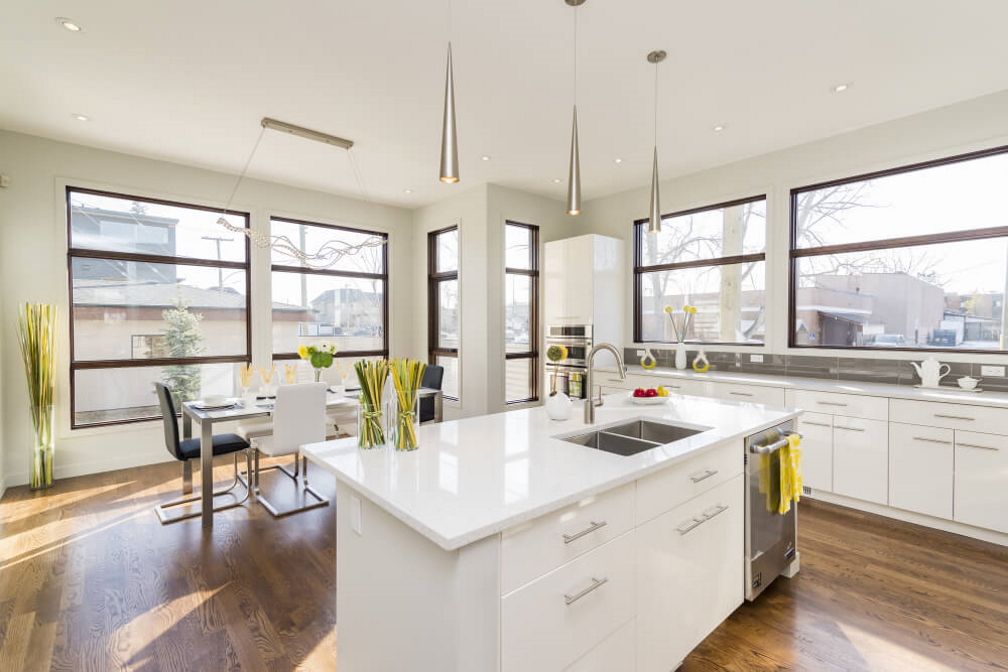
Secure and affordable housing is a fundamental human right[1] for all Australians.
Therefore, it is unsurprising the election campaign is being played out against a backdrop of heightened voter anxiety about rental stress and housing affordability. A growing number of people are unable to access housing[2] that meets their needs.
And it’s not just low-income earners who are affected by housing pressures. It is also the millions of people who make up middle Australia; the very group that will help determine the election outcome.
The solution to Australia’s housing problem is complex. We need to start thinking differently about what reform might look like.
No cheap rents
For most Australians, housing is their biggest and most unavoidable bill.
The average national weekly rent for a unit is A$566 a week. It is even higher in capital cities. To afford this comfortably, renters need an annual income[3] of $130,000.
But for someone on the median income[4] of $72,592 (or $58,575 after tax) half their pay packet is being swallowed by their weekly rent.
This significantly exceeds the 30% benchmark[5] that is a useful measure of housing affordability stress.
Million-dollar homes
The raw numbers are just as eye-watering for home ownership.
The mean price of a residential dwelling[6] in Australia is around $977,000. For house hunters in New South Wales, the figure is even higher at $1.2 million.
Rapidly rising house prices over the past few years have contributed to larger home loans and more people with a mortgage.
Only 13% of homes sold in 2022–23 were affordable[7] for a median income household, with housing prices increasing more rapidly than wages.

The cascading price pressures mean first home buyers are finding it harder to save for a deposit.
Policy options
There is an urgent need for housing reform to overcome the affordability and accessibility challenges. There is no shortage of options available to policymakers.
For starters, planning rules and zoning regulations could be eased[9] to facilitate more construction. Vacant commercial properties and office spaces could be repurposed as housing.
Another option includes removing barriers to constructing prefabricated[10] homes, which are more efficient and affordable to build.
Time to be bold
Housing reform often involves debate around negative gearing and capital gains tax concessions for property investors. There are mixed results regarding how they would impact housing affordability and accessibility. The unpopularity of such policies at the 2016 and 2019 elections have since hindered any changes.
But more radical reforms could be considered. They include applying negative gearing to first home buyers, who would benefit by claiming the mortgage interest on their property against their income. The United States[11] allows home-owner couples to claim mortgage interest on the first US$750,000 (A$1.19 million) of their loan to help them secure a home.
Read more: The government is reviewing negative gearing and capital gains tax, but this won't be enough to fix our housing shortage[12]
Overseas experience
The US policy highlights how high housing costs are not exclusive to Australia.
We could learn from other initiatives adopted overseas. For example, a bylaw[13] passed in Montreal, Canada, requires new developments to include 20% social housing, 20% affordable housing and 20% family units.
Further, Vienna is known for its progressive social housing policies[14], which include rental caps and housing security. The housing is high quality and often includes access to communal pools, child care, libraries and other facilities.
Here in Australia, the major political parties are mindful that the high cost of housing is political kryptonite. They are fighting the May election armed with policies aimed at improving affordability and availability. But will these policies go far enough?
Read more: The government is reviewing negative gearing and capital gains tax, but this won't be enough to fix our housing shortage[15]
What the major parties are offering
Labor plans to increase housing supply[16] by 1.2 million homes over five years by changing zoning and planning rules. This includes 20,000 social housing homes and 10,000 affordable rentals for front-line workers such as police and nurses. It will also increase tax incentives for the build-to-rent[17] program to increase rental supply.
These policies are likely to improve affordability and accessibility for lower income earners. However, there will be a wait while homes are constructed. It is also expensive at around $10 billion.
To increase supply, Labor will invest in prefabricated[18] and modular homes, including a national certification system to streamline approvals.
Labor will also expand the Help-to-Buy[19] scheme so more Australians can purchase their first home, although this may push-up prices through increased demand.
The Liberal Party’s policy centrepiece is $5 billion to fast track essential housing infrastructure[20] such as water and sewage, to unlock up to 500,000 homes.

The Coalition is also vowing to free up more housing by reducing immigration[22] by 25% and capping[23] the number of international students.
For first home buyers, the Liberals want to allow early access to superannuation of up to $50,000, but studies suggest[24] this could backfire by increasing house prices and hurting retirement savings.
Dream turns to a nightmare
Voters may find merit in one or more of the proposed policies, but bipartisanship[25] will be essential if we are to solve the housing crisis, regardless of the election outcome.
And genuine reform involves more than sugar-hit policies that might find favour during election campaigns. It requires bold, decisive action with investment in areas that benefit those most in need.
Without genuine reform, even more Australians will struggle to put a roof over their heads. The ramifications will be devastating to Australia’s social and economic future.
The Australian dream of owning a home will be at risk of becoming an even bigger nightmare.
This is the third article in our special series, Australia’s Policy Challenges. You can read the other articles here and here[26][27]
References
- ^ human right (www.ahuri.edu.au)
- ^ access housing (www.aihw.gov.au)
- ^ annual income (everybodyshome.com.au)
- ^ median income (www.abs.gov.au)
- ^ benchmark (www.ahuri.edu.au)
- ^ residential dwelling (www.abs.gov.au)
- ^ affordable (nhsac.gov.au)
- ^ Joel Carrett/AAP (photos.aap.com.au)
- ^ eased (theconversation.com)
- ^ prefabricated (theconversation.com)
- ^ United States (www.irs.gov)
- ^ The government is reviewing negative gearing and capital gains tax, but this won't be enough to fix our housing shortage (theconversation.com)
- ^ bylaw (www.cbc.ca)
- ^ progressive social housing policies (www.news.com.au)
- ^ The government is reviewing negative gearing and capital gains tax, but this won't be enough to fix our housing shortage (theconversation.com)
- ^ housing supply (alp.org.au)
- ^ build-to-rent (alp.org.au)
- ^ prefabricated (www.minister.industry.gov.au)
- ^ Help-to-Buy (www.abc.net.au)
- ^ infrastructure (www.liberal.org.au)
- ^ Dave Hunt/AAP Photos (photos.aap.com.au)
- ^ immigration (www.theguardian.com)
- ^ capping (theconversation.com)
- ^ studies suggest (smcaustralia.com)
- ^ bipartisanship (www.sbs.com.au)
- ^ here (theconversation.com)
- ^ here (theconversation.com)