2026/27 Federal Budget - What do Australian businesses want to see?
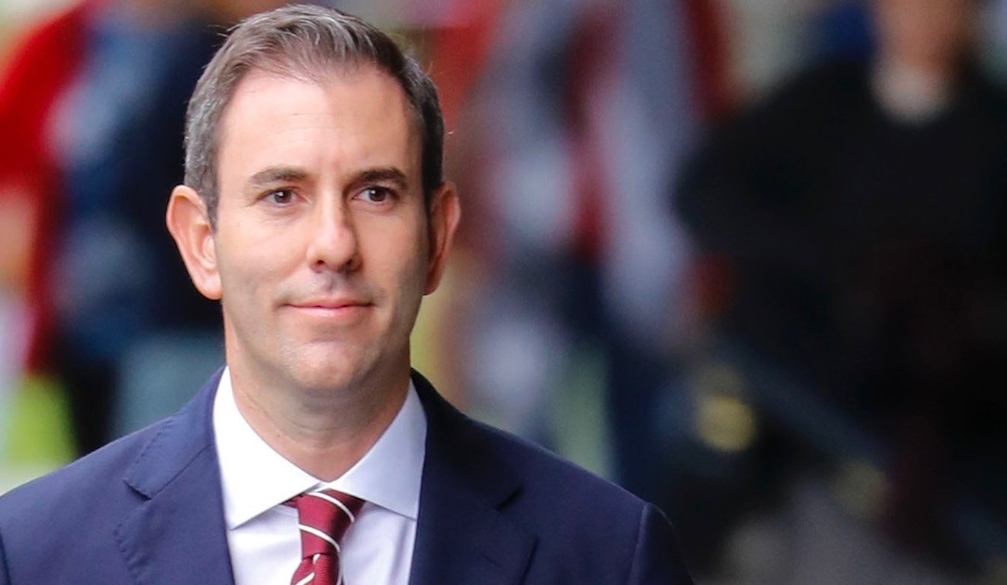
The Australian Government will hand down the 2026/27 Federal Budget on Tuesday 12 May, and with cost-of-living pressures still biting, Australians are watching closely.
Experts expect the Budget to prioritise productivity, spending restraint and tax reform, as it grapples with rising inflation, higher interest rates and mounting housing pressures. Potential measures being closely watched include changes to personal taxation, investment settings, business incentives and cost-of-living relief spanning energy support, healthcare funding and housing affordability initiatives.
The Treasurer initially framed this Budget around three guiding principles — addressing intergenerational unfairness, incentivising productive business investment, and making the tax system simpler and more sustainable — though expectations have since been reset, with the Prime Minister reframing it as a Budget focused on building national resilience. Here's what seven Australian founders and business leaders want to see included.
Julian Fayad, Founder and CEO at LoanOptions.ai - Fintech
The cost of living crisis isn't letting up, and I'm watching everyday Australians get squeezed from every direction. Fuel, grocery bills, insurance premiums, energy costs are seriously adding up and they're breaking household budgets. The data is clear: price gouging is real, it's systemic, and the government needs to stop tiptoeing around it. Our Government needs to drastically reduce its own spending immediately.
I want to see genuine accountability for pricing practices in supermarkets, utilities, and insurance. Not another inquiry that gets buried. Real transparency, real consequences. Farmers and primary producers are being crushed by the same supermarkets charging consumers a fortune. Power is being abused.
On the SME and tech side, Australia has an incredible opportunity right now. AI is reshaping financial services, logistics, healthcare, and Australian founders are building world-class solutions. But we're chronically under-resourced compared to the US and UK. I want to see bold R&D incentives, export support for tech businesses going global, and a regulatory environment that moves at the pace of innovation rather than against it.
The budget should back the builders, protect consumers, and hold the powerful accountable. This isn’t really a big ask… to me, it’s basic economic leadership.
Ivan Teh, Co-founder at AdVisible and Director at AIIMS Group - Merged digital marketing group
The businesses that move Australia's economy forward aren't the ones maintaining the status quo, they're the ones willing to shake up their industry. This budget needs to back them.
What we want to see are grants and incentives that reward small to medium enterprises (SME)s for disruptive growth, not just operational survival. Too much existing support is structured around keeping the lights on. The ‘challenger’ businesses, the ones genuinely trying to do something differently in their category, deserve a funding environment that makes it cheaper and less risky to take that swing.
Reducing the cost of innovation for small businesses should be a budget priority. That means meaningful R&D incentives accessible to SMEs, not just enterprise players. It means digital investment support that goes beyond tick-box schemes. And it means a policy mindset that treats small business disruption as a national economic asset rather than a regulatory headache.
Australia has no shortage of ambitious SMEs ready to challenge their industries. The budget should be built to meet them. Australia should back businesses changing industries, not just protecting old ones.
Renee Roumanos, Founder and Principal Solicitor at Renee Roumanos Legal - Law
This Budget needs to go beyond housing supply rhetoric and address something consistently overlooked: protection.
First home buyers are navigating one of the most legally complex transactions of their lives with minimal support. The conversation around affordability rarely includes the real cost of due diligence failures, underinsurance, or signing contracts without understanding them. We're setting people up to buy homes without equipping them to understand what they own.
After losing our family home to fire five months after moving in, I know firsthand that underinsurance is a quiet crisis hiding in plain sight. A national awareness campaign costs relatively little and could prevent enormous financial devastation.
Small business owners carry enormous risk, often without the legal infrastructure larger organisations take for granted. Tax offsets help, but meaningful investment in legal and financial literacy would do far more. Understanding your contracts, your IP, your succession plan — that shouldn't be a luxury reserved for companies with in-house counsel.
The same applies to women building businesses. Financial empowerment and legal empowerment go hand in hand. You cannot protect your wealth if you don't understand your rights.
Consumer protection infrastructure keeps getting left behind. Whether you are buying your first home, building a business, or simply trying to secure your family's future, protection should not be a privilege. That is the investment this Budget has the opportunity to make.
Nirlep Adhikari, Founder at Mount Mindforce - AI advisory
The Budget needs to stop treating technology as a cost centre.
The businesses winning right now don't see technology that way. They treat it as their primary growth lever. That distinction matters, and I don't see the Budget reflecting it.
Here's what I keep seeing on the ground: companies with millions in revenue running on six disconnected systems, ops teams spending 40 minutes a day copy-pasting between two portals that were supposed to integrate, and critical data living in a spreadsheet because no proper tool does what the business actually needs.
That's workflow debt. And it's quietly costing Australian businesses hundreds of thousands of dollars a year.
The productivity gains the Budget is chasing won't show up by deploying AI on top of broken processes. That just gives you faster, more expensive mistakes. Real gains come from eliminating the workflow debt first.
If the government is serious about productivity, it needs to fund the infrastructure layer, not the shiny application sitting on top of it.
There's a difference between economic resilience and economic growth. Right now, Australia's tech policy is optimising for the wrong one. We're funding the headline and ignoring the foundation.
That's the problem I'd like to see this Budget actually address.
Lisa Clark, Co-founder and COO at Backpack Bed for Homeless - NFP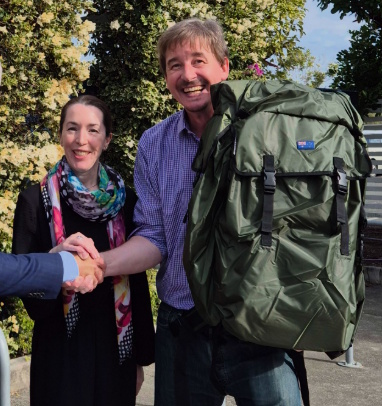
1,100 CEOs and boards around the country have a study-proven solution to save rough sleepers—yet politicians turn away from the massive taxpayer savings created.
The average lifespan of an Australian male rough sleeper is 45.6 months. Let that sink in.
In 2024-25, over 77,400 requests for short-term or emergency accommodation went unmet across the country.
At the expense of rough sleepers, the Australian government is consistently falling behind its housing schedule to save their lives with dignity.
The Federal Government signed the Human Rights Declaration with a legal and moral obligation to act with study proven emergency solutions which ultimately save millions of dollars to taxpayers. Ignoring the thousands of people forced to sleep rough is like ignoring a natural disaster zone happening now nationally.
No one is saying stop building houses—but politicians cannot ignore the humanitarian crisis happening right now on Australian streets. They can’t build their alleged 1 million homes overnight - so what is there to morally do in the meantime?
The multi-award-winning Backpack Bed is a 2.9kg ergonomic backpack that converts within seconds into a portal, waterproof, fire-retardant, all-weather shelter with built-in mattress, insect mesh, and windows.
Every $144 Backpack Bed deployed saves the community $3,319 in avoided health, justice, and emergency costs. This is a strategic social investment that saves both lives and taxpayer dollars.
Tired of government failure, the public recently saved Tasmania and made history by funding a study-proven Backpack Bed for every unsheltered person in the state while also saving the community $846,345.
The 2026/27 Federal Budget must invest in fire-retardant, 4-season technology that restores dignity and safety to all Aussies sleeping on our streets tonight. Stop bureaucracy from failing taxpayers; give our 1,100+ frontline homelessness agency partners the tools they need to ensure no Australian sleeps unprotected tonight.
Dr. Amir Shareghi Najar, Head of Data at Quickli - B2B mortgage technology provider
Quickli data tells an uncomfortable story. Borrowers aren't better off than they were a year ago. They're carrying $34,000 more debt on average while the cash rate has climbed back to where it started. The rate cuts didn't ease household budgets; borrowers used the extra capacity to stretch into bigger loans, and now they're managing those commitments at higher rates.
Walking into the Federal Budget, the government needs to understand that households are already under serious stress. Our platform data shows 38% of scenarios are now investment properties, up from 34% a year ago. That's a structural shift driven by investors chasing yield during rate cuts. If negative gearing restrictions land hard, that demand reverses overnight, and the adjustment won't be gentle.
Similarly, trust structures aren't a fringe channel anymore. We've seen 24% year-on-year growth in trust scenarios per broker, with exposure spanning the entire lender panel from majors to non-banks. A heavy-handed crackdown hits everyone.
What the budget should prioritise is genuine affordability relief, not policy changes that pull the rug out from under borrowers who've already maxed their serviceability. Households need breathing room, not another squeeze from a different direction while interest rates are climbing again.
The system is stressed. The budget needs to acknowledge that reality.
Nick Chong, Co-founder and Managing Director at Rateseeker - Mortgage broker
Buying a home in Australia right now is genuinely tough and navigating the lending market takes more than just saving a deposit. Between interest rate movements, rising property prices across most capital cities, and evolving lending conditions, many Australians are unsure whether to buy, wait, fix or refinance.
Buying a property is not just about getting your foot into the market. It's about carefully considering affordability and the real impact it has on your current lifestyle and your plans for the future, especially in the face of rising interest rates and living expenses. The size of your loan, your repayments, and your borrowing structure will shape your financial flexibility for years to come. Getting that balance right matters just as much as securing the property itself.
The 2026 Federal Budget is expected to include more help for first home buyers, like expanded deposit guarantee schemes that let you buy with a smaller upfront deposit. There may also be changes to rules around investment properties and how they're taxed regarding capital gain, which could shift what investors choose to do next.
Here's the simple truth though: government policy changes take time to kick in, and the best thing any borrower or investor can do right now is get their own finances in order before the announcement.
Know what you can actually borrow. Understand your rate. Don't assume you're getting the best deal just because your bank hasn't called you.
The people who come out ahead aren't always the ones who waited for the perfect conditions. They're the ones who were ready when opportunity showed up.