Cotton picking begins following mixed season
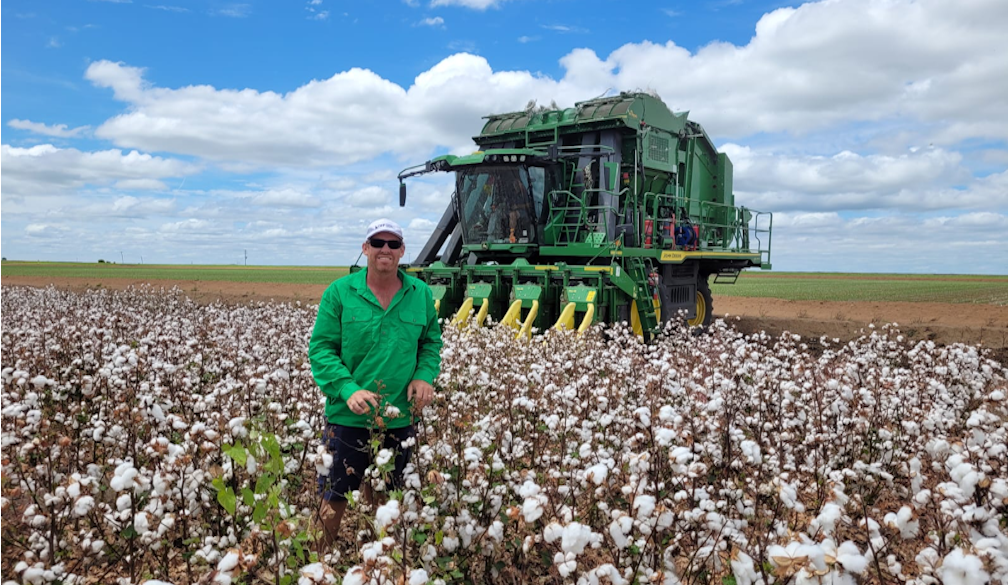
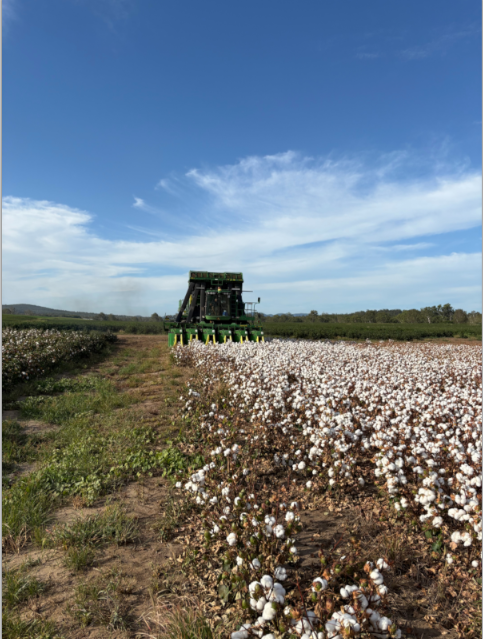
Cotton picking kicked off in central Queensland last week, with the first crops producing average results in what is shaping up to be a steady season despite mixed conditions.
The first to pick were Emerald growers Denis and Aaron Kiely, who began picking their 71-hectare cotton crop on Wednesday 4 February.
“It’s definitely nice to have the picker in the field - we were certainly lucky to miss storm activity the night before,” Aaron said.
“It’s picking very clean. Overall, I’m very happy with how it’s going so far, considering the variable season we’ve had
In a good year, the Kielys would usually plant around 550ha of cotton, but this season they ended up with a total of 93ha due to low water allocation. Carryover water enabled them to grow 71ha after dropping 22ha from the irrigation cycle.
The dry season prompted the Kielys to try a different approach to their watering schedule, and so far, it appears to have paid off.
“It’s yielding about 11.5 bales, and even though it’s down from last year’s January pick, the crop has not received any additional in-crop nitrogen,” Aaron said.
“We had zero water allocation at the start of the season; we opted to pre-irrigate in June to fill the moisture profile in the field which enabled us to plant on the rainfall in early August. We then spread our water scheduling out over five irrigation cycles. We will be interested to look at gross margins of this season’s crop.”
Recent rainfall in the Central Highlands has seen water allocations rise from zero to 89 per cent which has meant most growers have been able to re-start crops.
“The 22ha that we dropped from the water cycle has now restarted flowering following the rainfall and is now looking to be a successful crop,” Aaron said.
Picking has also gotten underway in the Brisbane Valley this week.
Other growers in the Central Highlands will begin picking their earlier planted crops over the coming weeks, while picking is expected to get underway in the Dawson and Callide Valley in late February.
Other regions will follow as conditions allow, with most valleys to begin picking in April, having planted from late September through to early October under warm conditions and good soil moisture.
Cotton Australia CEO Adam Kay said weather has been a key driver of outlook this season.
“Conditions have been mostly warm and favourable, but rainfall has been uneven,” Mr Kay said.
“Some valleys have received useful storm rain, while others have remained dry, with dryland crops particularly affected.
“Water availability is emerging as a constraint in parts of New South Wales, with some irrigated crops likely to be tight for final irrigations and dryland crops increasingly reliant on late rainfall.”
Mr Kay said the recent heatwaves across northern NSW and southern Queensland will test crops over the coming weeks and may influence final yield potential.
Despite varying conditions across cotton growing regions, the 2025-26 crop is still predicted to produce around 4.4 million bales.
In northern NSW, irrigated crops have strong retention, supported by reasonable dam levels, while dryland crops face a tougher finish where rainfall has been missed.
Southern valleys started more slowly but have improved with warmer conditions, although reduced plantings and water availability remain longer-
Queensland crops are generally well-advanced, with many areas slightly ahead of last season and picking expected from late April.
In Northern Australia, wet season conditions have created some uncertainty with reduced planted area and variable establishment, but crops remain in the ground across all regions.
More than 450,000 green hectares of cotton has been planted this season, predominantly in New South Wales and Queensland, with some in the Northern Territory and Western Australia.
Mr Kay said this year’s crop is predicted to generate more than $2.9 billion for the Australian economy.
“This will flow back into the 249 rural and regional communities that directly benefit from the cotton industry, supporting local jobs and local economies.”