


New Aussie musical Bloom misses an opportunity to interrogate the gaps in aged care – and in our social fabric
- Written by: Sarah Austin, Lecturer in Theatre, The University of Melbourne
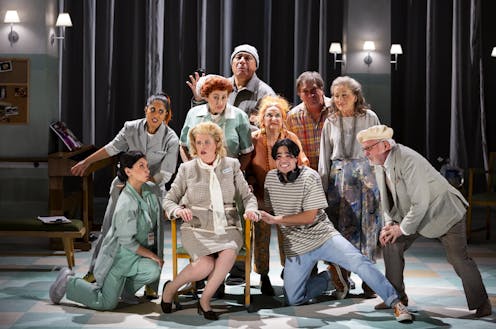
Bloom, the new Australian musical produced by the Melbourne Theatre Company, is proudly billed by the company as born and bred right here in Melbourne/Naarm.
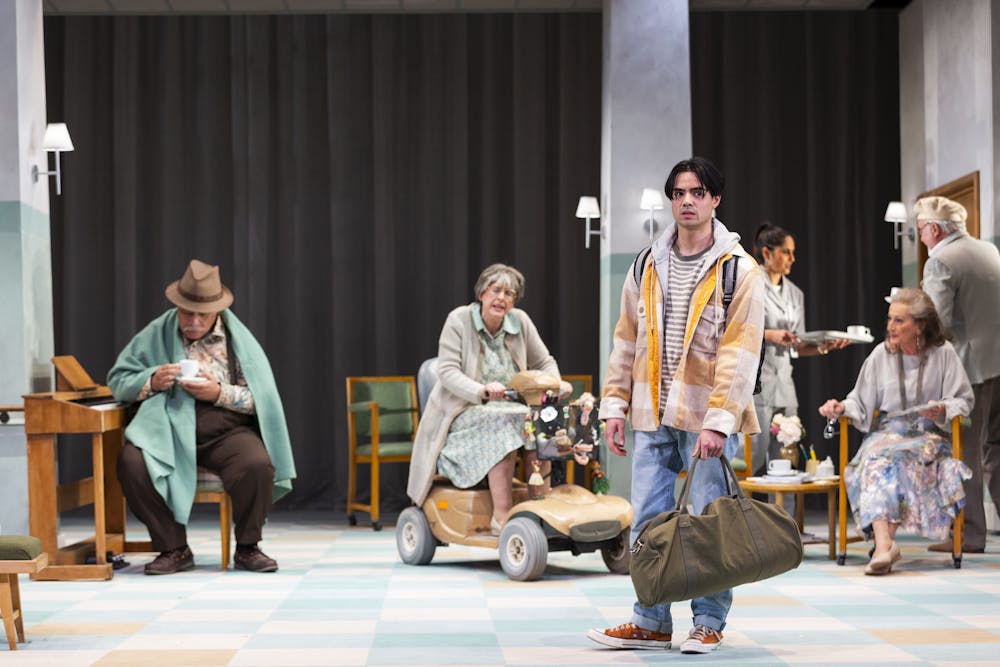
Written by Tom Gleisner (of The Castle fame) with music by Katie Weston, the show follows the story of Rose (Evelyn Krape), who reluctantly arrives at Pine Grove Aged Care Home after being told she can no longer live alone. Finn (Slone Sudiro), a university student studying music, arrives on the same day as Rose as part of a scheme offering students board in exchange for domestic duties.
As both Rose and Finn settle into their new accommodation, we meet the eclectic residents of the home and two dedicated care staff. Gloria (Christina O'Neill) has “accidentally” worked at Pine Grove for eight years. Ruby (Vidya Makan) gave up her communications degree at uni for a job that allowed her to do something more meaningful.
Fault lines soon appear. The frugal and punitive manager of Pine Grove, Mrs MacIntyre (Anne Edmonds), puts profit before people. She refuses requests for outings, fresh food and psychosocial programs designed to improve the residents’ (or as Rose puts it, inmates) lives so she can meet a tight fiscal bottom line.
Each character wrestles with the poignant and relatable idea that there is a gap between who they were and who they have become.
This gap occurs across the spectrum of ageing. Ruby asks herself in song if “maybe it’s time”, contemplating leaving Pine Grove and commencing a masters degree in aged care. Resident Sal (Eddie Muliaumaseali’i) silently looks through old photos to connect with his past and the remnants of his past self.
Dismissing the rights of older Australians
This question of aged care homes as for-profit entities was brought into sharp focus[1] during the pandemic. The final report of a Royal Commission into Aged Care and Safety exposed the deep chasms in the sector. It tabled 148 recommendations[2] to parliament in 2021 and has led to significant legislative reform[3].
The idea suggested at the core of Bloom – that student boarders in aged care homes may lead to significant innovation, intergenerational and reciprocal learning and subsequently improve the quality of life for our elders – is treated glibly and without much substance in the formulaic model of musical theatre.
Read more: 4 key takeaways from the aged care royal commission's final report[4]
The story references ideas of the human rights of our elders to have agency to voice complaints, to be treated with respect, to have liberty of movement and the right to social participation.
Specifically, Rose tries to lead an insurrection of residents during an inspection of the facility and refuses pills that make her feel groggy.
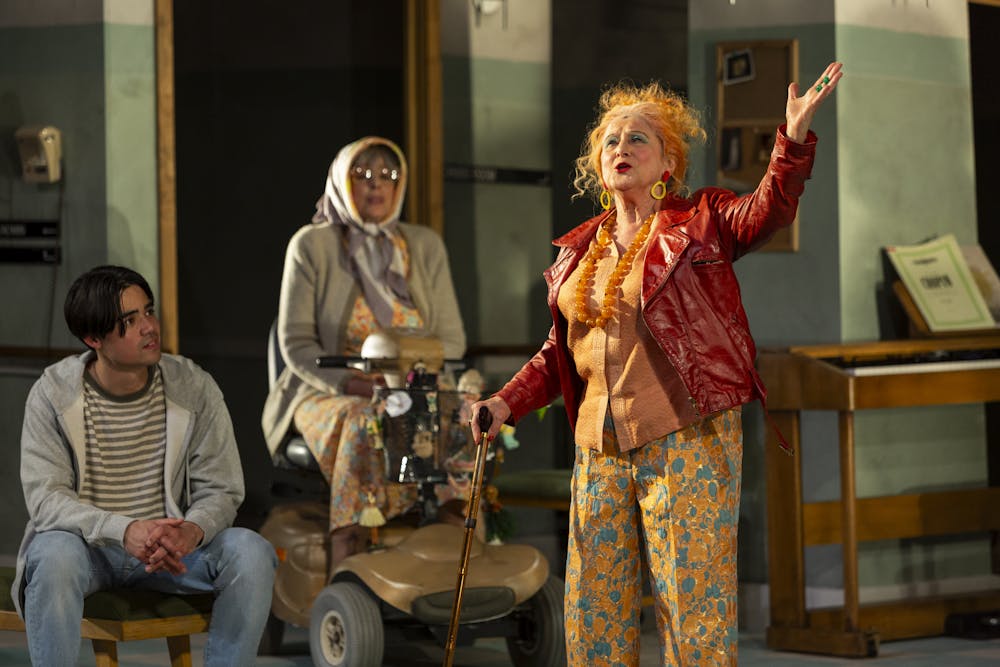 Instead of being heard and respected, the residents are treated as a problem.
Pia Johnson/Melbourne Theatre Company
Instead of being heard and respected, the residents are treated as a problem.
Pia Johnson/Melbourne Theatre Company
Instead of being heard and respected, she is treated as a problem. The suggestion by Mrs MacIntyre is that she is “having a little turn” during her complaints: a moment of insight into how easily we have dismissed the rights of older Australians to exercise choice and be heard on matters that impact them.
Here, Bloom provides an insight into the cruelty inherent in some aspects of the system, and the difference quality care and a good carer can make to someone’s life.
Stark realities and missed opportunities
Toward the end of the play, there is a scene where we watch Rose take her last few breaths in her small hospital bed, in a stark and all-too-familiar room. She is surrounded by Gloria, Ruby and Finn, who provide comfort in her final hours.
In the scene, Finn reflects that Ruby seems very comfortable with death. She responds that both her grandparents lived at her home and she was present when they died.
Ruby’s experience of multi-generational living arrangements that allow for care at home for the elderly is more common[5] in Australian families that include first- or second-generation migrants.
Finn reveals that when his mother died, he was considered too young to be at the hospital.
This scene at Rose’s bedside is a good representation of the missed opportunity in Bloom to starkly represent the realities of our aged care system and our dominant cultural approach to end-of-life care in this country.
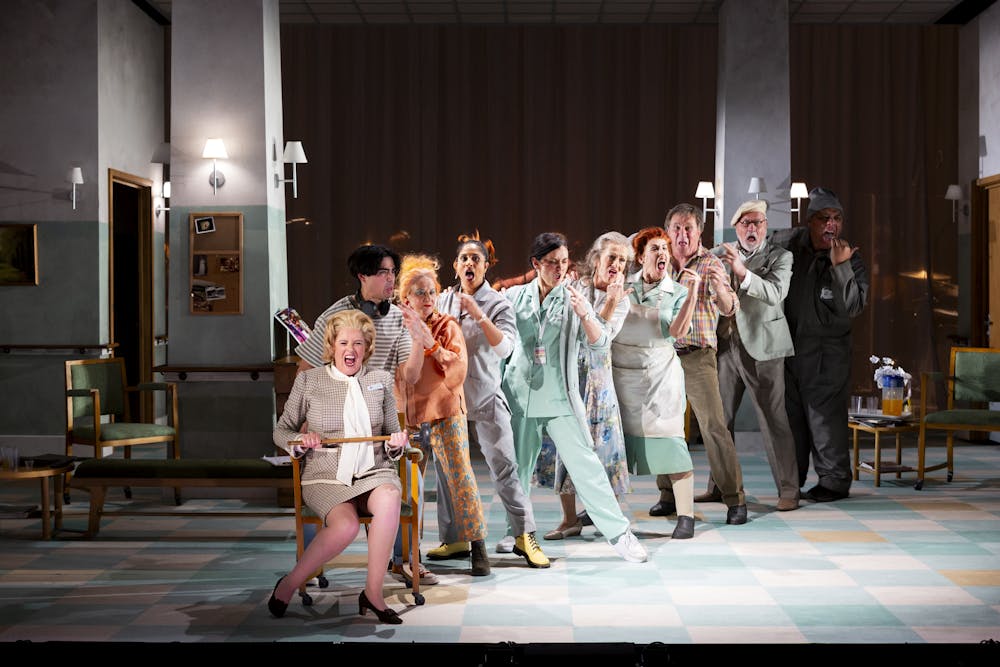 There is a missed opportunity to starkly represent the realities of our aged care system.
Pia Johnson/Melbourne Theatre Company
There is a missed opportunity to starkly represent the realities of our aged care system.
Pia Johnson/Melbourne Theatre Company
Due to the intense staffing shortfall so sharply reflected in the royal commission, unless family were present, it is very possible Rose would have died alone.
I can’t help but imagine how seeing that uncomfortable reality on stage may have been a transformative theatrical moment, seared into the memories of the audience as they make choices about end-of-life and aged care for themselves and those they love.
Instead of tackling the systemic issues around aged care and end of life, Bloom wraps things neatly up in a bow, ending the musical by suggesting the death of Rose led to change at Pine Grove. An unqualified student will now work as a musical therapist and a nice manager has been found to lead the home into a new era.
There is a great track record of musical theatre successfully tackling overtly political material and revealing the gaps in our social fabric and problematising history and power (think of shows like Hamilton, Urinetown and Bran Nue Dae).
Unfortunately, Bloom seems too afraid of its own subject material to truly tackle these issues and reflect their realities back to us.
Bloom is at the Arts Centre Melbourne Playhouse for the Melbourne Theatre Company until August 26.
Read more: We all hope for a 'good death'. But many aged-care residents are denied proper end-of-life care[6]
References
- ^ sharp focus (theconversation.com)
- ^ tabled 148 recommendations (theconversation.com)
- ^ significant legislative reform (theconversation.com)
- ^ 4 key takeaways from the aged care royal commission's final report (theconversation.com)
- ^ more common (universaldesignaustralia.net.au)
- ^ We all hope for a 'good death'. But many aged-care residents are denied proper end-of-life care (theconversation.com)










