What It Really Takes to Open a Dental Practice in Australia
Opening a dental practice is one of the most complex small business ventures in Australia. On the surface it looks like a commercial lease, some chairs, and a team of clinicians. In practice, it involves radiation compliance, medical-grade plumbing and electrical, infection control infrastructure, regulatory approvals, and a physical design that has to serve both clinical function and patient experience simultaneously.
Many dentists who take the step from associate to practice owner underestimate the buildout phase significantly, in cost, in time, and in the specialised knowledge required to get it right. The fitout is where a dental practice either sets itself up for long-term operational efficiency or inherits problems that are expensive and disruptive to fix later.
Key Takeaways
- A dental practice fitout involves significantly more complexity than a standard commercial renovation, including medical-grade services, radiation compliance, and stringent infection control standards.
- Poor fitout decisions made at the outset are among the most costly and disruptive problems a dental practice owner will face, since many cannot be corrected without major disruption to clinical operations.
- Patient experience design has become a meaningful differentiator in a competitive market, with layout, lighting, acoustics, and aesthetic choices all affecting how patients perceive and interact with a practice.
- Working with specialists who understand both the clinical and commercial sides of dental fitouts from the beginning saves significant time, cost, and stress compared to using generalist builders who learn on the job.
- Regulatory compliance, including radiation shielding, infection control layout, and accessibility requirements, is non-negotiable and requires documented evidence for AHPRA and council approvals.
The Dental Practice Market in Australia
Australia's dental sector is substantial and growing. With over 16,000 registered dentists practising across the country and patient demand continuing to increase, particularly in underserviced metropolitan growth corridors and regional areas, new practice openings remain consistent.
Private practice ownership is still the dominant model in Australian dentistry, though corporate consolidation has accelerated in recent years. Many dentists who choose to open independent practices do so precisely to maintain clinical autonomy and build equity through ownership, rather than spending their career building someone else's asset.
The financial investment in a new practice is significant. Beyond the cost of the fitout itself, there's equipment procurement, staff recruitment, practice management systems, and the working capital to sustain the business through its initial growth phase. Getting the foundational infrastructure right at the start is not a luxury. It's a prerequisite for the rest of the business to function.
Why Dental Fitouts Are a Specialist Category
Dental fitouts are not simply commercial fit-outs with dental chairs installed at the end. The clinical requirements shape virtually every aspect of the construction process, from the structural work through to the final fixtures.
Each dental surgery requires a specific combination of medical-grade compressed air, suction, and water systems. These services must meet precise pressure and flow specifications, be installed with appropriate filtration, and be configured to connect correctly with the specific dental units being installed. The positioning of these service connections is determined by the type and model of equipment being used, which means equipment selection and floor plan design have to happen in parallel, not sequentially.
Radiation rooms for X-ray and OPG equipment require lead or barium sulphate shielding within the walls, floor, and ceiling, and must be assessed and certified by a radiation safety authority before use. The design of these rooms involves calculations based on the specific equipment, its usage frequency, and what occupies the adjacent spaces. This is specialist engineering work, not something a generalist builder handles routinely.
Sterilisation and decontamination areas must be designed to meet AS/NZS 4815:2006, the Australian and New Zealand standard governing infection prevention and control in dental practices. The workflow within these spaces, from dirty receipt through cleaning, sterilisation, and sterile storage, must be physically separated to prevent cross-contamination. Getting this layout wrong creates both a compliance failure and an ongoing infection control risk.
The Patient Experience Dimension
Clinical compliance gets the most attention in dental fitout planning, and rightly so. But the patient experience dimension is increasingly important in a market where patients have more choice and more information than ever before.
A dental practice's physical environment communicates immediately and without words. A waiting area that feels calm, clean, and considered reduces anxiety before a patient has spoken to a single team member. Natural light, acoustic management that prevents clinical sounds from carrying into patient areas, and thoughtful wayfinding all contribute to how comfortable and confident a patient feels in the space.
This matters commercially. Patient retention and referral behaviour are strongly influenced by experience, and experience begins the moment someone walks in the door. Practices that invest in design thinking alongside clinical function tend to see measurably better patient satisfaction scores and lower attrition.
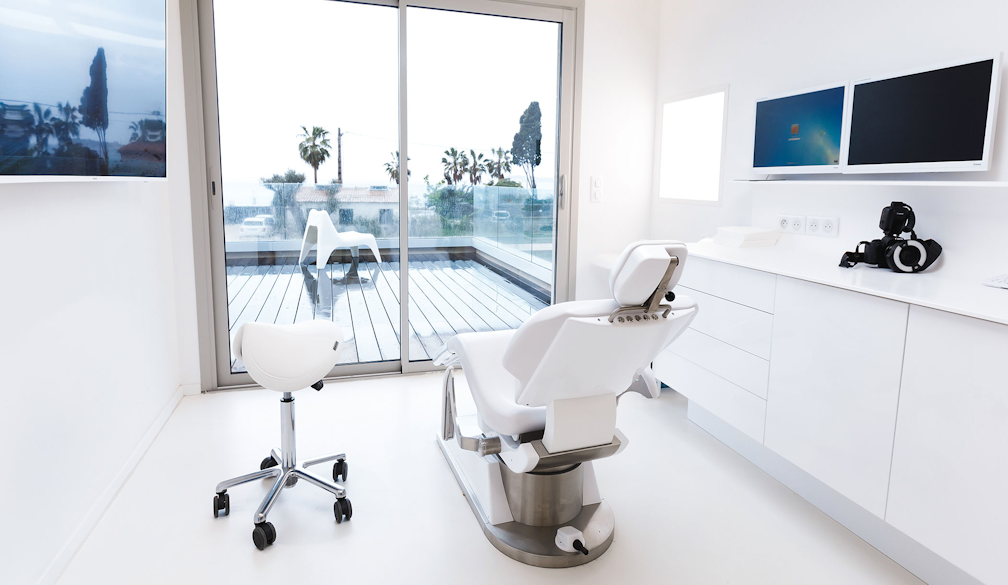
The operatory design matters too. Ergonomics for clinical staff, the position of cabinetry relative to the dental chair, task lighting configuration, and the placement of delivery systems all affect how efficiently and comfortably clinicians can work across a full clinical day. Staff wellbeing and clinical performance are not separate from the built environment. They're directly shaped by it.
Choosing the Right Fitout Partner
The most consequential decision a practice owner makes in the fitout process is who they engage to lead it. The consequences of that choice play out over years, not just during construction.
A generalist builder can construct walls and install flooring. What they typically can't do is navigate the intersection of clinical requirements, dental equipment specifications, infection control standards, radiation compliance, and Australian health facility standards simultaneously. That intersection is where the real complexity of a dental fitout lives, and where costly mistakes happen.
Working with experienced dental fitout specialists means the design process starts from an understanding of how a dental practice actually functions clinically, not from a generic commercial construction template. Specialists in this space understand how to sequence the design and construction phases so that equipment selection informs floor plan development, service rough-ins happen in the right locations, and compliance documentation is generated alongside the build rather than scrambled for at the end.
They also bring an understanding of the common mistakes that practice owners make when fitouts are approached piecemeal. Insufficient storage for consumables. Poor infection control workflow. Inadequate soundproofing between surgeries. X-ray rooms that don't account for equipment upgrade paths. These are the kinds of issues that are inexpensive to address at design stage and very expensive to fix after construction is complete.
The Compliance and Approval Process
New dental practices in Australia require a series of regulatory approvals before they can open. Understanding what's required, and building appropriate time for those approvals into the project schedule, prevents the situation where a completed fitout sits idle waiting for clearances.
Local council development approval is typically required for a change of use and for any structural work. The application process and timeline varies significantly between councils and between states, and engaging early with the relevant authority is advisable. Some councils have specific requirements for healthcare premises that go beyond standard commercial considerations.
Radiation management plans and room compliance certificates must be submitted to the relevant state radiation authority. In most jurisdictions this requires a pre-use inspection and sign-off before the X-ray equipment can be operated clinically.
For practice owners seeking guidance on the broader regulatory landscape for healthcare property and businesses, this guide to commercial property is a useful starting point before committing to a lease or building contract.
AHPRA does not directly regulate practice premises, but the requirements of the Dental Board of Australia's infection control guidelines inform how a practice must be physically set up, and these need to be reflected in the fitout design from the outset.
Planning for the Long Term
A dental fitout should be planned not just for the practice as it opens, but for the practice as it's intended to operate in five to ten years. Practices that open as single-chair operations with growth intentions need to consider whether the space can accommodate additional surgeries, whether the electrical and mechanical infrastructure can be expanded without significant reinvestment, and whether the layout allows for efficient workflow at a higher patient volume.
Flexibility in design is an investment that pays returns over time. Equipment technology changes, infection control requirements evolve, and patient volumes fluctuate. Practices that are built to accommodate change rather than locked into a rigid layout tend to be significantly easier and less costly to manage operationally over the long term.
The fitout phase is also the appropriate time to consider digital infrastructure. High-speed internet connectivity, CAD/CAM system integration points, digital radiography connections, and practice management system cabling are all easier and cheaper to install during construction than as retrofits later.
Getting the Start Right
The practices that perform best commercially in their first three years tend to have one thing in common: they invested in the right foundations before they opened. A well-planned fitout that's been executed by people who understand the clinical, regulatory, and commercial dimensions of dental practice design creates a working environment that supports patient experience, clinical efficiency, staff retention, and business growth from day one.
The cost of engaging the right specialist feels significant at the planning stage. Measured against the cost of rework, compliance failures, staff frustration, and patient experience gaps that result from an underspecified fitout, it's consistently the more economical choice.
FAQ
Q: How long does a dental practice fitout typically take in Australia? A: Most dental fitouts take between three and six months from design commencement to practical completion, depending on the size of the practice, the complexity of the build, council approval timelines, and equipment lead times. Planning well beyond this to account for contingencies is advisable.
Q: What is the typical cost of a dental fitout in Australia? A: Costs vary widely based on size, location, and specification, but most new single-to-three surgery practices fall in the range of $400,000 to $800,000 or more for the fitout component alone, not including equipment. Detailed quotation from a specialist is required for accurate project budgeting.
Q: Do I need a specific builder for a dental fitout or can any licensed builder do the work? A: A licensed builder can legally perform the construction work, but a builder without experience in dental or medical fitouts will lack the working knowledge of clinical requirements, equipment interfaces, and health facility standards that substantially affect the outcome. Specialist experience significantly reduces risk.
Q: What Australian standards apply to dental practice design? A: The key standards include AS/NZS 4815:2006 for infection control, state-specific radiation safety requirements for X-ray rooms, the National Construction Code for building compliance, and the Dental Board of Australia's infection control guidelines. Local council planning requirements also apply.
Q: Can an existing commercial space be converted into a dental practice? A: Yes, though the suitability of an existing tenancy depends heavily on structural capacity, service availability, ceiling height, column placement, and council zoning. A fitout specialist can assess a potential tenancy before a lease is signed, which is strongly recommended to avoid committing to a space that can't practically or economically support a dental practice.