The Digital Logbook Revolution: How EWDs are Redefining Australian Transport Culture
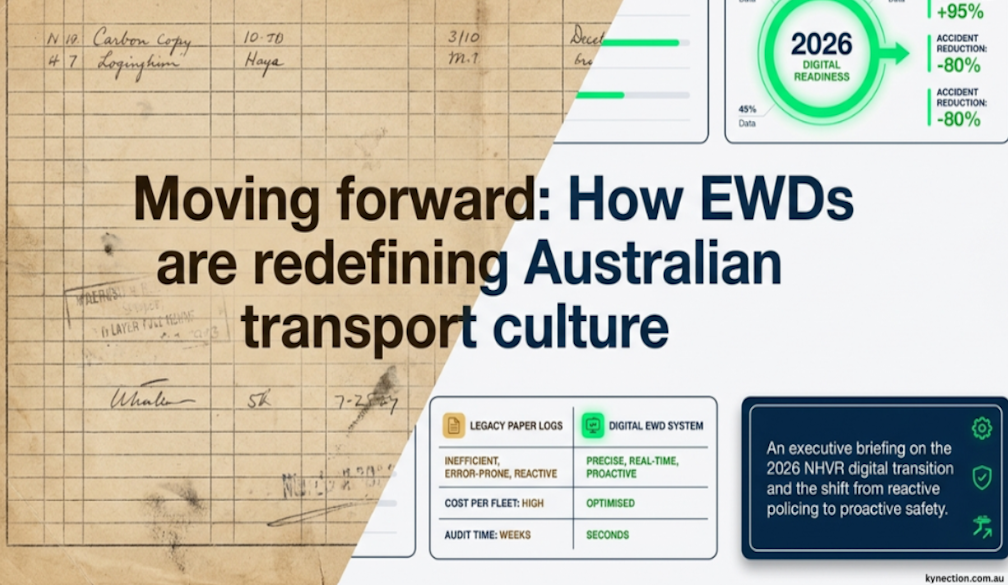
For decades, the Australian heavy vehicle sector was defined by the written work diary. This carbon-copy, paper-based ritual was as much a part of a driver's kit as their ignition keys. It represented an era of manual calculations, roadside anxiety, and the constant threat of heavy fines for simple mathematical errors.
As we move through 2026, the industry's shift toward Electronic Work Diaries is gathering pace, driven by a growing recognition that digital tools offer a safer and more practical alternative to paper-based records. The transition to Electronic Work Diaries (EWDs) is more than a technical upgrade; it is a fundamental cultural shift from reactive policing to proactive safety.
From "Compliance Policing" to Proactive Safety
Historically, fatigue management was viewed through the lens of enforcement. For many, the logbook was a document to be "managed" to avoid penalties during inspections. The administrative burden was immense, requiring manual tracking of 15-minute intervals and cumulative totals across multi-day trips.
NHVR-approved Electronic Work Diary have flipped this narrative. By automating records, they remove the "rounding error" anxiety that once plagued the industry. If a driver inadvertently works minutes into a break, an EWD provides a real-time countdown, alerting them before a breach occurs. This replaces the "mental load" of manual tracking with a digital assistant, allowing the driver to focus on the road while the business gains live visibility of compliance goals.
The End of the "Creative" Logbook
One of the industry’s greatest hurdles has been the legacy of the "creative" logbook. While often done to compensate for loading delays or traffic, 'backfilling' numbers created a culture of hidden risk.
The shift to digital eliminates this temptation. EWDs provide a tamper-evident record, fostering a culture of honesty that elevates the industry's professional status. Technology leaders like Kynection have been instrumental here, integrating EWDs into a broader "one-truth" philosophy. When fatigue data is linked to telematics and payroll, the entire organisation speaks the same language. If a driver is delayed at a dock, the office sees it instantly, allowing for schedule adjustments without pressuring the driver to "make up time" illegally.
Empowering the Modern Driver
This evolution is also a vital recruitment tool. To address the sector's well-documented driver shortage, the industry must shed its 'dinosaur' image. Modern drivers expect technology that mirrors their personal devices. They don't want a ruler and a pen; they want an intuitive app.
Crucially, EWDs provide drivers with autonomy. With a legally recognised digital record, a driver has the evidence to back themselves in discussions with dispatchers or customers. If a delivery window risks a fatigue breach, the data says "no" on the driver's behalf. This shifts the power dynamic, treating the driver as a professional operator rather than a "steering wheel attendant."
Bridging the Generational Gap
The challenge remains ensuring this transition honours the veterans who carried the sector through the paper era. To many, EWDs initially feel like "Big Brother." Successful cultural change requires empathy, not just mandates. This means:
- Support, Not Surveillance: Framing EWDs as a tool to protect a driver’s licence and livelihood.
- Intuitive Tools: Ensuring software is as simple to use as a banking app.
- People-First Logic: When a veteran driver realises they get home 20 minutes earlier because they aren't stuck doing paperwork in the cab, the culture changes itself.
In 2026, a "digital-first" mindset is the benchmark for safety. The paper logbook is fading into history, but the culture of reliability it built is now bolstered by real-time data. The Australian transport industry is no longer just moving goods; it is moving forward, ensuring every driver gets home safe, every single time.