Chef knives: Setting up a home or upgrading, does price equate to quality?
- Written by: The Times
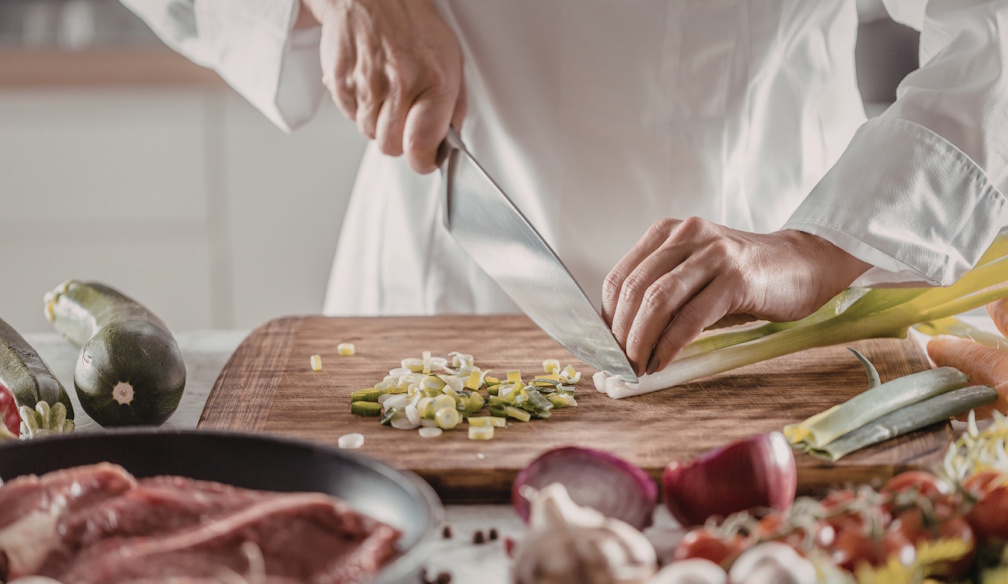
For anyone serious about cooking—whether setting up a first kitchen or upgrading an existing one—the question inevitably arises: how much should you spend on a chef’s knife, and does a higher price actually mean better quality?
The answer, as with most things in the culinary world, is nuanced. Price can reflect quality, but it is not a guarantee. What matters more is how a knife is made, how it performs, and how well it is maintained over time.
The modern kitchen has become a place of both function and identity. And at the centre of it sits the chef’s knife—the single most important tool a cook will own.
Famous brands and what they represent
The global knife market is dominated by a mix of heritage manufacturers and modern innovators. Brands such as Wüsthof and Zwilling J.A. Henckels are synonymous with traditional European craftsmanship. Their knives are typically forged, heavier in hand, and designed for durability and versatility.
From Japan, brands like Shun and Global offer a different philosophy—lighter blades, sharper edges, and a focus on precision. Japanese knives are often made with harder steel, allowing for finer edges but requiring more careful handling.
At the premium end, names such as Miyabi blend traditional Japanese techniques with modern engineering, producing knives that are as much works of art as they are tools.
Yet beyond branding, what matters is how the knife performs in your hand. A mid-range knife that suits your grip and cutting style will always outperform an expensive one that does not.
Why quality matters
A quality chef’s knife is not just about prestige—it directly affects performance, efficiency and enjoyment in the kitchen.
First, there is sharpness. A well-made knife holds its edge longer and cuts more cleanly. This reduces effort, improves precision and minimises damage to ingredients. Anyone who has sliced a tomato with a truly sharp knife understands the difference immediately.
Second, there is balance. A properly balanced knife feels stable and controlled, reducing fatigue during extended use. This is particularly important for home cooks who are preparing meals regularly rather than occasionally.
Third, there is durability. High-quality steel resists corrosion, chipping and warping. While cheaper knives may perform adequately at first, they often degrade quickly, requiring more frequent replacement.
In this sense, quality is not just a matter of performance—it is an investment in consistency.
Can a chef knife outlast the buyer?
The short answer is yes.
A well-made chef’s knife, properly maintained, can last decades—often outliving its original owner. There are professional kitchens around the world where knives have been passed down through generations.
The key factors are material and maintenance. High-carbon or high-quality stainless steel blades, when cared for correctly, retain their structural integrity over time. Handles, whether wood or composite, can also endure with proper care.
Maintenance includes regular honing, periodic sharpening, and appropriate storage. Knives should not be left loose in drawers, exposed to moisture, or used on hard surfaces that damage the edge.
In this context, a premium knife is less a purchase and more an heirloom.
Are quality knives safer?
It may seem counterintuitive, but sharper, higher-quality knives are generally safer than dull or poorly made ones.
A sharp knife requires less force to cut. This means greater control and a lower likelihood of slipping. Dull knives, by contrast, often require more pressure, increasing the risk of losing control and causing injury.
Quality knives also offer better ergonomics. Handles are designed to fit comfortably in the hand, reducing strain and improving grip. This contributes to safer, more controlled cutting.
However, safety ultimately depends on technique. Even the best knife can be dangerous if used improperly. Investing in quality should be accompanied by learning proper handling and cutting methods.
What type of cooking knives should every home have
While the market offers an overwhelming array of specialised knives, most home kitchens only need a core set.
The chef’s knife is the foundation. Typically 20cm in length, it handles the majority of tasks—chopping vegetables, slicing meat, and general preparation.
A paring knife is essential for smaller, more precise work such as peeling and trimming.
A serrated bread knife is necessary for cutting through crusty loaves and delicate items like tomatoes without crushing them.
Beyond these three, additional knives depend on cooking style. A boning knife may be useful for those who prepare meat regularly, while a santoku knife—popular in Japanese cuisine—offers an alternative to the traditional chef’s knife with a slightly different cutting profile.
The key is not quantity but quality. A small set of well-chosen knives will outperform a large block of mediocre ones.
Who should sharpen your knives
Sharpening is where many home cooks fall short. Even the best knife will lose its edge over time, and proper sharpening is essential to maintain performance.
There are three main approaches.
Professional sharpening services offer the highest level of precision. These are often available through specialty kitchen stores or dedicated sharpening businesses. For high-end knives, particularly those with harder steel, professional sharpening is recommended.
At-home sharpening using whetstones provides excellent results but requires skill and practice. It allows for precise control over the angle and finish of the edge, making it popular among enthusiasts.
Mechanical sharpeners offer convenience but can be less precise and, in some cases, remove more material than necessary. They are suitable for everyday knives but less ideal for premium blades.
Regular honing—using a honing rod—should also be part of routine maintenance. Honing does not sharpen the knife but realigns the edge, helping to maintain performance between sharpenings.
Honing and sharpening are often used interchangeably, but they are technically very different processes with distinct purposes.
Honing: realigning the edge
Honing is about maintenance, not material removal.
When you use a knife, the very fine edge—the cutting apex—does not immediately become “blunt” in the sense of being worn away. Instead, it tends to bend or roll slightly to one side due to contact with cutting boards and food.
Honing uses a rod (often steel or ceramic) to straighten that edge back into alignment.
Key points about honing:
-
It does not remove significant metal from the blade
-
It restores cutting performance temporarily
-
It should be done frequently (even every few uses for regular cooking)
-
It is quick—usually takes less than a minute
A properly honed knife will feel sharper because the edge is once again straight and able to cut cleanly.
Sharpening: recreating the edge
Sharpening is a corrective process that actually reshapes the blade.
Over time, the edge wears down—microscopic amounts of steel are lost, and the knife becomes truly dull. Honing cannot fix this. Sharpening removes material to create a new, sharp edge.
This is done using tools such as whetstones, sharpening systems, or professional grinding equipment.
Key points about sharpening:
-
It removes metal from the blade
-
It restores a worn or damaged edge
-
It is done less frequently (every few months to annually depending on use)
-
It requires more skill or professional assistance
Think of sharpening as rebuilding the edge from scratch, while honing is simply keeping that edge in proper alignment.
The practical difference
A simple way to understand it:
-
If your knife has gradually lost performance but still cuts with some effort → it likely needs honing
-
If honing no longer improves performance → it needs sharpening
Why both matter
Regular honing extends the time between sharpenings. If you hone consistently, you preserve the edge and reduce how often metal needs to be removed.
Without honing, the edge degrades faster, and you will need to sharpen more often—shortening the lifespan of the knife over time.
In professional kitchens, knives are honed daily and sharpened periodically. That same approach works well at home.
In summary
Honing keeps a knife performing well day-to-day by straightening the edge. Sharpening restores a knife that has become genuinely dull by removing material and creating a new edge.
Both are essential—but they serve very different roles in maintaining a quality knife.
Does price equate to quality?
Price often reflects quality—but only up to a point.
Beyond a certain level, additional cost may relate more to craftsmanship, materials, and aesthetics than to functional improvement. A $300 knife may perform noticeably better than a $50 one, but the difference between a $300 knife and a $1,000 knife is often more subtle.
For most home cooks, the optimal range lies in the mid to upper tier—where quality materials and construction are present without excessive cost.
The most important factor is fit. A knife should feel comfortable, balanced and intuitive in your hand. This cannot be determined by price alone.
Conclusion
Chef knives sit at the intersection of utility and craftsmanship. They are tools, but they are also expressions of how we cook and what we value in the kitchen.
Quality matters—not for prestige, but for performance, safety and longevity. A well-chosen knife can transform the cooking experience, making it more efficient, more precise and more enjoyable.
Price can be an indicator, but it is not the final word. The best knife is the one that suits your hand, your style and your needs—and one that, with proper care, may well outlast you.