For Most Australians the Queensland Floods Are a News Item. For North Queenslanders It Is Reality
- Written by: The Times
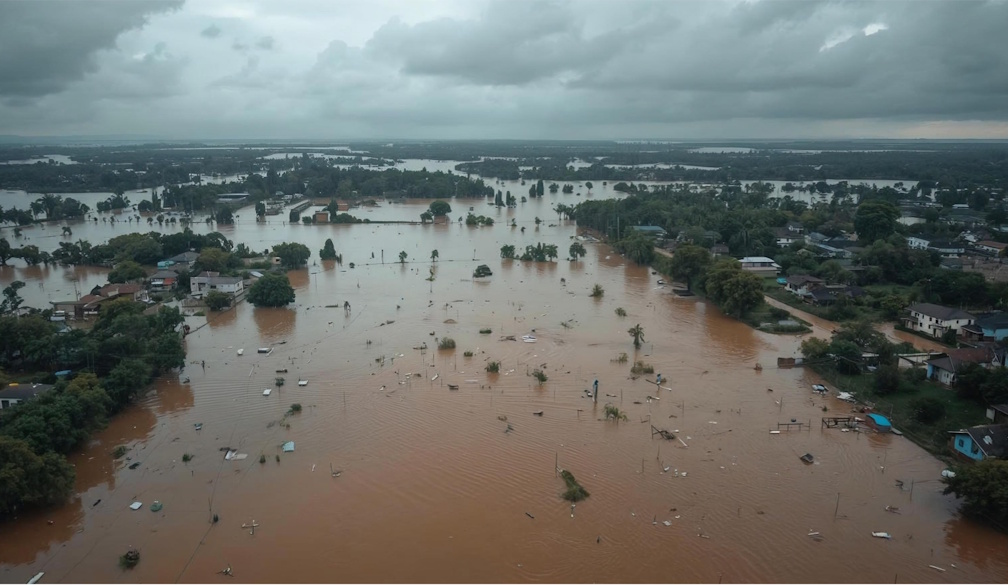
For most Australians, the Queensland floods arrive in short, sharp bursts — a breaking-news alert, aerial footage on the evening bulletin, a scrolling headline that disappears within days. For North Queenslanders, floods are not an interruption to normal life. They are normal life.
They are not experienced through screens or statistics, but through soaked carpets, spoiled fridges, closed highways, school bags left untouched, and the constant calculation of risk: Can we get to work tomorrow? Will the river peak tonight? Do we evacuate now, or wait one more hour?
This is the reality north of the Tropic of Capricorn — in places like Townsville, Cairns, Ingham and across the Burdekin, Herbert and Cape York regions — where water does not politely recede once the cameras leave.
Flooding Is Not an Event — It’s a Season
In North Queensland, the wet season shapes life as surely as winter shapes Melbourne or summer defines Sydney. Between December and March, cyclones, monsoonal rain and swollen catchments are not exceptions — they are expected.
Homes are built higher. Families own generators as routinely as barbecues. Evacuation routes are memorised like school addresses. Children grow up knowing the colour-coded river gauges before they learn multiplication tables.
Yet when the rain arrives in force, expectation does not soften impact.
For those on floodplains, the first sign is often not rain, but silence — the quiet when highways close, freight stops moving, and communities become islands. When the Bruce Highway is cut, or when feeder roads disappear under brown water, the consequences ripple instantly: supermarkets ration bread, fuel becomes scarce, medical appointments are postponed, and businesses simply shut their doors.
The Emotional Toll: Living With Permanent Uncertainty
The financial cost of flooding is often tallied in billions. The emotional cost is harder to measure — but it is no less real.
North Queenslanders live with a quiet, constant vigilance. Rain is not relaxing. It is interrogated. Every downpour prompts a check of radar apps, river heights, Facebook community pages, and SES alerts.
Parents weigh whether to send children to school. Business owners wonder if opening the doors is worth the risk. Elderly residents worry about evacuation timing, power outages, and isolation.
There is also the cumulative exhaustion — the sense that recovery never fully finishes before the next wet season begins. Insurance claims drag on. Repairs are delayed by shortages of tradespeople. Mould returns. Savings vanish.
For some families, floods don’t just damage houses — they reset lives.
Regional Australia Carries the Burden Quietly
While major cities move on after the headlines fade, North Queensland absorbs long-term disruption with little fanfare.
Farmers lose crops not just for a season, but sometimes for years, as soil structure is damaged and infrastructure destroyed. Small tourism operators — lifeblood businesses in the tropics — face cancellations long after the skies clear. Backpackers don’t arrive. Grey nomads change routes. Charter boats sit idle.
Local councils stretch limited budgets to repair roads that will almost certainly flood again. Volunteers from the SES, rural fire services and community groups turn out repeatedly, often while their own homes are at risk.
There is resilience here — but resilience should not be mistaken for immunity.
Why the Disconnect Persists
For Australians in capital cities, floods are episodic spectacles. For North Queenslanders, they are systemic.
Part of the disconnect lies in geography. Most Australians live far from flood-prone tropical systems. Another part lies in media cycles that prioritise immediacy over aftermath. Recovery does not rate the same attention as helicopters rescuing families from rooftops.
There is also a national habit of underestimating regional Australia — assuming that because people choose to live in the north, they accept all consequences without complaint or support.
But choosing to live, work and raise families in North Queensland should not mean accepting repeated disaster as an individual responsibility rather than a shared national challenge.
Adaptation Is Happening — But It Has Limits
Communities are adapting. Homes are raised. Drainage is improved. Councils plan better. Emergency responses are faster and more coordinated than decades ago.
Yet adaptation has limits without sustained investment.
Climate variability, population growth in flood-prone zones, and aging infrastructure are converging. What was once a “one-in-100-year” flood now feels alarmingly frequent.
North Queenslanders understand this reality viscerally — because they live it.
Beyond the Headline
When the next flood alert pings phones in Brisbane, Sydney or Melbourne, it may register as another news item — tragic, but distant.
For North Queenslanders, it is not news.
It is the sound of rain on tin roofs at 2am.
It is the river gauge climbing centimetre by centimetre.
It is the call from a neighbour asking if you need help moving furniture.
It is the knowledge that when the water recedes, the real work begins.
This is not a story about disaster tourism or dramatic footage. It is about Australians living in a region that feeds, fuels and enriches the nation — and doing so while shouldering a burden most of the country only glimpses briefly.
For North Queensland, floods are not a moment.
They are a reality.
Image - File pic