Trump in China: More Than Symbolism. Avoiding Conflict
- Written by: The Times
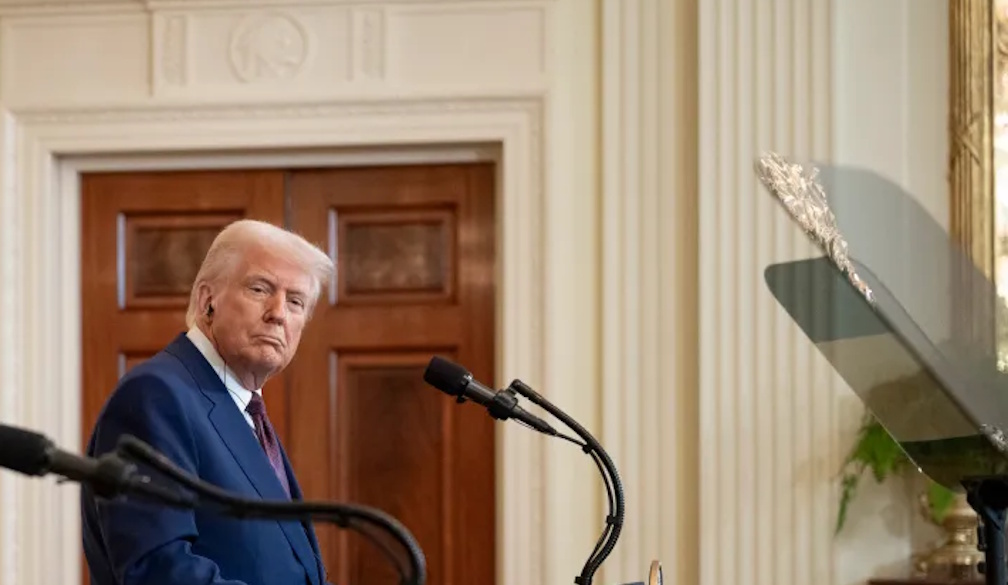
When Donald Trump stepped onto Chinese soil, the world was not merely be watching another diplomatic meeting.
The World is a witness to two superpowers trying to avoid a collision that could reshape the global economy, destabilise Asia and fundamentally alter the lives of billions of people.
For all the headlines, political theatre and personal drama surrounding Donald Trump, the deeper significance of a potential Trump-China engagement is brutally simple: the world’s two largest powers understand the cost of uncontrolled conflict would be catastrophic.
And increasingly, that fear is becoming the real driver behind modern diplomacy.
The World Has Become Nervous
Over recent years, tensions between the United States and China have steadily intensified.
The disputes are no longer limited to tariffs and trade balances.
The conflict now spans:
- military power
- Taiwan
- semiconductors
- artificial intelligence
- rare earth minerals
- cyber warfare
- shipping routes
- global influence
Meanwhile, the world itself has become more unstable.
Wars in Europe.
Conflict in the Middle East.
Global inflation.
Supply chain disruption.
Energy insecurity.
The idea of another major geopolitical confrontation — this time involving America and China — deeply frightens governments, businesses and financial markets.
That is why a Trump-China meeting matters far beyond symbolism.
Avoiding the Unthinkable
Behind closed doors, policymakers across the world increasingly share one overriding goal:
avoid direct conflict between the United States and China.
Because unlike earlier geopolitical rivalries, modern superpower conflict would not remain confined geographically.
The economic consequences alone could be devastating.
Global trade routes would be disrupted.
Financial markets could collapse.
Manufacturing supply chains would fracture.
Energy prices could surge.
Consumer goods could become scarce.
Technology industries would face enormous disruption.
Even countries far removed geographically would suffer economically.
Australia understands this reality particularly well.
Taiwan Remains the Most Dangerous Flashpoint
The issue hovering silently behind every American-Chinese diplomatic interaction is Taiwan.
China regards Taiwan as part of its sovereign territory.
America continues supporting Taiwan strategically and militarily while maintaining deliberate ambiguity regarding direct intervention.
This ambiguity creates tension constantly.
Military planners, investors and governments all understand Taiwan represents one of the most dangerous geopolitical flashpoints on earth.
A diplomatic thaw — even temporary — lowers the immediate temperature surrounding this issue.
That matters enormously.
Because global markets increasingly react not merely to actual conflict, but to fear of conflict.
Trump’s Approach Is Different
Donald Trump approaches foreign policy differently from traditional American leaders.
He tends to view diplomacy transactionally.
Deals.
Leverage.
Personal relationships.
Economic advantage.
This style attracts both strong criticism and strong support.
Critics argue Trump can appear unpredictable and overly personal in diplomatic matters.
Supporters argue he is willing to engage directly with rivals rather than drift toward endless confrontation.
His supporters often point to:
- North Korea talks
- pressure on NATO spending
- Middle East agreements
- trade renegotiations
as examples of unconventional diplomacy producing outcomes.
Whether one agrees or disagrees politically, Trump clearly believes personal engagement between powerful leaders can reduce tensions.
That philosophy may heavily shape any interaction with China.
China Also Wants Stability
Despite strategic rivalry, China itself has strong incentives to avoid direct confrontation.
China’s extraordinary economic rise has depended heavily on:
- trade
- manufacturing
- exports
- stable shipping
- international investment
Conflict threatens all of those foundations.
China also faces internal pressures:
- youth unemployment
- property sector instability
- demographic decline
- slowing growth
- capital outflow concerns
Beijing understands economic confidence matters enormously to long-term national stability.
That creates an important shared interest between Washington and Beijing:
neither side truly wants uncontrolled economic collapse.
The Global Economy Depends on This Relationship
Many ordinary people underestimate how deeply interconnected the American and Chinese economies remain.
Despite rivalry and decoupling efforts:
- trade volumes remain enormous
- manufacturing links remain extensive
- financial exposure remains substantial
- supply chains remain intertwined
Modern globalisation created economic interdependence on a scale never previously seen.
That interdependence now acts simultaneously as:
- a source of vulnerability
- and a deterrent against conflict
Both sides understand the economic damage of escalation could become uncontrollable.
Australia Watches Nervously
Australia sits in an extraordinarily delicate position.
Economically, China remains Australia’s largest trading partner.
Strategically, America remains Australia’s closest defence ally.
That creates a balancing act Canberra must manage carefully.
A worsening US-China confrontation would place enormous pressure on Australia diplomatically, economically and strategically.
Australian businesses understand this well.
Mining companies.
Agricultural exporters.
Universities.
Tourism operators.
Financial markets.
All benefit from regional stability.
That is why any sign of reduced tension between America and China is welcomed cautiously in Australia.
Markets Want Predictability
Global financial markets dislike uncertainty more than almost anything else.
And right now, uncertainty dominates:
- war
- inflation
- interest rates
- energy prices
- shipping security
- political instability
A successful Trump-China engagement could calm markets significantly.
Commodity exporters such as Australia would likely benefit from:
- stronger confidence
- steadier trade expectations
- reduced geopolitical risk premiums
The opposite is also true.
If diplomacy collapsed publicly, markets could react violently.
More Than Politics
One of the most important aspects of modern geopolitics is that major-power diplomacy increasingly affects ordinary households directly.
When tensions rise between America and China:
- fuel prices can rise
- inflation can worsen
- shipping costs increase
- supermarkets feel pressure
- electronics prices climb
- investment confidence weakens
This is no longer abstract foreign policy.
Global tensions now flow directly into household budgets.
That is why avoiding conflict matters far beyond diplomatic circles.
The Shadow of History
There is another uncomfortable reality shaping global thinking:
history contains many examples of rising powers colliding with established powers.
Historians often reference how strategic rivalry, nationalism and miscalculation contributed to earlier global conflicts.
Modern leaders understand these lessons.
That does not guarantee wise decision-making.
But it does explain why diplomacy itself remains so important even between rivals.
Talking is safer than escalation.
Even difficult talks are preferable to silence.
Trump Understands Political Theatre
Trump also understands optics.
A dramatic meeting with Chinese leadership projects:
- strength
- influence
- leadership relevance
- geopolitical significance
For Trump politically, international diplomacy reinforces his image as a global negotiator capable of dealing directly with powerful adversaries.
For China, hosting an American president demonstrates continued global importance and diplomatic legitimacy.
Both sides therefore gain symbolic advantages from engagement itself.
The Real Goal: Controlled Competition
The world increasingly appears headed toward long-term strategic competition between America and China.
But there is a major difference between:
- competition
and - conflict
Modern diplomacy increasingly revolves around managing rivalry without allowing escalation into catastrophe.
That may ultimately become the defining geopolitical challenge of the 21st century.
The Stakes Could Hardly Be Higher
For ordinary Australians watching events unfold from afar, discussions between Washington and Beijing may seem distant.
But the consequences are not distant at all.
The global economy.
Fuel prices.
Trade.
Financial markets.
Technology.
Supply chains.
Defence.
All are affected by the relationship between America and China.
That is why a Trump visit to China matters.
Not because of symbolism alone.
Not because of television headlines.
But because beneath the ceremony lies something far more serious:
two nuclear-armed superpowers attempting to ensure strategic rivalry does not become global disaster.
And in an increasingly unstable world, avoiding conflict may itself become the most important diplomatic achievement of all.