Middle Australia Is Starting to Feel Poor
- Written by: The Times
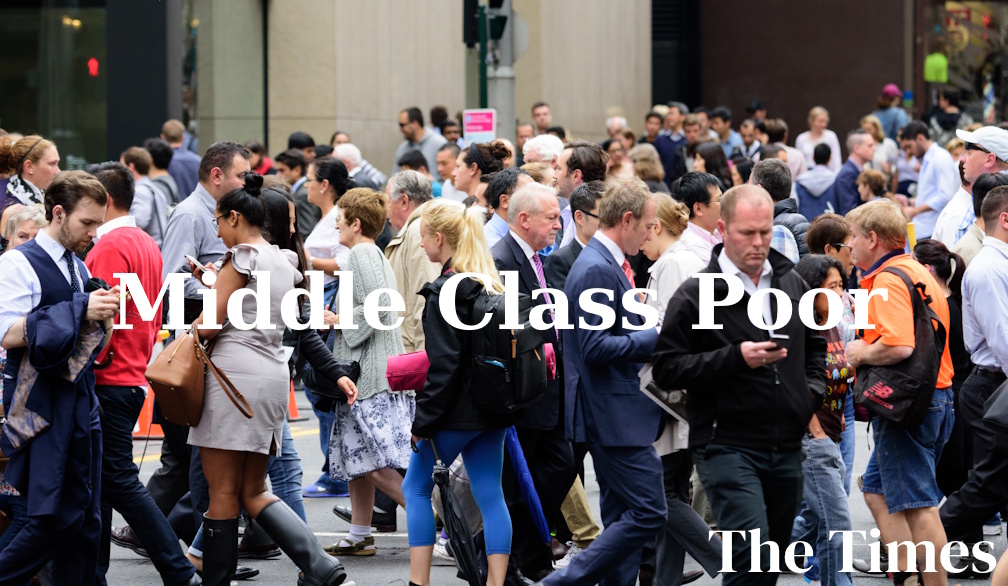
For generations, “middle Australia” represented stability.
A home.
Reliable employment.
A family holiday each year.
A reliable car in the driveway.
Some savings in the bank.
The belief that hard work would gradually improve life over time.
Now an increasing number of Australians say something has changed.
Not dramatically overnight.
But slowly.
Quietly.
Persistently.
Many middle-income Australians are beginning to feel something they never expected to feel:
financially vulnerable.
Not poor in the traditional sense.
But no longer financially secure either.
And that shift may be one of the most important social and political changes occurring in modern Australia.
The New Financial Anxiety
Across suburban Australia, households that once considered themselves comfortably middle class are increasingly living with constant financial tension.
Mortgage repayments have surged.
Insurance costs have climbed sharply.
Electricity bills remain elevated.
Groceries feel noticeably more expensive.
Council rates continue rising.
School expenses keep growing.
Families still work.
Often harder than ever.
But many now describe the same feeling:
the sense that despite earning reasonable incomes, they are struggling to get ahead.
Two Incomes, One Pressure Point
One of the defining features of modern Australia is that many households now require two full-time incomes simply to maintain what was once considered a standard middle-class lifestyle.
Decades ago, many families:
- purchased homes on single incomes
- raised children with one parent at home
- paid off mortgages earlier
- accumulated savings more steadily
That economic model has changed dramatically.
Today:
- both parents often work
- childcare becomes essential
- commuting costs increase
- stress levels rise
- household logistics become more complicated
Yet despite dual incomes, many families still feel financially stretched.
That reality is reshaping how Australians think about success, work and security.
Mortgage Stress Has Moved Up the Income Ladder
Mortgage stress is no longer confined to lower-income households.
Professionals, managers, tradespeople and small business owners increasingly report pressure from higher repayments.
Some Australians bought homes when interest rates were historically low.
Then rates rose sharply.
What once felt manageable suddenly became difficult.
Families adjusted quickly:
- fewer restaurant meals
- cancelled holidays
- reduced discretionary spending
- delayed renovations
- postponed vehicle upgrades
Many households are still coping.
But coping is not the same as thriving.
Australians Are Quietly Cutting Back
One of the clearest signs of financial pressure is behavioural change.
Australians are quietly modifying their lifestyles in subtle but important ways.
Families report:
- cooking at home more often
- reducing takeaway spending
- cancelling subscriptions
- delaying appliance replacement
- buying fewer premium products
- driving less
- avoiding large purchases
These changes often occur gradually.
But collectively they reveal a broader shift in national confidence.
The Psychological Shift Matters
Perhaps the biggest change is emotional rather than financial.
Australians increasingly fear unexpected expenses.
A car breakdown.
A major dental bill.
An insurance renewal.
A failed refrigerator.
A rate rise.
A rent increase.
Many households that once felt resilient now feel exposed.
That anxiety changes consumer behaviour profoundly.
People become:
- more cautious
- less optimistic
- slower to spend
- reluctant to take risks
This affects the entire economy.
Young Australians See a Different Future
For younger Australians, the middle-class pathway once taken for granted increasingly appears uncertain.
Home ownership feels distant for many.
Rent consumes enormous portions of income.
Saving deposits takes years.
Some young workers now openly question whether the traditional Australian dream still exists.
Many rely on family assistance to enter the property market.
Others delay:
- marriage
- children
- major purchases
- career changes
The economic ladder still exists.
But many believe it has become far steeper.
Retirees Are Also Feeling the Pressure
Older Australians are not immune either.
Retirees increasingly worry about:
- inflation eroding savings
- healthcare costs
- insurance premiums
- energy bills
- aged care expenses
Even households that own homes outright sometimes feel financially insecure due to rising living costs.
The result is a nation where financial anxiety increasingly crosses generations.
Why Australians Feel Worse Even While Employment Remains Strong
One of the paradoxes of the modern economy is that unemployment remains relatively low while financial stress remains widespread.
Australians are working.
But many still feel poorer.
Several factors contribute:
- high housing costs
- large household debt
- inflation
- taxation
- insurance increases
- service charges
- rising government fees
Many households now spend enormous portions of income simply maintaining existing living standards.
That leaves less room for savings, leisure or financial confidence.
The Cost of “Normal Life” Has Changed
Many Australians increasingly feel ordinary life itself has become expensive.
Not luxury.
Normality.
Owning a home.
Running two cars.
Raising children.
Paying school expenses.
Maintaining insurance.
Taking a modest holiday.
The cumulative cost of ordinary middle-class life now shocks many households.
Businesses Are Seeing the Shift Too
Retailers, restaurants and service businesses increasingly report consumers behaving more cautiously.
Australians still spend money.
But spending has become more selective.
Consumers hunt for discounts.
Delay purchases.
Reduce discretionary spending.
Businesses increasingly compete not merely on quality, but on affordability and perceived value.
Is This Temporary or Permanent?
That is the question quietly hanging over Australia’s economy.
Some economists argue conditions will improve if:
- inflation moderates
- interest rates eventually decline
- wages continue rising
Others believe Australia is entering a longer-term period where:
- housing remains expensive
- energy costs stay elevated
- insurance becomes permanently costlier
- governments collect higher revenue
- living standards plateau
If so, middle Australia may need to permanently adjust expectations.
Politics Will Follow the Mood
This growing financial insecurity is reshaping politics.
Australians increasingly vote not only on ideology, but on economic survival.
Cost-of-living pressures now dominate political debate.
Housing.
Fuel.
Food.
Insurance.
Energy.
Healthcare.
The emotional mood of the country increasingly revolves around affordability and security.
Governments that fail to understand this risk serious electoral consequences.
The Australian Dream Has Not Died — But It Has Changed
Australia remains one of the wealthiest countries in the world.
Many households still enjoy high living standards.
But something important has shifted psychologically.
The old assumption that each generation would automatically become more prosperous than the last no longer feels guaranteed.
That uncertainty is deeply unsettling because it challenges one of Australia’s core national beliefs:
that hard work eventually produces stability and opportunity.
For an increasing number of Australians, that promise now feels less certain than it once did.
And that may explain why middle Australia — despite still working, still earning and still striving — increasingly feels poor.