Albanese government will commit to boosting defence spending to 3% of GDP, but under a revised definition
- Written by: Michelle Grattan, Professorial Fellow, University of Canberra
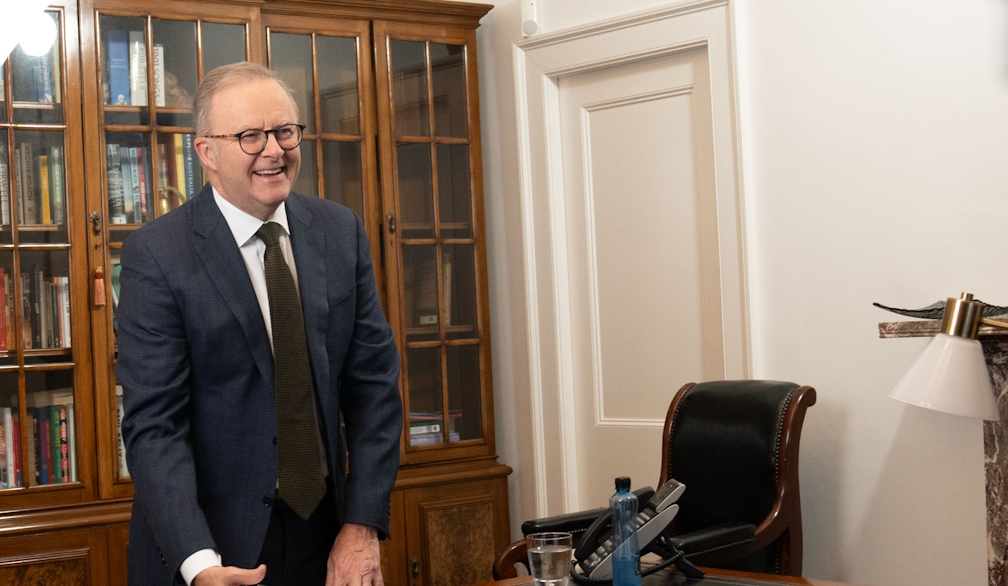
The Albanese government will increase defence spending to about 3% of GDP by 2033 in its 2026 National Defence Strategy to be unveiled on Thursday.
But it is using a revised definition that, in effect, makes the defence spend appear larger than it is.
The Trump administration has repeatedly made it clear[1] Australia should boost its defence spending. Last year, a top Pentagon official, Elbridge Colby, cited[2] the 3% figure in pushing for Australia to spend more.
The Coalition at the last election committed[3] to increase spending to 3%. Defence spending presently is around 2% of GDP and was headed to about 2.3%-2.4% by 2034 under the narrower definition.
Read more: Should Australia increase its defence spending? We asked 5 experts[4]
Defence Minister Richard Marles is due to release the 2026 National Defence Strategy and Integrated Investment Program on Thursday. He will announce the government will invest an extra A$14 billion in defence over the next four years and an extra $53 billion over the next decade. This is above the trajectory set out in the 2024 National Defence Strategy[5].
The government says the 3% of GDP defence spending figure is “in NATO terms”. NATO’s definition of defence spending can include some tangential items.
At last year’s NATO Summit, the members pledged to boost[6] their defence spending commitment to 5% of GDP by 2035, with 3.5% allocated specifically to “core defence requirements”. The other 1.5% is committed to other investments, some loosely tied to defence[7].
Under the NATO definition, Australia is already spending about 2.8% of GDP on defence.
In the spending increase, total funding across the defence portfolio will be $887 billion through to 2035-36. Of this, about $425 billion will be allocated to capabilities, up from $330 billion in the 2024 program.
“We are now seeing the biggest peacetime increase in defence spending in our nation’s history,” Marles will say on Thursday.
“Australia faces its most complex and threatening strategic circumstances since the end of World War II.
"International norms that once constrained the use of force and military coercion continue to erode. More countries are engaged in conflict today than at any time since the end of World War II, and this is occurring across every region of the world,” he will say.
“In the face of this, the Albanese government is pursuing every avenue of increasing defence capability quickly: mostly through bigger defence appropriations but also through accessing private capital.”
Additional funding in the 2026 program includes new and increased investment in capabilities to improve the Australian Defence Force’s ability to deter and respond to current and emerging threats. This includes spending between $12-15 billion on drones and counter-drone systems[8] over the next decade.
There will also be investment in the longer term to build more self-reliance.
Marles will say the 2026 National Defence Strategy “reflects a clear-eyed assessment of a more dangerous and uncertain world – and a confident response to it.
"It puts Australia on a path to strengthen our defence self-reliance. It reinforces the industrial and national foundations of defence. And it situates Australia firmly within a network of trusted regional and global partnerships.
"Above all, it ensures Australia remains secure, sovereign and ready – not just for today’s challenges, but for the decade ahead.”
References
- ^ repeatedly made it clear (www.afr.com)
- ^ cited (www.defenceconnect.com.au)
- ^ committed (www.theguardian.com)
- ^ Should Australia increase its defence spending? We asked 5 experts (theconversation.com)
- ^ 2024 National Defence Strategy (www.defence.gov.au)
- ^ pledged to boost (www.nato.int)
- ^ loosely tied to defence (www.bbc.com)
- ^ drones and counter-drone systems (theconversation.com)