Why surging oil prices are a shock for the global economy – but not yet a crisis
- Written by: Stella Huangfu, Associate Professor, School of Economics, University of Sydney
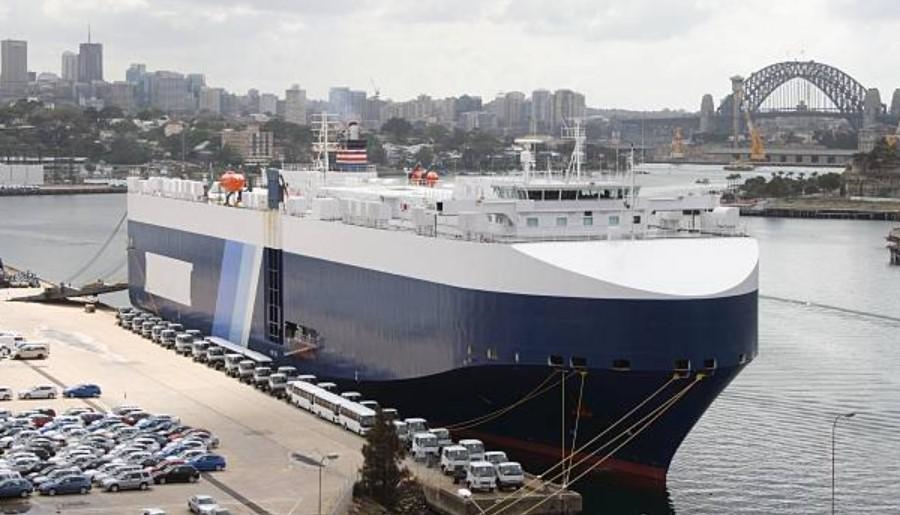
Global oil markets have reacted swiftly to escalating tensions in the Middle East as the United States and Israel continue their assault on Iran.
After oil tanker traffic through a key chokepoint, the Strait of Hormuz, stopped, the benchmark oil price[1], Brent crude, jumped about 6% to over US$77 a barrel. It initially spiked as high as US$82, its highest level since January 2025.
A roughly US$10 jump in a matter of days is a significant move and delivers an immediate inflationary jolt for oil-importing economies.
What does this mean for households, businesses and central banks?
Why oil still matters
Oil may no longer dominate[2] the global economy as it did in the 1970s, but it remains embedded in modern production.
It feeds directly into petrol prices, diesel, aviation fuel and shipping, and shapes the cost of transporting and producing everything from food to manufactured goods. When oil prices rise quickly, the effects spread beyond energy markets.
Economists call this a “negative supply shock[3]”: the result is production becomes more expensive. Companies can absorb higher costs or pass them on to consumers. In practice, they usually do both.
The result is an uncomfortable mix of higher inflation and slower economic growth.
The inflation impact will weigh on central banks
The most immediate effect is at the petrol pump. Higher crude prices lift fuel costs and push up headline inflation. For households already facing cost-of-living pressures, that can be felt quickly.
For example, when the price of oil goes up by $10 a barrel, the rough rule of thumb is that the price of gasoline for US drivers could rise by about 25 cents a gallon[4]. Elsewhere, such as Australia, it’s estimated at around 10 cents a litre[5] more for every US$10 rise.
Transport and logistics costs also increase, and some of those higher costs filter into the broader price level over time.
How much inflation rises depends how long the disruption to oil markets lasts. A brief spike[6] might add only a few tenths of a percentage point to inflation. A sustained increase[7] would be more problematic.
Central banks are watching closely. Inflation in the US[8] and Europe[9] has eased from post-pandemic peaks. In Australia, inflation has fallen from its pandemic highs, but recent data show renewed upward pressure[10]. Reflecting those concerns, the Reserve Bank of Australia raised the official cash rate[11] in February.
An oil shock could weaken global growth
Higher fuel costs risk adding fresh momentum to inflation now, arriving at precisely the wrong time, just as policymakers at the US Federal Reserve and the European Central Bank were hoping it was coming under control.
In one of the first comments from a central banker on the economic impact of the conflict, the Reserve Bank of Australia’s governor today noted the supply shock could add to inflation pressures[12].
However, Governor Michele Bullock also warned that a prolonged impact on energy markets
could have adverse effects on global economic activity and result in downward pressure on inflation. It is not obvious how this might play out.
Oil-driven inflation is particularly challenging for central banks. Raising interest rates cannot affect the supply of oil. Unlike demand-driven inflation – where strong consumer spending can be cooled by higher interest rates – supply-driven inflation reflects higher production costs.
If central banks lift rates to contain prices, they risk slowing growth further. But the interest rate rises cannot directly lower oil prices.
Pressure on household budgets
Higher oil prices also squeeze household budgets.
When families spend more on fuel, they have less to spend elsewhere. Since household consumption typically accounts for around 60% of the economy[13] in advanced economies, even modest shifts in spending can matter.
Businesses face similar pressure. Higher energy and transport costs reduce profit margins and can delay hiring or investment.
The effects vary by country. Europe is a major net energy importer. While Australia exports coal and gas, it relies heavily on imported oil[14] and refined fuel. That leaves both economies exposed to higher global oil prices.
The United States is more mixed: higher prices support its energy sector[15], but still lift costs for most households.
The current jump in the oil price is not enough to trigger a global recession. But it adds another headwind as global growth moderates.
How does this compare with 2022?
The obvious comparison is the oil price surge following Russia’s invasion of Ukraine in 2022.
Then, crude prices briefly climbed[16] above US$120 a barrel, intensifying already high inflation. In response, the US Federal Reserve hiked rates rapidly[17] to rein in inflation.
Today’s situation is less extreme. Prices are well below those peaks, global demand is softer, and interest rates in the United States, Europe and Australia are several percentage points higher than they were in early 2022. Inflation has been trending down in most major economies.
Still, households may be more sensitive now. After years of rising prices and higher interest rates, consumer confidence is fragile. Even moderate increases in petrol prices can influence spending.
The key question is whether this is temporary, or the start of a sustained climb.
What if prices rise further?
If oil prices continue moving higher – especially toward US$100 a barrel – the risks would increase.
Inflation would be pushed higher. Central banks could face an uncomfortable choice: tolerate higher energy-driven inflation or keep interest rates higher for longer.
Financial markets would adjust quickly, and volatility could rise.
The most serious scenario would involve supply disruptions[18] that constrain global output, increasing the risk of slower growth combined with persistent inflation.
A shock, but not yet a crisis
For now, the 6% jump in oil prices represents a clear inflationary impulse and a moderate drag on growth. It complicates the outlook, but does not resemble past energy crises.
What matters most is persistence. If prices stabilise, the impact should be manageable. If they continue to climb, oil could again become a central driver of global inflation – and a renewed challenge for central banks.
Read more: The oil price surge is just one symptom of a supply chain network that is not fit for this age of global tensions[19]
References
- ^ benchmark oil price (www.bloomberg.com)
- ^ no longer dominate (theconversation.com)
- ^ supply shock (www.investopedia.com)
- ^ about 25 cents a gallon (www.economist.com)
- ^ 10 cents a litre (media.licdn.com)
- ^ brief spike (www.eia.gov)
- ^ sustained increase (www.abc.net.au)
- ^ in the US (tradingeconomics.com)
- ^ Europe (tradingeconomics.com)
- ^ upward pressure (www.abs.gov.au)
- ^ raised the official cash rate (theconversation.com)
- ^ could add to inflation pressures (www.abc.net.au)
- ^ around 60% of the economy (data-explorer.oecd.org)
- ^ relies heavily on imported oil (www.abc.net.au)
- ^ support its energy sector (www.scotiabank.com)
- ^ briefly climbed (www.cnbc.com)
- ^ hiked rates rapidly (fred.stlouisfed.org)
- ^ supply disruptions (theconversation.com)
- ^ The oil price surge is just one symptom of a supply chain network that is not fit for this age of global tensions (theconversation.com)