


Human Rights Day: The Right to Shelter Isn’t Optional
- Written by: Tony Clark
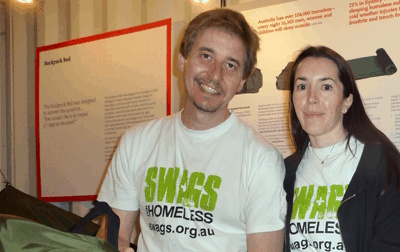
It is World Human Rights Day this week. Across Australia, politicians read declarations and claim their dedication to dignity and welfare. I say, stop talking, and start looking at our streets – where children walk and see the danger they may face later in life.
The truth is, Australia is failing the most basic Human Rights test every single night. We are living in a national moral paradox. Australia helped write and are legally committed to the Universal Declaration of Human Rights – which guarantees the rights to dignity, shelter, and health – yet it simultaneously allows tens of thousands of our citizens to sleep in what I call a permanent disaster zone; our streets.
We are all proud to see politicians rush to the camera during a natural disaster whereby housed Australians suddenly lose their homes. To ensure this, legislation was deliberately made whereby it is technically illegal for an Australian to sleep without shelter in a disaster zone. Heaven help any politician caught ignoring a suffering constituent during a flood or fire. Political millions appear out of nowhere to help our “mates”.
Yet, when it comes to homelessness, this urgency vanishes. It’s a medical fact that people are not designed to sleep on the street all year round without shelter. They can die. Hence, it is no surprise that an unsheltered homeless Australian will die, on average, at the age of 46 – a staggering 30 years before the average Australian. Does this data, which confirms the dangers of street violence, hypothermia, and despair, make politicians rush towards a camera? Nope.
Reality check: If you are one of the many thousands suddenly sleeping on our streets, imagine your despair when you go to your local politician's office – of any level – asking for help. Quicker than you blink, they will give you a phone number and website which many homeless claim are “hope destroyers”. Now imagine doing all you were told, calling every agency, explaining your desperation – only to be told the cruel political lie that they are “at capacity”.
Tonight, when shelters are “at capacity”, thousands of Aussies who can’t afford rent are forced to sleep on our streets, in their cars, and worse. They cannot find a single politician willing to give them anything but newspapers full of rhetoric and claims of building a million houses.
The latest AIHW figures prove this abandonment to Human Rights is a crisis of policy, not just poverty.
The system is buckling: in 2024-25, there were around 129,000 requests for crisis shelter that went completely unassisted. That means over 350 people per day were turned away with nothing.
The cruelest statistic is perhaps that around 60% of these unmet needs were requests for emergency accommodation, and the majority of those asking for help were vulnerable women. The over 1,100 agencies we partner with have to deal with this horrific tide every day, often reporting "No accommodation was available" as the top reason for turning people away.
The government knows they can't build a million houses overnight. So what does a politician do when they know they can’t house you tonight? They have no plan. They provide no alternative. In Australia, if a constituent is turned away from shelter, there is no policy to give them anything. Not a blanket. Not a toothbrush. And certainly not a dignified shelter to protect their human rights.
So why for the last 16 years have politicians ignored the expertise of the CEOs and boards of 1,100 homeless agencies who demand the study-proven, fit-for-purpose, multi-award winning design – the Backpack Bed – for unsheltered Australians sleeping on our streets?
The Backpack Bed is a 2.9kg 135L ergonomic backpack that rolls out in seconds into a three- window, four-season shelter with built-in mattress. All fire retardant. All waterproof. All dignity.
The Backpack Bed is not a welfare handout. It is a meticulously designed piece of equipment ticking all the boxes of what to do when a politician reneges on building a million homes.
An independent study in 2018 shows that every $144 Backpack Bed distributed results in $3,319 in community taxpayer savings in health, justice, and employment costs.
Australia would like to think it’s a clever country. Yet, only in Australia does a national Human Rights Award-winning frontline charity that partners with 1,100 homeless agencies attempting to assist over 129,000 unmet needs for shelter receive no government funding.
On this Human Rights Day, the challenge to our politicians is simple – stop ignoring the obvious. Stop telling us you support dignity while refusing to fund a taxpayer-saving tool that saves the lives and dignity of tens of thousands of unsheltered Australians.
Voters should envision a near future where the Backpack Bed is government funded as a mandatory piece of equipment for any person unsheltered, or released from prison or hospital into homelessness. Just as in a disaster zone, constituents need an absolute minimum standard of care required to uphold human rights in our alleged modern, wealthy nation.
We invite the government to move past their rhetoric, put down the policy papers, and pick up the common sense solution. We’ve done the design, we’ve done the math, and we have the capacity. Now it’s time for politicians to fund the mandate demanded by 10,000’s of experts and users of the Backpack Bed tonight
Tony Clark is the Founder and CEO of Backpack Bed for Homeless.
Twice nominated Australian of the Year. Australian Human Rights Award recipient.










