robot lawn mowerRobot Lawn Mower Buyer’s Guide: How to Choose the Right One
Buying a robot lawn mower isn’t just picking a price point—it’s matching the mower’s navigation and traction to the realities of your yard: slope, tree cover, obstacles, and how much lawn you actually need to maintain.
Below is a practical, criteria-first guide you can use to evaluate any model without getting lost in marketing.
Key Takeaways:
● Start with your yard profile (mowable area, slope, tree cover, and zones). That determines which navigation systems will work.
● Don’t undersize: pick a robot lawn mower rated for 20–30% more area than your actual lawn so it can keep up with growth (a common recommendation in buyer guides and installer advice).
● If your property has steep grades, prioritize traction and slope rating over “smart” features.
● For heavy tree cover, make sure the mower can handle signal dropouts (or uses a navigation method designed for shade).
Step 1: Build your yard profile (this takes 3 minutes)
Before you compare models, write down four facts about your lawn. You’ll eliminate most “not a fit” options immediately.
1) Mowable area (not lot size)
Measure the grass you actually mow—exclude driveways, beds, wooded areas, and steep no-go zones. Then apply a sizing buffer: choose a robot lawn mower rated for at least 20–30% more than that number.
Why it matters: an undersized mower won’t “catch up” after fast growth, storms, or a missed schedule. It just keeps falling behind.
2) Slope and traction trouble spots
Look for:
● long continuous slopes
● transitions (flat-to-slope edges)
● damp shaded areas that stay slick
If your slope is near the limit of what a model claims to handle, assume you’ll need extra traction margin—especially if your grass stays wet in the morning.
3) Tree cover and sky visibility
Stand in your hardest area—under dense trees, beside the house, near tall hedges—and ask: “Will this mower be able to navigate accurately here?”
This matters most for satellite-based navigation approaches (like RTK/GNSS). If your yard has frequent canopy cover, choose a mower designed to stay reliable when signals degrade.
4) Complexity: zones, narrow passages, and obstacles
Complexity is the silent killer of robot mower performance.
Your yard is “complex” if you have:
● multiple separated mowing zones
● narrow corridors between beds
● lots of landscaping features (rocks, roots, irrigation heads)
● frequent layout changes (new beds, new fencing, seasonal objects)
If that’s you, prioritize a robot that supports multi-zone management and robust obstacle handling.
Step 2: Evaluate robot lawn mower navigation (wired vs. wire-free)
The navigation system determines both setup effort and day-to-day reliability.
Boundary wire (traditional)
Best for: smaller/simple lawns where you want a predictable boundary.
Pros
● clear, physical boundary control
● generally stable once installed
Cons
● installation can be time-consuming
● wire can be cut or damaged, which becomes a troubleshooting task
Wire-free navigation (virtual boundaries)
You’ll usually see wire-free robot lawn mower models described with navigation terms like RTK, vision, LiDAR, or “fusion.”
Best for: larger yards, multi-zone layouts, or homeowners who don’t want to bury perimeter wire.
What to watch
● If the system depends heavily on satellite positioning, confirm how it behaves under trees or beside structures.
● If your yard has both open sky and shaded sections, look for hybrid approaches (so the mower can keep working when conditions change).
Step 3: Prioritize slope handling (the make-or-break factor for hilly yards)
If you’re shopping for a robot lawn mower slope solution, don’t stop at the headline slope number.
Check:
● drive type (2WD vs 4WD/AWD)
● tire design and ground clearance
● how the mower handles turns on a slope
● whether it detects wheel slip and corrects course
Practical reality: even strong models can struggle when the grass is wet, the slope is uneven, or the soil is soft.
Step 4: Safety and obstacle avoidance (especially with kids, pets, and landscaping)
Obstacle handling isn’t just about “not getting stuck.” It’s also about protecting:
● toys and hoses
● irrigation heads
● decorative rocks
● pets that wander into the yard
Look for:
● lift/tilt sensors that stop blades immediately
● reliable obstacle detection (camera/vision or other sensing)
● configurable no-go zones
Step 5: Coverage, runtime, and what “large yard” really means
A robot lawn mower for large yard use should be judged by the outcome: can it maintain your lawn on schedule, week after week?
A few practical checks:
● Can it resume effectively after charging?
● Does it support multi-zone scheduling (not just one continuous area)?
● Does it keep consistent cut quality across the whole property—or does it “favor” easy areas?
Tip: Don’t treat maximum area ratings as a guarantee. Use them as a starting point, then size up with the 20–30% buffer.
Step 6: Maintenance and theft protection
Robot mowers reduce mowing labor—but they don’t eliminate maintenance.
Plan for:
● blade changes and deck cleaning
● keeping wheels and sensors clear of debris
● storing the mower properly in extreme weather
If you’re investing in a premium unit, theft protection matters. Look for features like app locking, alarms, tracking, or geofencing options depending on the model.
Red flags (deal-breakers) that cause most bad purchases
If any of these describe your property, be careful:
● Heavy tree canopy everywhere and the model relies primarily on satellite positioning without a strong backup
● Steep slopes plus damp shade where traction loss is frequent
● Disconnected lawn areas that require manual carrying between zones (unless multi-zone is well supported)
● Unrealistic sizing (buying a small mower for a large lawn and hoping it “catches up”)
A wire-free option to consider: GOKO M6
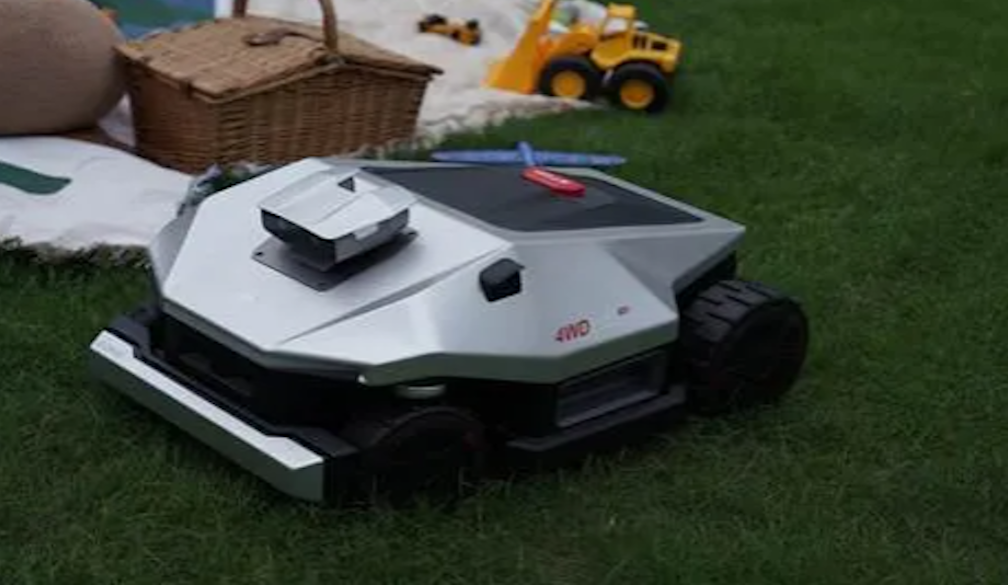
If your yard is large and challenging—think steep slopes, uneven ground, and multiple zones—one wire-free option in this category is the GOKO M6.
It’s positioned as a premium robot mower built around two practical needs that show up on bigger properties:
● Traction for difficult terrain: a 4WD system the brand positions for reducing slip on slopes.
● Navigation designed for real yards: a “fusion” approach (RTK + VSLAM + IMU, per the brand) intended to maintain more stable positioning as conditions change.
The brand also highlights AI vision obstacle avoidance and multi-zone management aimed at larger properties.
If you want to review details and decide whether it fits your slope, tree cover, and acreage requirements, you can start with their robot lawn mower page.
A 5-minute checklist to choose the right robot lawn mower
Use this as your final filter before you buy:
1. Is the mower rated for at least 20–30% more area than your mowable lawn?
2. Do you understand which navigation method it uses—and whether it’s reliable under your tree cover?
3. Does the slope rating and drive system match your steepest sections (with margin for wet grass)?
4. Can it manage your zones and narrow passages without constant rescues?
5. Are safety sensors and obstacle avoidance strong enough for your yard’s reality?
Next steps
Once you’ve nailed your yard profile, comparing models becomes straightforward: you’re no longer shopping for features—you’re shopping for fit.
If you’re deciding between wired vs. wire-free, make the choice based on your property’s complexity and canopy cover, then shortlist models that meet your slope and coverage needs with comfortable margin.