Google AI
The Times Australia

Times Media Advertising

Melbourne Residential Property: Up or Down in 2026?

  • Written by: The Times

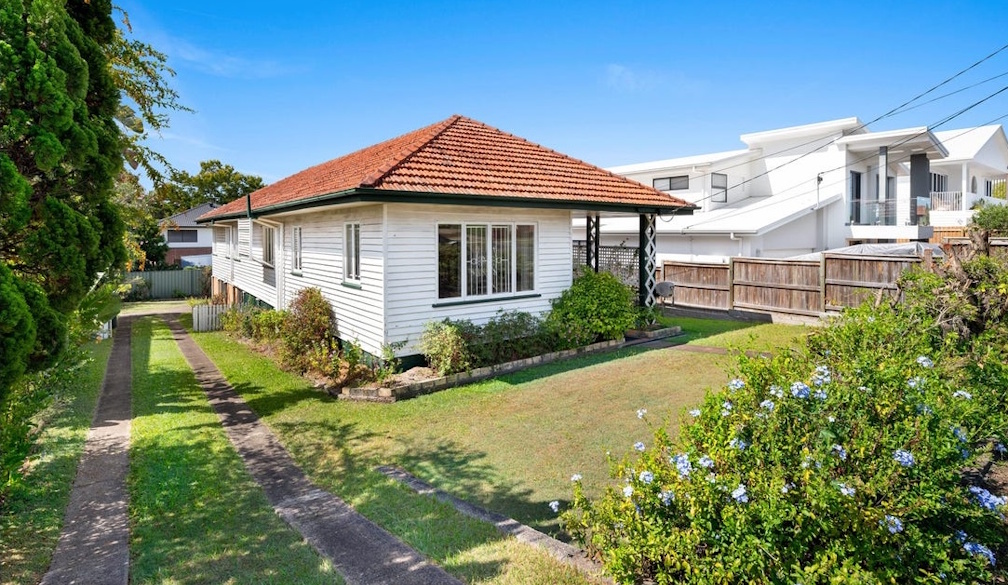
Melbourne’s property market in 2026 is not delivering a simple answer. It is neither booming nor collapsing. Instead, it is operating in what can best be described as a split, cautious recovery — with upward pressure in some segments and clear weakness in others.

For buyers, sellers, and investors, the question is no longer “up or down?”

It is: where, and for whom?

The headline answer: modest growth… with hesitation

Most credible forecasts point to growth in 2026 — but modest, uneven, and fragile.

  • Major banks are forecasting ~2% to 4% growth

  • Broader analyst ranges suggest 3% to 6% increases

  • More optimistic modelling (such as KPMG) points to ~6–7% growth

At the upper end, Melbourne could be one of the stronger performing capitals in 2026 — but only after several softer years.

In short: Up — but not strongly.

Why prices are rising (the “up” case)

Despite the caution, there are solid structural reasons supporting Melbourne property.

1. Population growth and housing shortage

Melbourne remains one of Australia’s fastest-growing cities:

  • Strong overseas migration

  • Continued population expansion

  • Limited new housing supply

This imbalance between demand and supply continues to underpin prices.

Some forecasts suggest median prices could rise meaningfully over the decade, driven largely by this structural shortage .

2. Melbourne is relatively “cheap” again

Melbourne lost its position as Australia’s second-most expensive city in recent years. That matters.

  • Median house prices only recently pushed just over $1 million

  • It now sits below Sydney and, in some cases, Brisbane

This relative affordability is:

  • Attracting first-home buyers

  • Drawing interstate interest

  • Supporting long-term investor confidence

3. The recovery cycle has started

After underperforming other cities, Melbourne is now in a catch-up phase.

Economists often see this pattern:

  • Markets that lag tend to rebound

  • Lower base prices allow stronger percentage growth

That’s why some analysts now describe 2026 as the beginning of a “recovery phase” rather than a peak.

Why prices are under pressure (the “down” case)

At the same time, real weaknesses are visible — and cannot be ignored.

1. Interest rates are biting

Higher borrowing costs are the single biggest constraint.

  • Borrowing capacity is reduced

  • Mortgage stress is rising

  • Buyer confidence is fragile

Nationally, price growth has slowed sharply as rates rise and sentiment weakens .

2. Buyers have gained power

Recent data shows:

  • Many homes selling below asking price

  • Longer days on market

  • Discounts becoming common

In fact, around three-quarters of Melbourne homes are selling below listing price in some datasets .

That is not a boom market — it is a negotiation market.

3. The top end is soft

The market is clearly two-speed:

  • Affordable homes → steady demand

  • High-end properties → slower, weaker sales

Properties above $1 million are taking longer to sell and seeing softer conditions .

4. Investors are cautious

Victoria’s:

  • Land tax settings

  • Regulatory environment

…have reduced investor appetite compared to other states.

That matters because investors are a key driver of price growth — particularly in inner and middle-ring suburbs.

5. Global and economic uncertainty

2026 is not a stable global environment:

  • Fuel shocks

  • International conflict

  • Inflation concerns

Some analysts have even revised forecasts down to 0–3% growth under more pessimistic scenarios .

A two-speed Melbourne market

The most accurate way to describe Melbourne in 2026 is:

A divided market

Performing well:

  • Affordable outer suburbs

  • Family homes under key price thresholds

  • Areas with infrastructure growth

Struggling or flat:

  • High-end properties

  • Some inner-city apartments

  • Oversupplied segments

This divide is likely to widen, not shrink.

What about rents?

While price growth is moderate, the rental market is telling a different story:

  • Severe rental shortages

  • Rising rents

  • Strong tenant demand

This is supporting investor yields — even if capital growth is slower.

The strategic view: what smart players are doing

Serious market participants are not asking “up or down.”

They are asking:

  • Where is demand strongest?

  • Which price brackets are moving?

  • Which suburbs are under-supplied?

And increasingly, they are focusing on:

  • Entry-level housing

  • Growth corridors

  • Renovation or value-add opportunities

Final verdict: up, but not in a straight line

Melbourne residential property in 2026 is:

  • Not crashing

  • Not booming

  • Recovering — cautiously

Expect:

  • Modest price growth overall

  • Ongoing buyer caution

  • Continued volatility between segments

The real takeaway is this:

Melbourne is moving up — but unevenly, slowly, and with clear risks.

The bigger picture

Over the long term, Melbourne remains one of Australia’s most compelling property markets.

But in 2026, it is not a market driven by momentum.

It is a market driven by selectivity, patience, and timing.

And for those who understand that —
this is not a weak market.

It is a thinking market.

The Times Property

Auction Clearance Rates: What Australia’s Property Market Is Trying to Tell Us

Australia’s auction market is sending a strong message in 2026: buyers are cautious, sellers are n...

Property Paralysis: Buyers Hesitate As Australia’s Housing Market Sends Mixed Signals

Australia’s property market may still be active, but beneath the auctions, listings and glossy rea...

The Noise Around the 2026 Federal Budget Does Not Match the Reality for Most Property Investors

Every time the government changes the rules around property investment, the same thing happens. Ph...

Times Magazine

The Human Supplement Craze Has Officially Gone to the Dogs (Literally)

Australians’ appetite for supplements is no longer limited to their own vitamin cabinets. New reta...

AI Guilt: It’s Real — But it is irrational

Artificial intelligence is rapidly becoming one of the most powerful tools ever made available to ...

Australians Are Keeping Their Cars Longer — And It’s Changing The Market

Australia’s car market is undergoing a subtle but important transformation. People are keeping th...

Streaming Fatigue: Australians Overwhelmed By Subscriptions

Streaming was once supposed to simplify entertainment. Instead, many Australians now feel overwhe...

Why Shopping Centres No Longer Feel Exciting

There was a time when going to the shopping centre felt like an event. Families spent entire Satu...

Harry And Meghan: Less Powerful As Royals, More Powerful As Content

For all the claims of “Harry and Meghan fatigue”, the world’s media still cannot stop talking abou...

The Times Features

Nationals move Bill to protect women. Sall Grover inter…

Matt Canavan  All good. Look, well, it's great to be here with my friend and colleague, Alison Pe...

The Human Supplement Craze Has Officially Gone to the D…

Australians’ appetite for supplements is no longer limited to their own vitamin cabinets. New reta...

The Teals: Can They Spoil Australia’s New Attraction to…

Australian politics is shifting again. For years, the dominant national contest revolved around L...

Property Paralysis: Buyers Hesitate As Australia’s Hous…

Australia’s property market may still be active, but beneath the auctions, listings and glossy rea...

The Return Of Practical Luxury: Buyers Want Quality Aga…

For years, consumer culture revolved around speed and abundance. Fast fashion.Fast furniture.Fast...

People Are Going Out Less — And Businesses Know It

Restaurants are full on some nights. Concerts still sell tickets. Sporting events attract crowds. ...

Why Shopping Centres No Longer Feel Exciting

There was a time when going to the shopping centre felt like an event. Families spent entire Satu...

The Liberal Party Faces Its Greatest Question Since Men…

When Robert Menzies founded the Liberal Party of Australia in the aftermath of World War II, Austr...

The Noise Around the 2026 Federal Budget Does Not Match…

Every time the government changes the rules around property investment, the same thing happens. Ph...