SpaceX changed spaceflight. Now China is proving reusable rockets are the new battleground.
- Written by: The Times
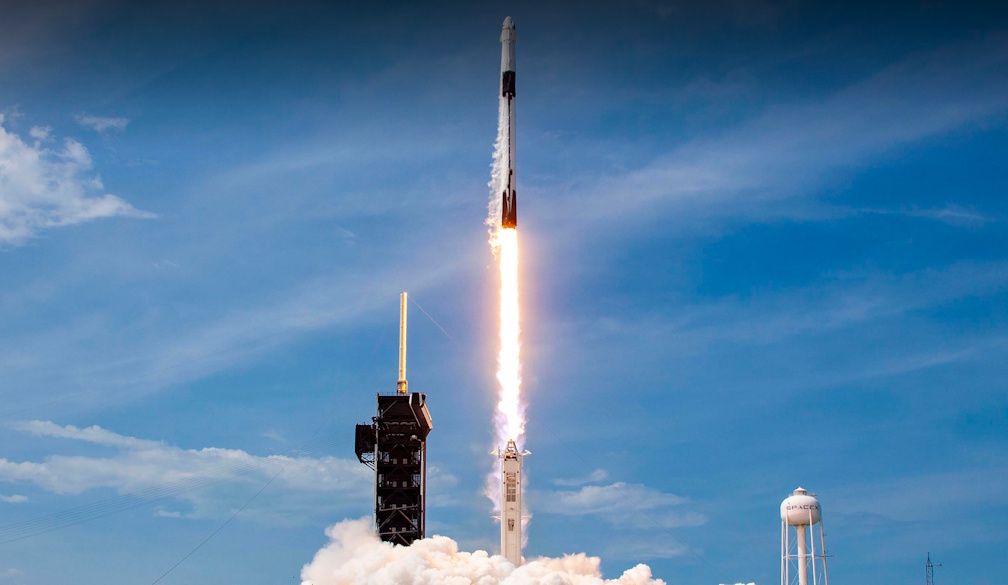
When SpaceX first landed a Falcon 9 booster vertically on a floating drone ship, many experts described it as one of the defining engineering achievements of the modern space age. What had once belonged to science fiction suddenly became routine.
Now China is demonstrating remarkably similar controlled rocket landings as it accelerates development of reusable launch vehicles.
The obvious question is whether China independently developed the technology or whether it benefited from knowledge gained elsewhere.
There is no public evidence proving that Chinese reusable rocket technology resulted from espionage. China possesses world-class universities, highly capable aerospace engineers and decades of experience in missile and launch vehicle design. At the same time, governments and companies around the world have repeatedly accused Chinese organisations of seeking foreign technology through cyber espionage, industrial intelligence and recruitment of overseas expertise. Distinguishing between independent innovation and technology transfer is often difficult.
In reality, successful engineering rarely depends upon a single invention. Once one organisation demonstrates that something is possible, competitors frequently invest heavily to achieve the same result using their own methods.
That has happened throughout history.
The jet engine spread beyond its inventors. Nuclear technology eventually appeared in multiple nations. Commercial aviation, high-speed rail and modern smartphones all evolved through competition after an initial breakthrough.
Reusable rockets are likely following the same path.
Why reusable rockets matter
Traditional rockets are extraordinarily expensive because much of the vehicle is discarded after each launch.
Recovering and flying the same booster multiple times dramatically lowers launch costs, increases launch frequency and makes ambitious missions economically viable.
Lower launch costs mean more satellites, more scientific missions, larger space stations and eventually more commercial activity beyond Earth.
The nation that masters rapid, reliable rocket reuse gains significant economic and strategic advantages.
Beyond commercial space
Reusable launch technology has implications beyond telecommunications and scientific exploration.
Advanced rocket engineering improves manufacturing, materials science, guidance systems, artificial intelligence, autonomous flight control and precision navigation.
Many of these technologies also have military applications.
Although civilian launch vehicles differ from military missile systems, expertise in propulsion, control software and advanced materials strengthens a nation's overall aerospace capability.
This explains why major powers view space technology as an increasingly important element of national security.
What it means for Australia
Australia is not building reusable launch vehicles on the scale of either the United States or China, but it has growing interests in the space economy.
Australian companies participate in satellite manufacturing, launch support, communications, mining technologies and space research.
As launch costs continue to fall, Australian universities, businesses and defence organisations could gain cheaper access to space-based services and research opportunities.
At the same time, Australia will need to navigate an increasingly competitive strategic environment in which space becomes another arena of technological rivalry.
The bigger picture
Whether China's reusable rocket capability emerged entirely through domestic innovation or benefited from ideas developed elsewhere may continue to be debated.
The more important reality is that reusable rockets are no longer the achievement of a single company or nation.
SpaceX proved the concept at commercial scale.
Now other nations are racing to master it.
History suggests that once a revolutionary technology becomes practical, competitors eventually catch up. The question is no longer whether reusable rockets will shape the future of spaceflight—it is who will lead the next generation of innovation.