New Israeli law could mean death penalty by default for Palestinians convicted of deadly attacks
- Written by: Shannon Bosch, Associate Professor (Law), Edith Cowan University
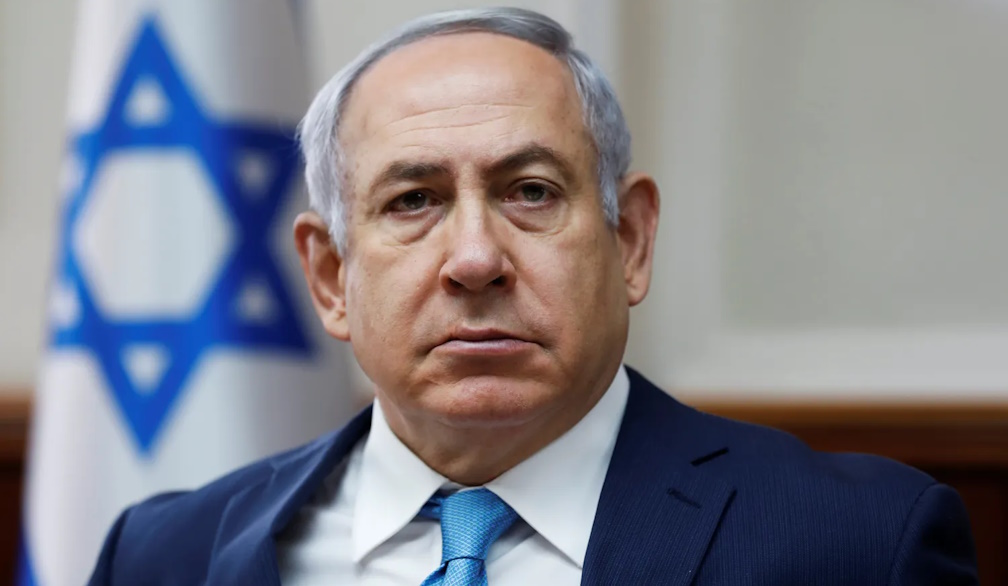
Israel’s parliament, the Knesset, this week passed legislation[1] that would vastly expand capital punishment in Israel and in the occupied Palestinian territories.
The changes, made via an amendment to Israel’s penal law, allow for executions without proper appeal, pardons or meaningful judicial discretion.
According to media reports[2], 62 of 120 Knesset members voted in favour of the bill on Monday, including Prime Minister Benjamin Netanyahu, and 48 voted against. The remainder absented themselves from the vote or abstained.
UN experts[3] and Amnesty International[4] have warned these new death sentencing rules would apply almost exclusively to Palestinians.
It would, they argue, entrench discrimination already identified by the International Court of Justice as amounting to apartheid[5]. UN experts said of the bill[6]:
Since Israeli military trials of civilians typically do not meet fair trial standards under international human rights law and humanitarian law, any resulting death sentence would further violate the right to life […] Denial of a fair trial is also a war crime.
This development is a significant change for Israel, which has not executed anyone for more than 60 years[7]. It reverses decades of global movement towards abolition, while normalising executions in an occupied territory.
Death penalty as the default
These changes were made via legislation brought by National Security Minister Itamar Ben-Gvir and his far-right Otzma Yehudit party[8].
The Penal Bill (Amendment ― Death Penalty for Terrorists)[9] amends both Israeli civil law (applicable to Israeli settlers) and Israeli military law (applicable to Palestinians) in the occupied West Bank.
The law states[10], according to a Deutsche Welle media report:
Palestinians in the occupied West Bank convicted of terrorism in military courts will face a mandatory death sentence or, in the wording of the bill “his sentence shall be death, and this penalty only.” Only if the court determines that there are “special reasons” can it then commute the death sentence to life in prison.
Under this change:
- prosecutors do not need to request[11] the death penalty
- the defence minister may submit an opinion to[12] the judicial panel of three military officials who only need a simple majority to impose the death penalty
- judges need to record exceptional reasons[13] for imposing a life sentence over the death penalty
- avenues for appeal would be tightly restricted
- there would be no possibility of a pardon[14]
- people sentenced to death would be detained in isolated facilities that would have restricted visitor access, with legal counsel only by video link[15]
- executions (by hanging) would take place within 90 days[16] of the final judgement.
Another yet-to-be-passed bill that may still be brought before the Knesset – the Prosecution of Participants in the October 7 Massacre Events Bill[17] – would also see more death sentences handed down.
It establishes[18] ad hoc military tribunals with retrospective jurisdiction to prosecute those accused of participating in the October 7 2023 Hamas-led attacks[19] on southern Israel.
These tribunals would:
- consist[20] of a retired district court judge and two officers qualified to serve as judges
- be authorised to depart from ordinary rules[21] around evidence and procedure
- be able to impose the death penalty via a simple majority, without prosecutors requesting it.
Appeals and clemency[22] mechanisms would again be extremely limited.
Taken together, the two amendments significantly expand the scope of capital punishment in Israel. They also remove many procedural safeguards.
Supporters argue capital punishment could deter future attacks and preclude hostage-taking for prisoner exchanges[23].
Yet, historically, Israel’s intelligence services[24] have opposed death sentences. They have argued it may encourage armed groups to kidnap Israelis as bargaining chips[25] to prevent executions.
International humanitarian law
Critics[26] have argued the new changes place Israel in breach[27] of international humanitarian law and international human rights law.
As critics point out[28], Israel’s new death penalty rules limit access to legal counsel. They also:
- restrict appeals
- allows trials before ad hoc military tribunals for new capital offences
- mandate executions be carried out within 90 days.
This all runs counter to international humanitarian law[29].
Significant legal concerns are raised by Israel enforcing new capital offences in the occupied territory after the International Court of Justice[30] concluded Israel’s occupation violates international law and must cease.
These concerns are compounded by longstanding criticisms of Israeli military courts[31] in the occupied West Bank[32], where conviction rates for Palestinian defendants reportedly exceed 99%[33].
International human rights law
Under international human rights law[34] people should be guaranteed equality before the law and protected from discrimination.
But the changes passed by the Knesset this week subject Palestinians to death sentences as the default[35], while Israeli citizens accused of killing Palestinians would appear before civil courts. Here, capital punishment would be discretionary and far more limited[36]. This entrenches a discriminatory system.
Critics argue this amounts to collective punishment against Palestinians, which is prohibited under the Geneva Convention[37].
The European Union has warned[38] that executions through hanging would also violate the absolute prohibition on cruel, inhuman or degrading treatment.
Taken together, the two new amendments normalise state-sanctioned executions and violate Israel’s obligations under international law[39].
References
- ^ legislation (www.abc.net.au)
- ^ reports (www.dw.com)
- ^ UN experts (www.ohchr.org)
- ^ Amnesty International (www.amnesty.org)
- ^ apartheid (www.theguardian.com)
- ^ UN experts said of the bill (www.ohchr.org)
- ^ 60 years (www.theguardian.com)
- ^ far-right Otzma Yehudit party (www.amnesty.org.au)
- ^ Penal Bill (Amendment ― Death Penalty for Terrorists) (www.dw.com)
- ^ states (www.dw.com)
- ^ request (www.theguardian.com)
- ^ an opinion to (www.theguardian.com)
- ^ exceptional reasons (www.adalah.org)
- ^ pardon (www.dw.com)
- ^ legal counsel only by video link (www.theguardian.com)
- ^ 90 days (www.reuters.com)
- ^ Prosecution of Participants in the October 7 Massacre Events Bill (www.dw.com)
- ^ establishes (m.knesset.gov.il)
- ^ October 7 2023 Hamas-led attacks (www.timesofisrael.com)
- ^ consist (www.amnesty.org)
- ^ rules (www.haaretz.com)
- ^ Appeals and clemency (www.aa.com.tr)
- ^ prisoner exchanges (www.bbc.com)
- ^ intelligence services (www.timesofisrael.com)
- ^ bargaining chips (www.english.acri.org.il)
- ^ Critics (www.ohchr.org)
- ^ breach (worldcoalition.org)
- ^ point out (www.english.acri.org.il)
- ^ international humanitarian law (ihl-databases.icrc.org)
- ^ International Court of Justice (www.un.org)
- ^ criticisms of Israeli military courts (www.ohchr.org)
- ^ occupied West Bank (www.btselem.org)
- ^ exceed 99% (www.amnesty.org)
- ^ international human rights law (www.ohchr.org)
- ^ default (www.reuters.com)
- ^ discretionary and far more limited (www.english.acri.org.il)
- ^ the Geneva Convention (ihl-databases.icrc.org)
- ^ European Union has warned (www.aa.com.tr)
- ^ law (www.aa.com.tr)