As Trump’s threats over Greenland escalate, will Europe use its ‘trade bazooka’?
- Written by: Markus Wagner, Professor of Law and Director of the UOW Transnational Law and Policy Centre, University of Wollongong
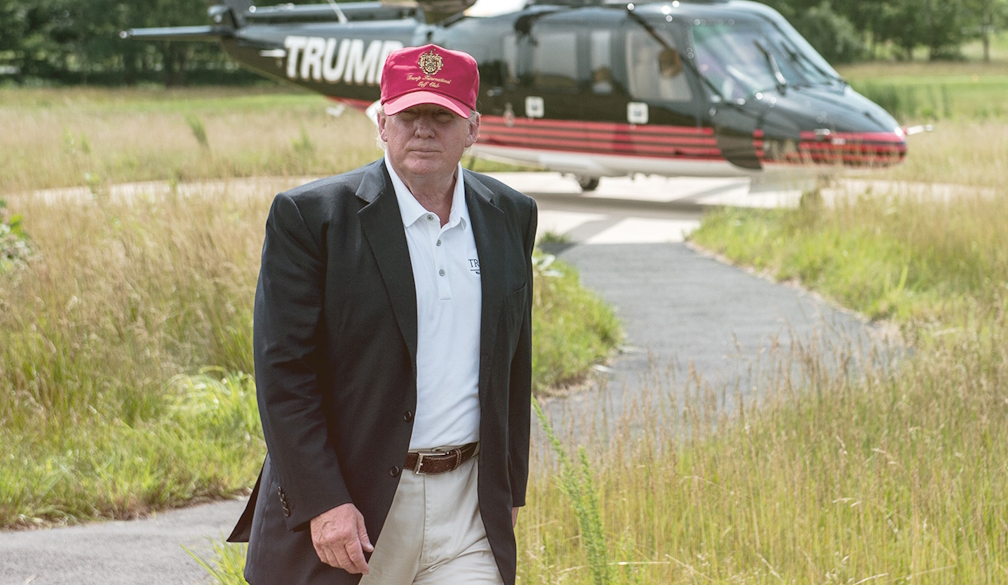
The renewed campaign by United States President Donald Trump to acquire Greenland has escalated, with tariff threats against European allies. Asked on Tuesday how far he is willing to go to “acquire” Greenland, Trump replied[1]: “You’ll find out”.
This is the latest episode in a long-running effort under Trump 2.0 to remake the international order[2] with major geopolitical implications:
- the potential rupture of NATO
- further pressure on transatlantic trade
- a shock to stock and bond markets.
There is a chance of both escalation and de-escalation when Trump holds meetings[3] this week on Greenland with European leaders at the World Economic Forum in Davos, Switzerland.
US–Greenland relations and the ownership question
Trump first floated the idea of acquiring Greenland during his first presidency, which at the time was dismissed as “absurd[4]” and a diplomatic curiosity.
Greenland, while part of the Danish realm[5], is a self-governing territory with its own parliament and a right to self-determination under international law. Under a 1951 agreement[6], the US already has extensive rights to install and operate military bases in Greenland.Trump’s arguments around Greenland have shifted from access to resources[7] to defence arguments[8].
Trump has now explicitly linked the acquisition of Greenland to trade sanctions against eight – ostensibly allied – European countries unless they cooperate in facilitating a deal. He is using trade as a weapon.

Tariffs as foreign policy coercion
Trump announced tariffs[9] of 10% on imports from Denmark, Norway, Sweden, France, Germany, the United Kingdom, the Netherlands and Finland beginning February 1, rising to 25% by June 1, until the “Complete and Total purchase of Greenland” has been achieved.
These tariffs are in addition to the so-called Liberation Day tariffs announced in April 2025. The legality of these tariffs under US law is currently under scrutiny by the US Supreme Court[10]. The outcome is important: if Trump loses, he would not be able to impose tariffs over Greenland without Congressional involvement.
This is not regular trade policy. Tariffs are traditionally imposed as remedies against trade measures by other governments. Here, they are being used outside any international legal constraints as leverage to extract unrelated territorial concessions from allies. While national security exceptions exist[11], its use against close allies – and in pursuit of territorial objectives – pushes that exception well beyond its limits.
What is the EU’s trade ‘bazooka’?
European leaders are forced to choose between multiple unattractive options. They strongly rejected[12] this latest round of US coercion, emphasising Greenland’s sovereignty and self-determination.
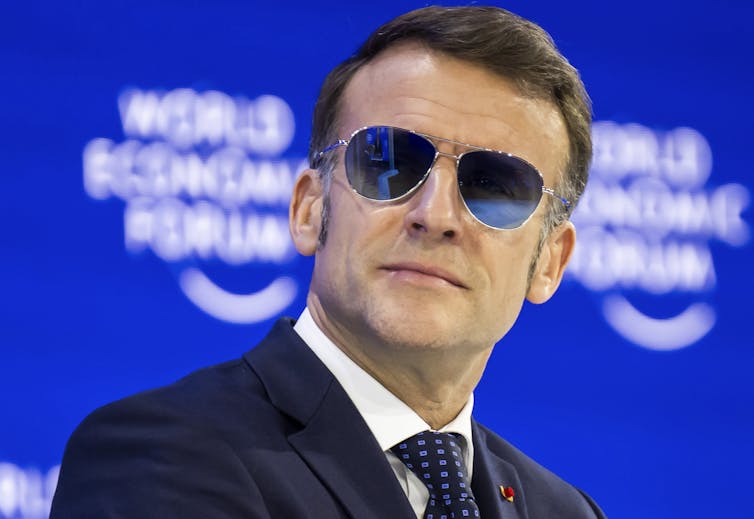
French President Emmanuel Macron, speaking in Davos, said[13] the “endless accumulation of new tariffs […] are fundamentally unacceptable, even more so when they are used as leverage against territorial sovereignty”.
“We do prefer respect to bullies. And we do prefer rule of law to brutality,” Macron said. German Chancellor Friedrich Merz was more conciliatory[14].
European leaders warned of a “dangerous downward spiral[15]” in transatlantic ties and possible retaliatory measures. Such counter tariffs had already been drafted up in response to Trump’s 2025 tariff threats, up to a value of €93 billion[16] (A$162 billion).
While such tit-for-tat trade measures are already concerning, the EU has another measure at its disposal: its Anti-Coercion Instrument[17] or ACI, sometimes referred to as its “trade bazooka”. This was initially designed to deter economic coercion by China.
Macron has raised[18] the spectre of using the Anti-Coercion Instrument against the US. This would allow the EU to select from a range of measures, including:
- the imposition of tariffs on US goods
- restrictions on imports and exports of good and services such as banking or insurance
- investment screening, such as preventing US investors from buying companies in the defence or energy sectors
- restrictions on intellectual property rights, which would put pressure on US tech giants.
The decision over whether to impose such measures has to be taken by EU member governments in the Council of the European Union.
In addition to the time it takes to reach such a decision (officials indicated it could take up to six months[19]), it would also test the ability of EU leaders to resist opposition from within. Hungary’s Victor Orban, a close Trump ally, could try to play the role of spoiler. Although even for him, Trump’s power play over Greenland may be a step too far into unknown waters.
In financial markets, Europeans are also large holders[20] of US government bonds. One Danish pension fund on Tuesday announced plans[21] to sell off its holdings of US Treasuries worth US$100 million (A$148 million). Any broader sell-downs could put pressure on the US bond market.
For the time being, European leaders appear to want to keep the EU trade bazooka dry, indicating a path of de-escalation[22] bordering on appeasement rather than outright confrontation despite Trump’s tactics.
If the EU retaliates, it is likely Trump will respond in kind, possibly resulting in a ratcheting up of trade measures on both sides of the Atlantic. This would have devastating consequences for consumers and exporters alike.
NATO’s greatest test
Trump’s antagonism is not just an odd foreign policy episode, but a test[23] of the strength and depth of the NATO alliance, international legal norms, and trade governance.
The outcome of this conflict – which is entirely of Trump’s making – will signal whether the post-Cold War order can withstand transactional geopolitics cloaked as national security.
Trump has had multiple off-ramps, none of which he appears to be willing to take. His actions will determine whether the US can retain its status as a reliable superpower or will be seen as a pariah in international relations.
References
- ^ replied (www.nytimes.com)
- ^ international order (theconversation.com)
- ^ meetings (www.bbc.com)
- ^ absurd (www.theguardian.com)
- ^ while part of the Danish realm (english.stm.dk)
- ^ 1951 agreement (avalon.law.yale.edu)
- ^ access to resources (apnews.com)
- ^ defence arguments (www.cfr.org)
- ^ announced tariffs (www.theguardian.com)
- ^ under scrutiny by the US Supreme Court (www.brennancenter.org)
- ^ national security exceptions exist (scholarship.law.columbia.edu)
- ^ strongly rejected (www.bbc.com)
- ^ said (www.afr.com)
- ^ more conciliatory (www.politico.eu)
- ^ dangerous downward spiral (www.bbc.com)
- ^ up to a value of €93 billion (www.atlanticcouncil.org)
- ^ Anti-Coercion Instrument (policy.trade.ec.europa.eu)
- ^ raised (www.politico.eu)
- ^ up to six months (www.ft.com)
- ^ large holders (ticdata.treasury.gov)
- ^ announced plans (www.reuters.com)
- ^ path of de-escalation (www.nytimes.com)
- ^ test (theconversation.com)