


Supermarket price gouging will be banned from July. Will consumers actually end up better off?
- Written by: Sanjoy Paul, Associate Professor in Operations and Supply Chain Management, UTS Business School, University of Technology Sydney
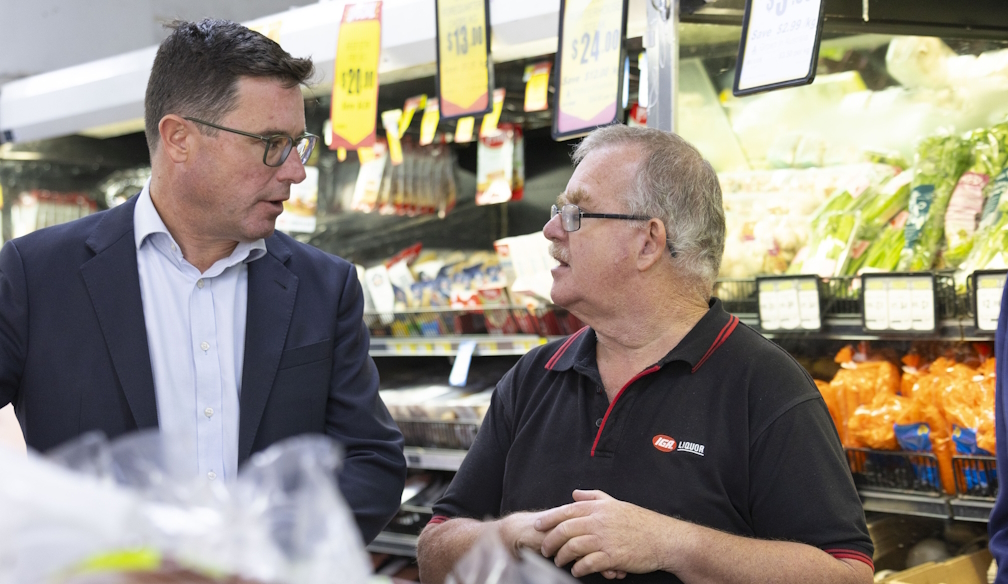
This week, the federal government announced a ban on supermarket price gouging[1], aiming to get “a fairer go for families in their weekly shop”.
From July 1 2026, the new supermarket regulations will ban very large retailers (those with revenue of more than A$30 billion per year[2]) from charging prices that are:
excessive when compared to the cost of the supply plus a reasonable margin.
Coles and Woolworths are currently the only two supermarkets big enough to meet this definition of “very large” and therefore face these new regulations.
The Australian Competition and Consumer Commission’s (ACCC) final report[3] after its major inquiry into the supermarket sector was released in March. It found they were among the most profitable supermarkets in the world.
However, it did not directly accuse them of price gouging. So, what’s actually changing under the new regulations? And could it lead to lower prices for Australians at the checkout?
What’s changing?
Price gouging – setting prices at a level far higher than people think is reasonable – isn’t currently illegal[4] for businesses in Australia.
The ACCC will enforce the new rules, which form part of the now-mandatory Food and Grocery Code of Conduct[5]. The penalty[6] per contravention for breaching the new laws will be the highest of:
- $10 million
- three times the benefit derived
- 10% of turnover during the preceding 12 months.
But both Coles and Woolworths were quick to voice their opposition[7] to the new regulations, arguing they could drive up costs and cause consumers to miss out on deals.
Who decides prices?
To price their products, supermarkets consider a wide range of costs for supply, manufacturing, transportation and distribution, warehousing and storage.
They also have to factor in labour, rent and inventory costs that are involved at every step of the supply chain[8].
Under the new regulations, pricing will have to reflect supply costs and a “reasonable[9]” margin. This will require supermarkets and the regulator to accurately track and determine supply chain costs.
Why tracking costs is tricky
This could prove a challenging task. Supermarkets deal with thousands of products. They have hundreds of different local and international suppliers, manufacturers and logistics service providers.
The supermarket supply chain[10] has several stages. This includes the first tier of direct suppliers, second tier (which supplies the first) and the third tier (which supplies the second).
On many occasions, suppliers beyond the first tier remain invisible and potentially responsible for contributing to supply chain costs. It is a challenging task to factor them accurately into the product costings.
Supermarket supply chains are also dynamic. Operational costs vary significantly across time and different locations.

Other challenges
Many other factors in the supply chain influence pricing. These include logistics, disruptions, waste, operational inefficiencies, high labour costs, marketing strategies, insurance and adoption of technologies.
The main challenge is these factors are always changing, which can make it hard to determine their accurate contributions to the pricing.
The ACCC may need extra resources, including a sophisticated price reporting and monitoring system, to make it work. Supermarkets, manufacturers, suppliers and logistics providers will need to report supply chain cost data regularly.
A significant effort will also be required to ensure data integrity and accuracy in the reporting system.
A shifting approach
The supermarket price gouging ban[12] is more than just a new enforcement issue for the ACCC. It also represents a broader shift in how Australia approaches competition and consumer protection.
Under Australia’s existing legal framework, high prices alone are not unlawful[13]. Australian competition law[14] focuses on protecting the competitive process rather than regulating price levels directly.
For example, cartel rules prohibit price fixing[15] and other forms[16] of collusion between competitors. And resale price maintenance[17] rules prevent suppliers from controlling resale prices charged by downstream businesses.
In both cases, the law targets anti-competitive coordination, not the level of prices themselves.
Consumer law similarly protects consumers through consumer guarantees[18] and rules[19] against misleading or deceptive conduct, unconscionable conduct and unfair contract terms, rather than regulating profit margins themselves.
Comparison with overseas
The current policy in Australia broadly reflects international practice. In the United States, federal anti-trust law does not prohibit[20] firms from charging high prices, even where they have substantial market power, if there isn’t anti-competitive conduct such as collusion. Enforcement focuses on conduct rather than price levels themselves.
The European Union (EU) and the United Kingdom[21] take a more interventionist, but still cautious, approach. EU competition law allows action against excessive pricing[22] by firms with a dominant market position, but such cases are rare.

How might the ban affect competition?
On one hand, closer scrutiny[24] of pricing may limit the ability of large supermarkets to sustain margins that are persistently disconnected from costs.
Greater transparency[25] may also help address public concern in a highly concentrated grocery sector, as highlighted in ACCC market studies[26].
At the same time, competition authorities and economists have long warned direct price regulation[27] carries risks. High prices do not necessarily indicate market failure. Poorly targeted interventions can weaken incentives[28] to compete, discount or innovate.
Will consumers actually end up better off?
In the short term, stronger oversight may place downward pressure on prices where margins are clearly out of step with costs. However, price regulation alone does not guarantee[29] sustained lower prices.
If retailers adopt more cautious or uniform pricing strategies to manage regulatory risk, price competition could weaken[30] rather than intensify.
Competition law does not promise low prices at all times. It aims to deliver competitive prices over time through rivalry[31] and market entry. Consumers are therefore most likely to benefit if the price gouging ban[32] operates alongside broader competition and supply-side reforms, rather than as a standalone mechanism.
References
- ^ ban on supermarket price gouging (ministers.treasury.gov.au)
- ^ revenue of more than A$30 billion per year (www.accc.gov.au)
- ^ final report (www.accc.gov.au)
- ^ isn’t currently illegal (www.accc.gov.au)
- ^ Food and Grocery Code of Conduct (www.accc.gov.au)
- ^ penalty (ministers.treasury.gov.au)
- ^ voice their opposition (www.abc.net.au)
- ^ supply chain (theconversation.com)
- ^ reasonable (ministers.treasury.gov.au)
- ^ supermarket supply chain (www.agriculture.gov.au)
- ^ Darren England/AAP (photos.aap.com.au)
- ^ supermarket price gouging ban (ministers.treasury.gov.au)
- ^ not unlawful (www.accc.gov.au)
- ^ competition law (www.legislation.gov.au)
- ^ prohibit price fixing (www.accc.gov.au)
- ^ other forms (www.accc.gov.au)
- ^ price maintenance (www5.austlii.edu.au)
- ^ consumer guarantees (www.accc.gov.au)
- ^ rules (www.accc.gov.au)
- ^ not prohibit (www.justice.gov)
- ^ United Kingdom (www.lexology.com)
- ^ excessive pricing (www.lexology.com)
- ^ Bianca De Marchi/AAP (photos.aap.com.au)
- ^ closer scrutiny (www.accc.gov.au)
- ^ Greater transparency (www.accc.gov.au)
- ^ studies (www.accc.gov.au)
- ^ direct price regulation (www.cato.org)
- ^ weaken incentives (www.oecd.org)
- ^ not guarantee (www.economicshelp.org)
- ^ weaken (assets.publishing.service.gov.uk)
- ^ through rivalry (www.accc.gov.au)
- ^ price gouging ban (www.oecd.org)










