The under-16s social media ban will damage young people’s political education. Teachers need better support
- Written by: Zareh Ghazarian, Associate Professor in Politics and International Relations, School of Social Sciences, Monash University
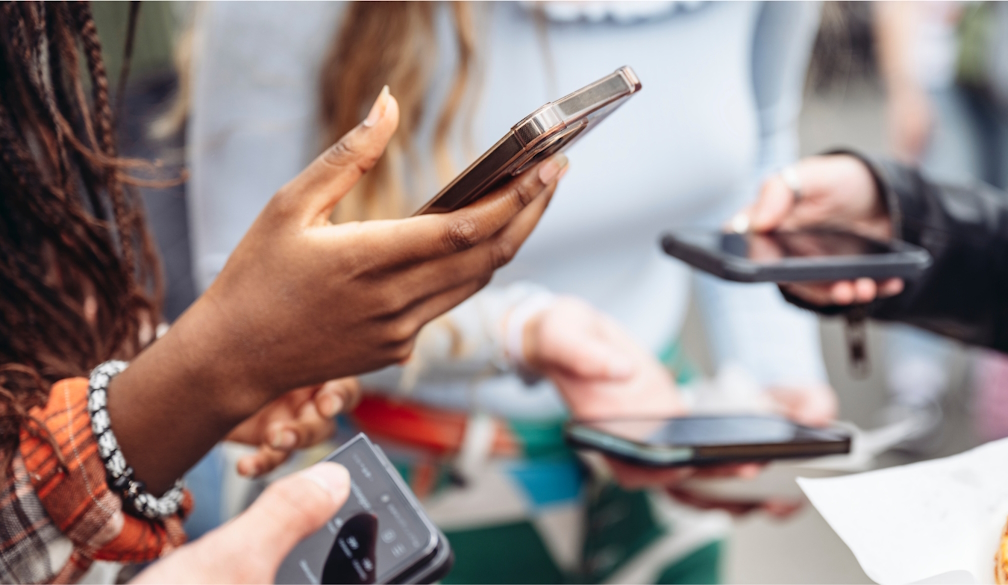
From this week, Australians aged under 16 will not be able to hold an account on many social media platforms. In anticipation of the ban, some social media companies have already begun disabling accounts they believe are held by under-16s.
While the nation’s social media ban is hoped[1] to safeguard young people from the dangers of the online world, it also has the potential to inhibit the development of their political knowledge.
At a time when civics education has been found to be seriously inadequate, this could have major implications for our democracy.
Importance of political knowledge
Engaging with political debates and understanding how the political system operates are important characteristics of what is often known as political knowledge[2].
To build the political knowledge of young people, and to ensure they become “active and informed members of the community[3]” for the whole of their lives, Australian governments have invested in civics and citizenship programs in schools.
The Australian federated system, however, poses a challenge to these aspirations. Each state and territory, for example, can have different approaches to teaching young people about civics and citizenship. The class time that is devoted to the subject also varies, as do teaching methods across, and within, jurisdictions.
Since 2004, national testing has been undertaken every three years to identify the proportion of young people achieving a reasonable level of proficiency[4] in civics and citizenship.
The latest round shows record low results. Nationally at the Year 6 level, just 43% of students achieved the proficient standard. This is the first time in the test’s history the rate has been less than 50% for this year level.
Even more bleak is the result at the Year 10 level. Just 28% of students nationally achieve the proficient standard. Furthermore, unless students enrol in a specialist elective unit such as legal studies, they may never engage with content about democracy, or their rights and responsibilities as citizens in class again.
By the time young people finish Year 12, they are either able to vote or on the cusp of being able to vote. It should be a matter of enormous concern that their civics education is so poor. The social media ban may well make this worse.
Listening to the voices of teachers
While governments may pursue ambitions to build the political knowledge of young people, the responsibility to design and deliver civics and citizenship classes is with teachers.
As part of my E.G. Whitlam Research Fellowship[5], I have been speaking with teachers from New South Wales and Queensland to understand their perspectives on the challenges and opportunities to build young people’s political knowledge.
For some teachers, social media was an important way of allowing young people to be exposed to political debates and issues around the world.
As one teacher put it, students
[…] are actually getting more engaged because of what they see on social media, and so I love them going off and debating in my class about what they feel. It’s just fantastic.
Similarly, according to another teacher, students often don’t know who to ask about matters concerning politics, “so many of them go to social media for information”.
Indeed, the Parliament of Australia’s From Classroom to Community Report[6] published this year noted the significance of social media on political knowledge. Recommendation 20, for example, sought to “develop guidance, resources and tools that support the delivery of education on media and digital literacy” that “should cover social media, misinformation and disinformation, and artificial intelligence”. The same recommendation also called for “consistent teacher professional development resources”.
Enhancing support for teachers
Students who may have relied on social media for their political development will have to find new sources. While other platforms may pop up, and some content may still be visible, the implementation of the ban presents the ideal opportunity to better support teachers.
For example, many teachers I spoke with did not remember having opportunities to undertake professional development in civics and citizenship education. Others felt they needed additional resources and support to build their own confidence to teach the content effectively.
While the Parliament’s report[7] recommended investing in professional development for teachers, there must be greater urgency to do more to support teachers now.
The online political world of young people may be about to be extinguished. It’s time to ensure that teachers have the capacity and confidence to build young peoples’ knowledge through effective, and accessible, professional development and helpful resources.
References
- ^ hoped (www.theguardian.com)
- ^ political knowledge (www.jstor.org)
- ^ active and informed members of the community (www.education.gov.au)
- ^ reasonable level of proficiency (nap.edu.au)
- ^ E.G. Whitlam Research Fellowship (www.whitlam.org)
- ^ From Classroom to Community Report (www.aph.gov.au)
- ^ Parliament’s report (www.aph.gov.au)