Australia’s latest metro is about to open. Here’s how we’ll know if it’s working
- Written by: Hussein Dia, Professor of Transport Technology and Sustainability, Swinburne University of Technology
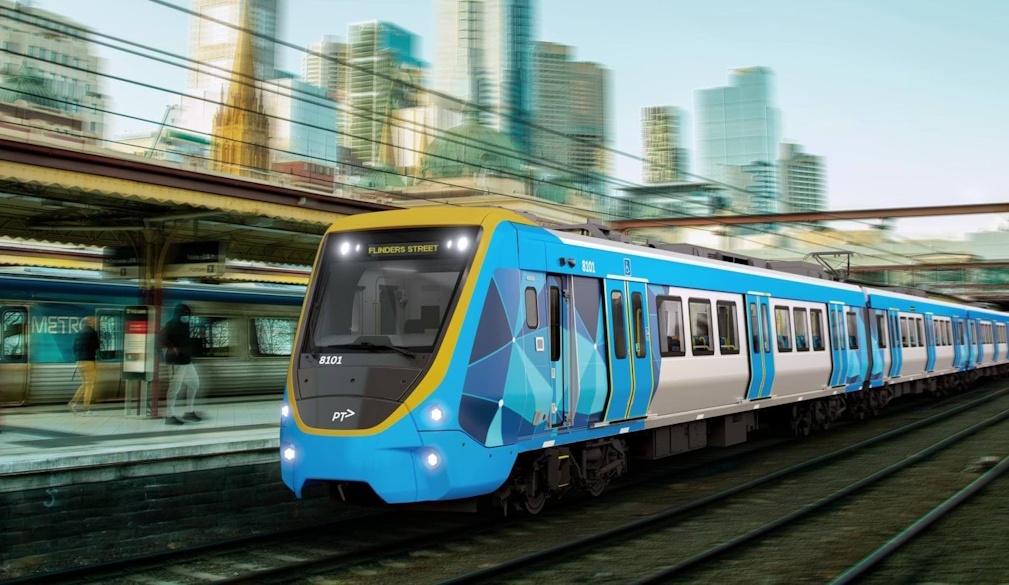
Melbourne’s long-awaited Metro Tunnel will open on Sunday November 30[1]. The tunnel will only carry limited services until February 2026, when it will become fully operational.
With construction having begun in 2017, this is the first major reconfiguration of Melbourne’s rail system in decades. It is expected to increase capacity, improve reliability, and create new connections to some of the city’s busiest destinations.
But Melbournians’ travel behaviour[2] is changing slowly. Car dependence remains high, confidence in public transport has fallen, and commute times continue to rise.
Like other major Australian cities, Melbourne is being pulled between two futures: the sustainable, public-transport-centred city long planned for, and the car-led city that daily life still reinforces. The tunnel is a crucial step towards the first — but its success will be measured by what happens next.
What the Metro Tunnel delivers on day one
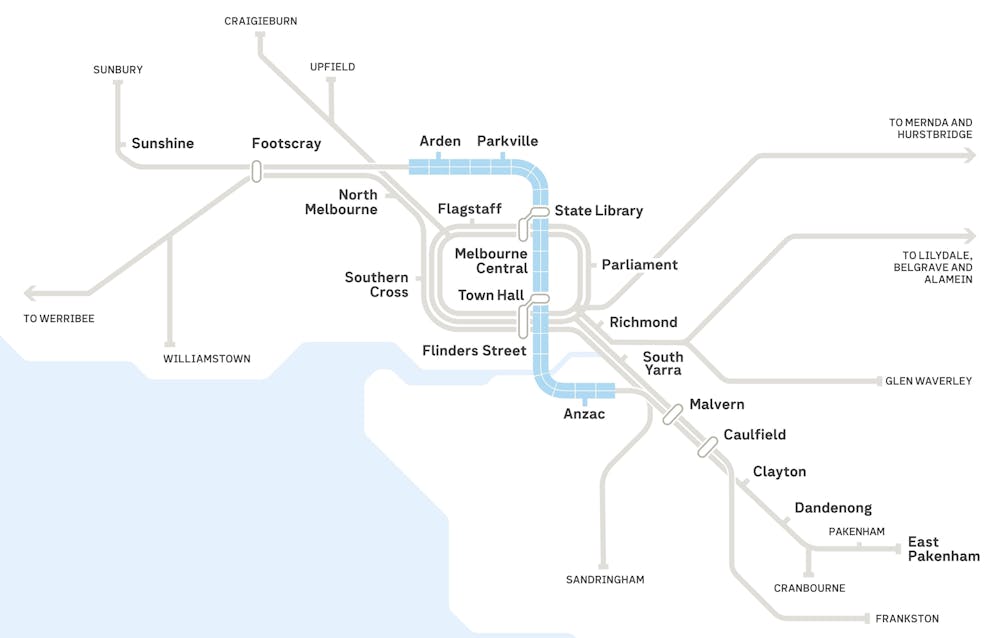
From 30 November, new train services[3] will begin running through the Metro Tunnel and stopping at all five new underground stations.
These services operate alongside the existing timetable, and passengers on the Cranbourne, Pakenham and Sunbury lines can choose between their current City Loop services or a Metro Tunnel service by interchanging at key stations.
A full timetable change will occur on 1 February 2026, when all trains on these lines begin running through the Metro Tunnel.
Five new stations – Arden, Parkville, State Library, Town Hall and Anzac – greatly expand access to key destinations, particularly the medical and university precinct. These visible gains set the tone for the next decade of network improvements.
Why the opening is significant
The tunnel will be the backbone for future expansions, such as Airport Rail and the Suburban Rail Loop.
It also gives planners more flexibility. With lines removed from the City Loop, delays are less likely to cascade, and services can increase where demand is strongest.
This moves Melbourne closer to the operating principles of successful metro systems overseas – a shift that signals how Australian cities can modernise legacy suburban rail.
Behaviour may not shift immediately
Infrastructure can change a network overnight. Travel habits change more slowly.
Experiences in London[5] and Vancouver[6] show that passengers respond gradually as new patterns become familiar.
Melbourne’s latest travel data[7] shows the challenge ahead. Car dependence remains high, even as car ownership declines.
Confidence in public transport has dipped, with concerns about cost, crowding, connections and safety – especially in outer suburbs with fewer alternatives. The Metro Tunnel will improve performance, but rebuilding trust requires consistency over time.
What needs to happen next
A smooth early period will be important. Frequent, predictable services matter more to daily choices than small travel-time savings.
Safety and accessibility also influence whether people choose public transport. This means lighting, wayfinding and comfortable interchanges will play a big role.

The tunnel’s full impact will depend on broader reform. Bus network improvements, better tram priority and stronger first- and last-kilometre connections will determine how many people can realistically shift from driving.
The tunnel provides a spine. The rest of the network must support it.
What to watch in the first few months
Crowding on the busiest corridors may ease gradually over the first few months, with more noticeable change expected from February when the new timetable[8] begins and all trains on the affected lines shift to the Metro Tunnel. Ridership at Parkville and Arden stations, which serve hospitals and universities, will be particularly telling when students return early next year.
Network-wide travel times will show whether the added capacity is improving stability and reliability in peak periods. Early shifts in the share of people using public transport will indicate how quickly habits are changing.
Lessons from the Sydney Metro
Sydney’s 2024 City and Southwest Metro opening[9] offers a useful benchmark.
In its first year, the M1 line delivered more than 66 million journeys[10], with more than 99% of trains running on time.
Traffic across the Harbour Bridge fell, and passengers moved away from crowded Sydney Trains stations. The key lesson: when reliability and frequency are high, behaviour can shift within months.
 Sydney’s Metro opening in 2024 was a dramatic success. Jeremy Piper / AAP
The bigger picture
The Metro Tunnel is a major step towards a more sustainable Melbourne. It expands capacity, improves access, and enables upgrades that were impossible under the old configuration.
The tunnel also demonstrates how Australian cities can adopt true metro-style networks rather than stretching legacy rail systems ever further.
But travel patterns still lean heavily toward driving. Infrastructure changes what is possible, but reliability, safety and convenience determine what people choose.
New public transport infrastructure on this scale is a milestone, but the real test is how it reshapes the way Melbourne moves in the years ahead – and what other Australian cities learn from it.
References
- ^ will open on Sunday November 30 (www.premier.vic.gov.au)
- ^ Melbournians’ travel behaviour (www.melbourne.org.au)
- ^ new train services (bigbuild.vic.gov.au)
- ^ State Government of Victoria (bigbuild.vic.gov.au)
- ^ London (growthplan.london)
- ^ Vancouver (www.weforum.org)
- ^ Melbourne’s latest travel data (www.melbourne.org.au)
- ^ new timetable (bigbuild.vic.gov.au)
- ^ City and Southwest Metro opening (www.transport.nsw.gov.au)
- ^ 66 million journeys (www.sydneymetro.info)