Bangkok Design Week 2026 Sets the Stage as Asia’s Creative Hub
Uniting Networks from Over 17 Countries to Drive Cross-Border Collaboration and Sustainable Regional Growth
BANGKOK, THAILAND – Media OutReach Newswire – 12 February 2026 - As design increasingly proves its power to transform creativity into a strategic force of macroeconomic competitiveness, Bangkok Design Week 2026 (BKKDW2026), organized by the Creative Economy Agency (Public Organization) or CEA, together with its partners, enters its ninth edition with a bold ambition — evolving from a national design festival into a leading creative platform for Asia.By uniting networks of designers and international partners from more than 17 countries across Asia and Europe, the festival plays a pivotal role in positioning Bangkok as Asia's Creative Festival Hub (Creative Hub of Asia).
Under the theme "DESIGN S/O/S," Bangkok Design Week 2026 highlights design and creativity as practical tools to help societies act, adapt, and survive amid global challenges. The festival significantly expands its international partnerships, opening new spaces for designers, artists, and creative entrepreneurs to exchange knowledge, technology, and business models. These collaborations aim to foster a new creative business ecosystem as one that leads to investment opportunities, business matching, and the development of Thai creative products capable of competing in global markets.
Explore perspectives from international partners, who shed light on the role of design as a universal language — a borderless bridge between cultures that generates tangible opportunities for Thailand's creative economy in the global arena.
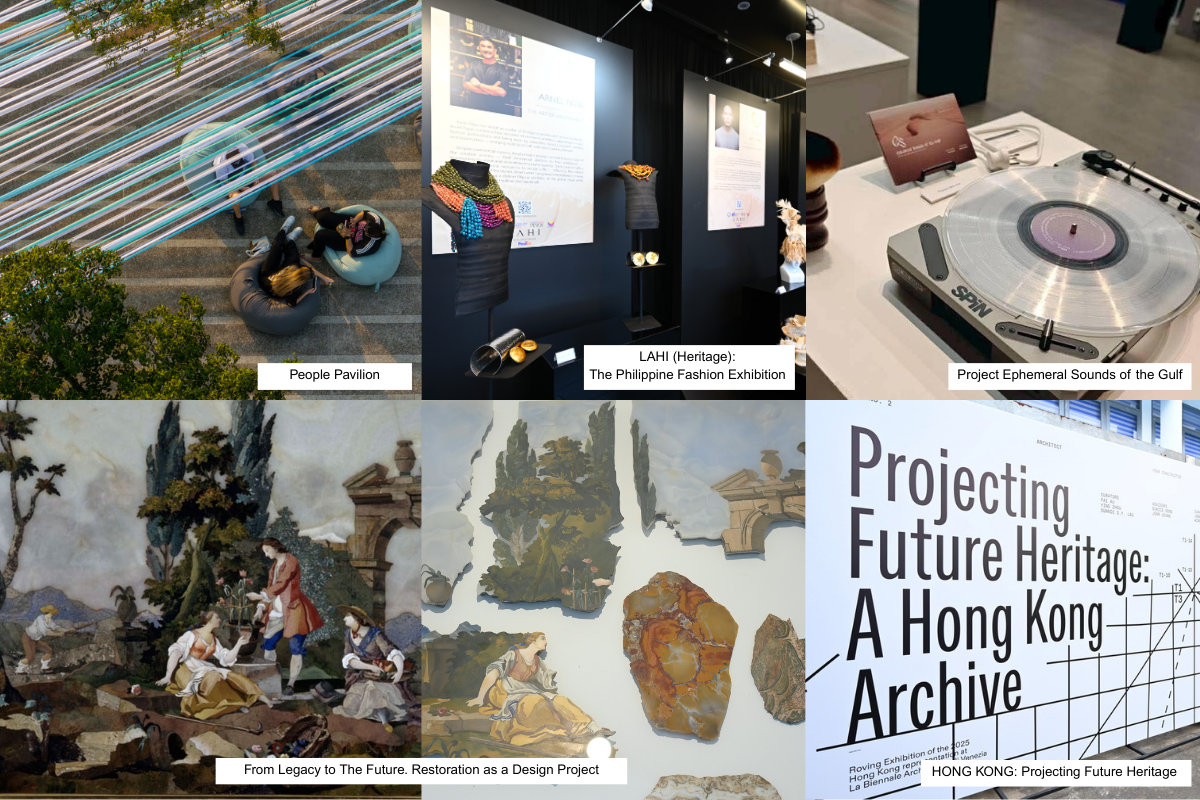
FROM LEGACY TO THE FUTURE. RESTORATION AS A DESIGN PROJECT
Sustainable Cultural Asset Management for Future Generations
by Embassy of Italy in Bangkok
The first international highlight comes from Italy, through the project Italia Reloaded, presented by the Italian Cultural Institute and the Embassy of Italy in Thailand. The initiative introduces the concept of "Restoration as Sustainability."
Maria Sica, Director of the Italian Cultural Institute, explains "Restoration is not about the past, it lies at the heart of sustainability. It focuses on reusing existing resources rather than producing new ones, guided by the principle of 'Not Fake'- repairing without imitation. By integrating innovation, restoration preserves the authenticity and living value of cultural heritage. The project also draws on the historical relationship between Florence and Bangkok, inspired by the legacy of Silpa Bhirasri, serving as a foundation for knowledge transfer and hands-on workshops. These activities aim to elevate Thai craftsmanship to international standards while supporting high-quality cultural tourism. Together, these efforts frame restoration as a strategic pillar of urban cultural asset management — revitalizing historic districts, generating economic vitality, and strengthening a creative business ecosystem that grows sustainably from the city's existing foundations.
LAHI (Heritage): The Philippine Fashion Exhibition
Fashion as Cultural Diplomacy and a New Economic Bridge in ASEAN
by the Philippine Embassy in Thailand
Representing the Philippines, Bangkok Design Week 2026 serves as the launch platform for "LAHI (Heritage): The Philippines Fashion Exhibition," presented through a collaboration between the Department of Trade and Industry (DTI), the Philippine Trade and Investment Center in Bangkok, and the Philippine Embassy in Thailand. Using fashion as a tool of both economic development and creative diplomacy, the initiative underscores Thailand's role as a strategic partner for the Philippines within ASEAN.
A representative from DTI noted "Bangkok Design Week is a key platform for showcasing Philippine design capabilities to regional and global markets. It also serves as a gateway for cross-border business and investment opportunities, particularly through co-creation.The collaboration explores hybrid products that combine Thailand's strength in international-standard manufacturing with Philippine design and craftsmanship. This approach not only strengthens the ASEAN brand and elevates products into high-value market segments, but also demonstrates how fashion — when rooted in cultural heritage — can become a competitive economic asset on the global stage."
Ephemeral Sounds of the Gulf
Listening to Impermanence Through Design That Is Meant to Dissolve
The project "Ephemeral Sounds of the Gulf" by Japanese mixed-media artist and producer Erika Tsuchiya (VCUarts Qatar) examines the tension between permanence and impermanence in contemporary production and consumption. The work experiments with biomaterial records, using physical media as a sonic and conceptual platform.
Erika Tsuchiya explains "The project reflects the continued economic potential of the physical format market even in a digital era — especially in Bangkok, where vinyl culture is experiencing a revival. At the same time, the project functions as research and development for a future green supply chain in the music industry. By recording natural soundscapes from the Arabian Gulf region and distributing them globally through biodegradable records, the work challenges conventional expectations of sonic perfection, while raising awareness of digital pollution and resource-intensive mass reproduction.
"Presently, designers and creators must be conscious of where materials come from and the impact of their choices. Understanding costs and consequences from the very beginning of the supply chain is the foundation of business models that grow not only in profit, but in long-term sustainability." Tsuchiya concludes.
People Pavilion: Reimagining Streetlights as Urban Landmarks
Shade, Light, and Inclusive Design for the Tropical City
Another tangible example of urban innovation is People Pavilion, or Lan Prakai Muang, a collaboration between Urban Ally and HAS design and research, led by Jenchieh Hung and Kulthida Songkittipakdee. The project reinterprets "the Streetlight Pole" an existing piece of urban infrastructure transforming it into a functional and inclusive public architecture.
The design is grounded in a shared perspective that "the tropical climate is not a constraint, but an urban resource." Drawing from everyday life in Bangkok where people seek shade during the day and light at night, the pavilion upgrades existing infrastructure into usable public space. This approach reduces construction waste while adding value to existing urban assets through the concept of infrastructure upcycling.
The core of the project goes beyond creating a new space. People Pavilion functions as an urban prototype for sustainable city-making, offering alternative solutions to public space challenges without relying on large-scale budgets. Through cross-sector collaboration and inclusive design, underutilized or neglected areas are transformed into places of tangible social and economic impact supporting a more resilient, adaptive, and people-centered city. Ultimately, the project demonstrates that meaningful urban transformation can be achieved through strategic design, rather than heavy financial investment.
HONG KONG: Projecting Future Heritage
When Everyday Architecture Becomes Tomorrow's Blueprint
The exhibition "HONG KONG: Projecting Future Heritage,"originally presented at the Venice Biennale Architettura in 2025, arrives in Bangkok curated by Hong Kong architects and urbanists Sunnie S.Y. Lau and Fai Au. It offers a perspective on social innovation by re-examining architecture embedded in everyday life. Moving beyond iconic landmarks, it invites critical reflection on ordinary buildings and familiar urban structures.
The two creators explain "Under the concept of Future Heritage, we explore strategic commonalities among historic port cities such as Hong Kong, Venice, and Bangkok. Those highlight the role of urban water systems as foundational infrastructures that have shaped these cities' transformation from historic settlements into economic centers. We also present local architectures that reflect real everyday life, which may become valuable historical heritage in the next 20 - 30 years."
From a sustainability perspective, the exhibition proposes an approach to urban development that integrates traditional wisdom with contemporary technology. Rather than viewing existing buildings as obsolete or burdensome, it advocates adaptive reuse — reimagining and repurposing structures without demolition — so they can continue to support living, working, and everyday life in meaningful ways. The exhibition underscores that looking back at what already exists is a crucial key to transforming cultural heritage into economic and intellectual capital capable of sustainable growth in the future.
Elevating Bangkok Design Week as the Creative Hub of Asia
These collaborations represent only a fraction of what unfolds at Bangkok Design Week 2026, taking place from 29 January - 8 February 2026. Through CEA's strategic direction, the festival is being elevated as an international creative platform connecting designers, cities, businesses, and investors from Thailand and abroad. The goal is clear to transform cultural capital into measurable economic value, while firmly establishing Bangkok as one of Asia's leading creative festival hubs. Driven by the power of the creative economy and sustained through long-term cross-border collaboration, Bangkok Design Week continues to advance a vision of inclusive, competitive, and sustainable growth for the region and beyond.
Hashtag: #CEA #BKKDW2026 #BangkokDesignWeek #DesignSOS #PowerOfDesign #PowerOfThaiDesign https://www.bangkokdesignweek.com
https://x.com/BKKDesignWeek
https://www.facebook.com/BangkokDesignWeek
https://www.instagram.com/bangkokdesignweek
Line: https://page.line.me/613aqnre
The issuer is solely responsible for the content of this announcement.
About Bangkok Design Week
Bangkok Design Week, first launched in 2018, has long been a fixture on the Bangkok event calendar. It plays a pivotal role in fostering the creative economy and propelling Bangkok to stand out as a member of the UNESCO Creative Cities Network (UCCN) as a City of Design. Organized by the Creative Economy Agency (Public Organization) or CEA, in collaboration with over 60 public and private organizations, educational institutions, and international partners, the festival draws an estimated 400,000 visitors from both Thailand and abroad each year. Bangkok Design Week serves as a growth engine for Thailand's creative industries in multiple ways, including showcasing creative businesses and designs, stimulating competitiveness, providing local and international business networking opportunities, and generating economic momentum for downstream sectors such as marketing, printing, online media, galleries, cafes, restaurants, gifts and souvenirs, travel, hotels, and public transportation.
About the Creative Economy Agency (Public Organization) or CEA
The Creative Economy Agency (Public Organization) or CEA, is a government agency dedicated to promoting creativity as a key driver of Thailand's creative economy. CEA supports the development of various creative industries and encourages the manufacturing sector to adopt creative approaches, enhancing the value of products and services and boosting Thailand's global competitiveness.