


Fitzgibbon is quitting politics but this doesn't mean Albanese can party
- Written by: Mark Kenny, Professor, Australian Studies Institute, Australian National University
One imagines the retirement of Joel Fitzgibbon[1] at the next election simplifies things for Anthony Albanese, as he crafts a climate change formula more in sync with the established science and the global consensus.
A vocal defender of coalmining and “hi-vis” jobs in the regions, Fitzgibbon had become a burr in the Labor leader’s saddle — and a gift to the Coalition — as he regularly lamented his party’s latter day “obsession” with emissions reduction at the expense of regional jobs.
The voluntary exit of a media-enabled critic should help Labor present a unified front. But the electoral dualism bedevilling the ALP, both championed and personified by Fitzgibbon, remains problematic.
The end of an era
Fitzgibbon, a trade-qualified regional MP of 25 years, represented a dying breed in a parliamentary peloton now typically populated by tertiary-educated cosmopolitans.
That dualism may yet pose real-world implications in Fitzgibbon’s regional NSW seat of Hunter, which has been held between him and his father Eric for almost a third of a century.
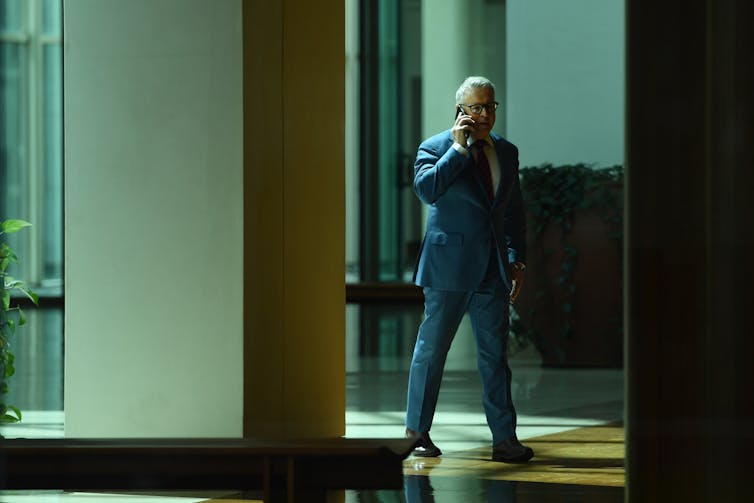 Joel Fitzgibbon has been a vocal critic of his party and its direction since the 2019 election.
Mick Tsikas/AAP
Joel Fitzgibbon has been a vocal critic of his party and its direction since the 2019 election.
Mick Tsikas/AAP
Albanese knows that to secure a Labor majority, he must first wrest seats from the Coalition, not give away strongholds already in his column. Yet some in Labor believe the risk of losing Hunter — still a 62.4% Labor seat —has been overstated, anyway.
They say (or is it hope?) the savage 14-plus percentage swing against Fitzgibbon in 2019 “probably” represented the nadir of Labor’s support, citing an election blighted by mixed messaging over the Adani Carmichael coal mine and Bill Shorten’s proposed 45% cut to emissions by 2030.
Whatever the cause, there’s little doubt the 21.5% share of the first preference vote secured by One Nation’s Stuart Bonds[2] sent shockwaves through the ALP. It was certainly instrumental in Fitzgibbon’s decision to step up his public criticism, complaining long and loud about his party’s “drift to the left”, driven by the concerns of inner-city professionals.
Restaurant chats and public spats
One ostentatious demonstration of this new muscularity was the formation of the OTIS group[3] led by Fitzgibbon. The group first met at a Canberra restaurant of the same name ahead of parliamentary sittings in February, 2020. As Peter van Onselen reported in The Australian[4] at the time,
the members want to see Labor move further to the right on policy scripts such as coal mining, climate change more broadly and how Labor best handles the threat of the Greens on its left flank.
Even more divisive was Fitzgibbon’s public spat with Labor’s climate change spokesperson, Mark Butler. In an uncommonly frontal public attack in November 2020, Fitzgibbon successfully called for Butler’s removal from the climate role in favour of a more conservative figure.
Read more: With the release of a terrifying IPCC report, Australia must face its wilful political blindness on climate[5]
A swap of jobs between Butler — a left-aligned Albanese confidant — and health spokesperson Chris Bowen of the NSW Right faction, duly followed.
‘Back to the centre’?
Albanese has since signalled Labor’s election pledge will be less ambitious arguing, among other things, an already steep emissions reduction path designed to begin in 2019, would be too sharp if commenced in 2022.
Either way, Fitzgibbon claims some of the credit, telling media that his work of dragging the ALP “back to the centre[6]”, was largely done.
While the emission policy was only part of a wider sweep of policy initiatives blamed for Labor’s shock defeat in 2019, Fitzgibbon had called the 45% cut “crazy” in an interview with Sky News.
Read more: View from The Hill: Kristina Keneally's house switch stops one row, starts another[7]
Announcing his retirement, Fitzgibbon continued to prosecute his case declaring the retention of Hunter would be contingent on Albanese’s “strong support” for an ongoing coal mining industry. As he told Radio National[8]:
I’m confident that Albo has taken us sufficiently to the centre and put sufficient emphasis on hope and aspiration amongst working families that I can go comfortably knowing that Hunter is safe.
Local sensitivities are clearly front-of-mind. Albanese has endorsed Fitzgibbon’s choice of a successor, Daniel Repacholi[9], a former coal miner who also happens to be five times Olympic shooter — most recently in Tokyo.
The Labor leader has also parked his past objections to local ALP branch members being denied a vote, calling for Labor’s national executive to short-circuit the process of selecting Fitzgibbon’s successor if there is more than one nomination.
Albanese has been fielding red-hot anger in Labor ranks over the plan to parachute[10] current deputy Senate leader, Kristina Keneally into the western Sydney seat of Fowler. But similarly, he expects the national executive to step in.
Labor’s TBC climate policy
Once the politics here is navigated, the next challenge is one of policy.
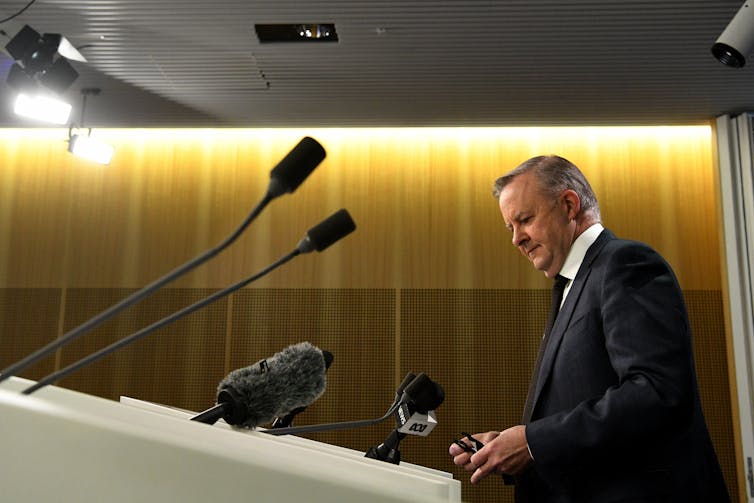 Labor leader Anthony Albanese will face off with Prime Minister Scott Morrison in an election expected in early 2022.
Bianca De Marchi/AAP
Labor leader Anthony Albanese will face off with Prime Minister Scott Morrison in an election expected in early 2022.
Bianca De Marchi/AAP
Fitzgibbon has previously argued Labor should hold its tongue on emissions targets, leaving it for the government to set the policy.
So far this has been Albanese’s approach — wait until the Morrison government has determined its final position going into the UN COP26 climate talks in Glasgow in November, before setting out a policy which is more ambitious, but not dramatically so.
It seems Labor’s previous terror of being picked off on its left flank by the Greens in the inner cities, has given way to another fear — a virtuous loss in the more conservative suburbs and regions. And potentially a fourth consecutive defeat.
References
- ^ retirement of Joel Fitzgibbon (www.theguardian.com)
- ^ One Nation’s Stuart Bonds (www.theguardian.com)
- ^ OTIS group (www.theguardian.com)
- ^ The Australian (www.theaustralian.com.au)
- ^ With the release of a terrifying IPCC report, Australia must face its wilful political blindness on climate (theconversation.com)
- ^ back to the centre (www.abc.net.au)
- ^ View from The Hill: Kristina Keneally's house switch stops one row, starts another (theconversation.com)
- ^ Radio National (www.abc.net.au)
- ^ Daniel Repacholi (www.theguardian.com)
- ^ plan to parachute (www.abc.net.au)










