Natural Skincare in Australia: Why Consumers Are Shifting to Simpler, Ingredient-Led Products
- Written by: The Times

Walk into most bathrooms ten years ago and you would probably see the same thing, a crowded shelf filled with natural skincare and conventional products alike, all promising something slightly different.
More steps. More actives. More results.
Now, a more subtle shift is happening behind closed bathroom doors.
It's not loud, and it’s not being driven by a single trend or product. It’s showing up in small, almost unnoticeable changes. Fewer products on the shelf. Simpler routines. People actually stopping to read what's on the label before they use something.
At some point, it stopped feeling like self-care and started feeling a bit like admin.
And it's not just anecdotal.
Across Australia, demand for natural skincare and more consciously formulated products has been steadily rising. Industry coverage from Professional Beauty Australia has noted that around a third of consumers have increased their use of natural skincare products in recent years, while market analysis from Mordor Intelligence points to faster growth in natural skincare categories compared to more conventional options.
Something is clearly changing.
That shift didn't happen overnight. If anything, it crept in quietly.
Part of it feels distinctly Australian.
There has always been a strong connection here between lifestyle and environment. Coastal living, outdoor routines, and an awareness of climate and conditions all shape how people think about their skin. In places like Western Australia in particular, where the natural environment is front and centre, there is often a more practical approach. Products are expected to work, but also to make sense.
That mindset is starting to show up more clearly in natural skincare choices.
From More Products to Less Guesswork
For a long time, skincare followed the same pattern as most consumer trends. More choice meant more perceived value. If one product worked, five must be better.
And for a while, that logic held.
Multi-step routines became normal. Skincare felt almost like a process you had to get right. Layer things in the correct order, use the right combinations, follow the latest advice.
But somewhere along the way, it became exhausting.
People started noticing that more products did not always mean better skin. In some cases, it meant the opposite. Irritation, sensitivity, or just a general feeling that things had become harder than they needed to be.
So instead of adding more, Australian consumers have started pulling things back.
Not dramatically. Just enough to feel like they understood what they were using again.
A Quiet Shift Toward Ingredient Awareness in Natural Skincare
Alongside that change is something else. A growing awareness of what actually goes into skincare.
You see it in the language people are using now. "Fragrance-free". "Minimal formulation". Even "botanical", "plant-based" or "essential oil-based" products are being talked about differently.
Not as buzzwords, but as reference points.
These categories continue to outpace more conventional options, which lines up with what people are starting to prioritise. Simpler ingredients. Clearer purpose. Products that feel easier to trust.
It’s not about removing everything. It’s about understanding what’s there, and why.
Why Simpler Formulations Are Gaining Ground
There are a few reasons this shift is gaining traction.
For some, it’s practical. Fewer ingredients can mean fewer variables, especially for skin that reacts easily.
For others, it's about alignment. The same people thinking more carefully about what they eat, what they bring into their homes, and how they live day to day are naturally applying that thinking to skincare as well.
And then there’s the simple reality that not everything needs to be complicated.
Skincare, at its core, is meant to support the skin. Not overwhelm it. That sounds obvious, but it’ s easy to lose sight of.
Where Smaller Brands Are Leading the Shift
Much of this movement is not being driven by large-scale campaigns or mass-market trends. It is often smaller, independent brands shaping the direction.
Without the pressure to appeal to broad demographics, these brands tend to take a more formulation-led approach. Products are built around specific outcomes, and ingredient lists are refined accordingly.
In Australia, that approach is often closely tied to place.
Brands that are developed outside of major metro centres, particularly in regions known for their natural environments, tend to reflect that influence more directly. There is often a stronger emphasis on simplicity, on plant-based ingredients, and on creating products that feel consistent with how people live day to day.
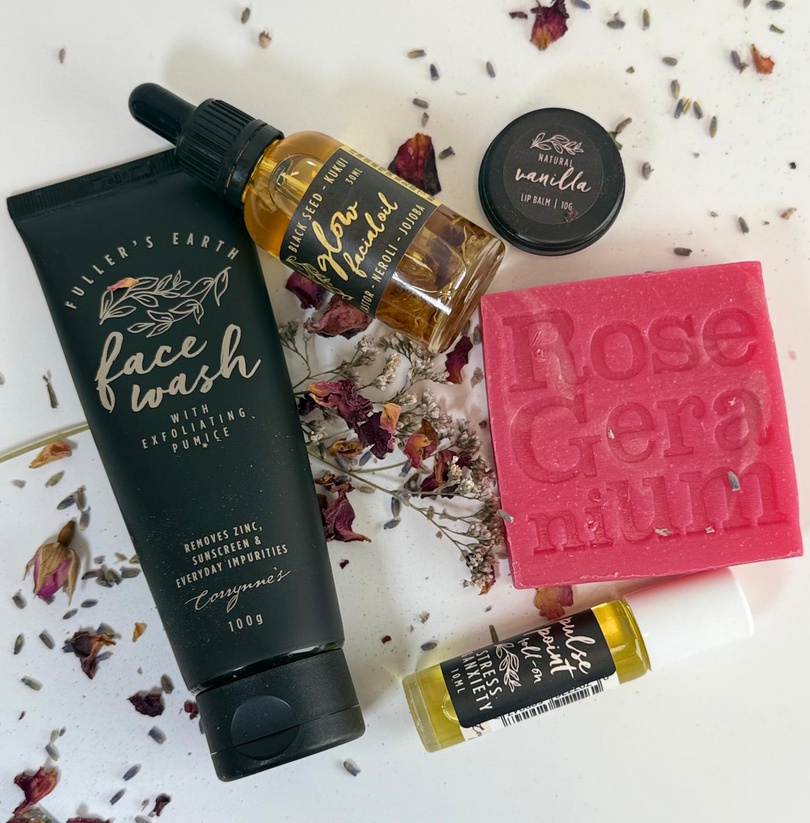
Brands like Corrynne's Natural Skincare sit within that space, where formulation decisions are driven by ingredient purpose rather than positioning.
Elise Hanley, who runs the business alongside her husband Mike, has been part of Corrynne's for decades, joining her sister early in its development and helping shape what it has become today.
She describes the brand as growing out of a very specific environment and way of living, one that has always leaned toward natural, practical choices rather than trends.
"We were raised by parents who were a bit ahead of their time, very much about living a wholesome, healthy lifestyle. We've carried that through with Corrynne's, believing nature provides an abundance of ingredients to support healthy skin and healthy bodies."
That thinking was reinforced early on when the business secured a permanent space in Fremantle Markets, connecting directly with a customer base already aligned with natural skincare.
"Fremantle customers were the right crowd for us, supporting natural skincare products wholeheartedly. We'd met our tribe."
Over time, that foundation shaped how the product range developed.
Hanley explains that while the business began with natural soaps, those early formulations set the tone for everything that followed. As the range expanded, the focus remained on combining essential oils and plant-based ingredients in ways that served a clear purpose.
"Soaps were the mainstay for the first few years, then as we grew we expanded into products like our face wash and detox paste, which still use coconut-based soap as part of the formulation."
That ingredient-led approach has remained central to how new products are developed.
Rather than chasing complexity, Hanley prefers to work with fewer, more purposeful components, selecting ingredients based on how they function within a formulation.
"I like to understand ingredients and their role. Keeping formulations simpler means the product is purer and less complicated."
She also notes that while formulation follows certain technical rules, particularly when working with water-based products, much of the process still comes down to understanding how ingredients behave together.
"We research the properties of essential oils and include particular ones to perform in a certain way or deliver a specific result."
Being based in the southwest of Western Australia continues to influence that approach.
Hanley says that living in a region defined by clean air, natural landscapes, and a strong connection to the environment naturally carries through into how products are made and used.
"Living in the southwest surrounded by pristine nature just supports a more wholesome, nature-based lifestyle. We extend that into the food we grow, the products we make, and the homes we live in."
That same thinking is reflected in how customers are evolving.
She has seen a clear shift, particularly among younger customers, toward more conscious product choices and a stronger awareness of ingredients.
"We're seeing more younger customers who are very conscious about choosing botanical, nature-based ingredients."
For Hanley, the direction is fairly straightforward.
Rather than constantly chasing new trends, she believes most people are ultimately looking for clarity and consistency.
"Clean skin, natural ingredients and a simple routine that you actually stick to is the basis for good skin health."
That extends to how the business operates more broadly.
Corrynne's focuses on small-batch production, minimal packaging, and local manufacturing, prioritising product quality over presentation.
"We don't overly package. The cost should be in the ingredients, not the box that gets thrown away."
It is a quieter approach, but one that aligns closely with the broader shift happening across natural skincare.
What That Looks Like in Practice
You can see that thinking reflected not just in how products are described, but in what people are actually choosing to use day to day.
That approach becomes clearer when you look at the types of products that tend to resonate most.
Foundational items, the ones used daily, often see the strongest demand. Natural soaps, simple cleansers, and body products built around a small number of well-understood ingredients are usually where people start, and often where they stay.
Within Corrynne's range, that shows up in a continued focus on products that are both functional and straightforward. Natural soaps remain a core part of the lineup, alongside body and skincare products that are built around plant-based ingredients and familiar bases such as coconut oil.
It’s not just about what’s included, but how it’s used.
Essential oils, for example, are typically incorporated with a specific purpose, whether that’s for scent, skin calming effect, or overall formulation balance, rather than being added in excess. The same applies to base ingredients, where consistency and reliability tend to matter more than complexity.
That kind of formulation approach aligns closely with what many consumers are now looking for. Products that feel predictable, easy to use, and consistent over time, rather than something that needs to be constantly rotated or replaced.
And in many cases, that simplicity is exactly what keeps people coming back.
What This Means for Everyday Routines
For consumers, the takeaway isn’t to overhaul everything overnight.
It's more about approaching skincare with a slightly different lens.
- choosing products based on purpose, not promise
- paying attention to how skin responds over time
- favouring consistency over constant change
For some, that might mean simplifying routines. For others, it often comes down to being more selective about the natural skincare products they use, focusing on quality and formulation rather than constantly adding something new.
There's no single "right" way to do it, which is part of the point.
A More Considered Direction
Skincare is not becoming simpler because people care less.
It's becoming simpler because they are paying closer attention. To ingredients, to outcomes, and to how products fit into a broader way of living.
The shift is gradual, but it’s meaningful.
And for many, it’s making natural skincare feel simpler, more grounded, and easier to trust.