Why are public schools asking parents to pay fees?
- Written by: Emma Rowe, Associate Professor in Education, Deakin University
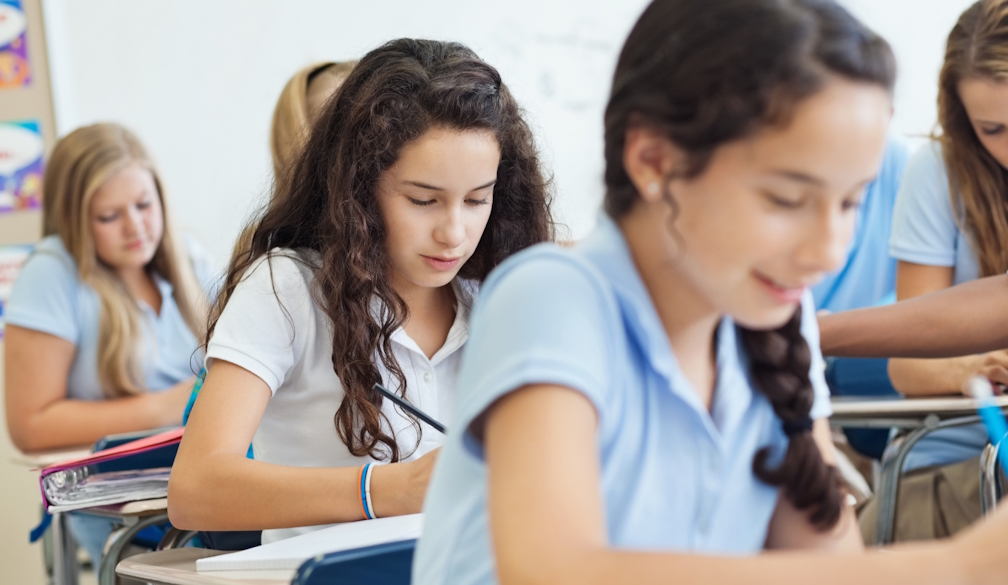
At this time of the school year, many schools are asking families to pay fees[1]. These are not private schools, but public schools.
The fees are voluntary and go towards a range of items such as stationery, textbooks and excursions.
The voluntary fees range from hundreds[2] to thousands of dollars[3] per child, per year.
This often depends on the socioeconomic status of the school, with more advantaged or select-entry public schools tending to ask parents to contribute more[4].
Are schools allowed to do this?
Yes, public schools can ask families for fees. But they cannot force parents to pay. The precise rules around fees for public school students also differ from state to state.
For example, in Victoria, public schools must provide students “with free instruction[5]”.
But they can ask parents to make voluntary financial contributions in two categories: “curriculum contributions[6]” and “other contributions[7]”. Schools do not have to be specific about each item within this category but this could involve things such as stationery, library books and IT programs used in classrooms.
Schools might ask parents to contribute towards extracurricular activities, which must be categorised as “optional[8]”. These include excursions, camps, sports programs, music programs or non-curriculum-based school events such as graduations.
In New South Wales, parents might be asked to contribute towards “mandatory excursions[9]” such as camps, swimming and athletics carnivals, and incursions – where experts or performers come to the school.
State governments – such as in NSW[10] – emphasise to parents how voluntary school contributions are “at the discretion of parents and carers” and “there must be no incentives or penalties tied to voluntary contribution payments”.
This is helpful and important for parents who cannot afford to pay. As The Age reported this week[11], many parents are struggling to pay these fees. But it also puts further pressure on schools to fund basic operations and meet government funding shortfalls.
Why is this happening?
Public schools ask parents to make voluntary contributions because they need the funds. These voluntary contributions are important to the school.
State governments have consistently not met their funding targets for public schools[12]. On current timelines – and provided future governments deliver the funds – schools will not have their full funding entitlements until 2034[13].
This puts school principals in a very difficult situation. Their schools are not properly funded by the government and there are limits to their ability to seek additional funds from parents.
How do schools make up the shortfall?
Many parents might not know that principals spend a lot of time applying for competitive funding government grants, as my 2024 study showed[14].
These grants can be for a range of reasons, such as paying for a school bus, or fixing a school wall.
But many of these applications are unsuccessful. There is no feedback available to principals and it is common for them to seek the funding year upon year.
Are there alternatives?
There have been some recent government polices to help with the costs of public schooling. But these are directed at families, not schools.
In 2025, the Victorian state government provided parents with a A$400 school saving bonus[15]. This was provided directly to parents to help with uniforms, textbooks and school activities.
However, it was schools who had to administer the voucher. This meant extra work and costs for schools. The state government did not allow any additional funding to schools to meet this cost. So it had little-to-negative impact for schools when it comes to meeting their funding needs.
The South Australian government has pledged to abolish voluntary parent fees in public schools[16]. It says this will save families more than $8,000 over the life of a child’s schooling.
But with the state’s schools not receiving their full funding entitlements for eight years, this will create an ongoing shortfall for schools.
This is yet another reason[17] why we need full funding for public schools immediately, rather than a commitment to do so in 2034.
References
- ^ asking families to pay fees (www.theage.com.au)
- ^ hundreds (www.theguardian.com)
- ^ thousands of dollars (www.theguardian.com)
- ^ tending to ask parents to contribute more (www.theguardian.com)
- ^ with free instruction (www2.education.vic.gov.au)
- ^ curriculum contributions (www2.education.vic.gov.au)
- ^ other contributions (www2.education.vic.gov.au)
- ^ optional (www2.education.vic.gov.au)
- ^ mandatory excursions (education.nsw.gov.au)
- ^ such as in NSW (education.nsw.gov.au)
- ^ reported this week (www.theage.com.au)
- ^ not met their funding targets for public schools (www.theguardian.com)
- ^ until 2034 (www.pm.gov.au)
- ^ 2024 study showed (link.springer.com)
- ^ school saving bonus (www.vic.gov.au)
- ^ pledged to abolish voluntary parent fees in public schools (www.sa.alp.org.au)
- ^ yet another reason (www.theguardian.com)
Read more https://theconversation.com/why-are-public-schools-asking-parents-to-pay-fees-278985