What the RBA wants Australians to do next to fight inflation – or risk more rate hikes
- Written by: Meg Elkins, Associate Professor in Economics, RMIT University
When the Reserve Bank of Australia (RBA) board voted unanimously[1] to lift the cash rate to 3.85%[2] on Tuesday, the decision was driven by one overriding concern. It wants to stop the rising cost of living from becoming entrenched.
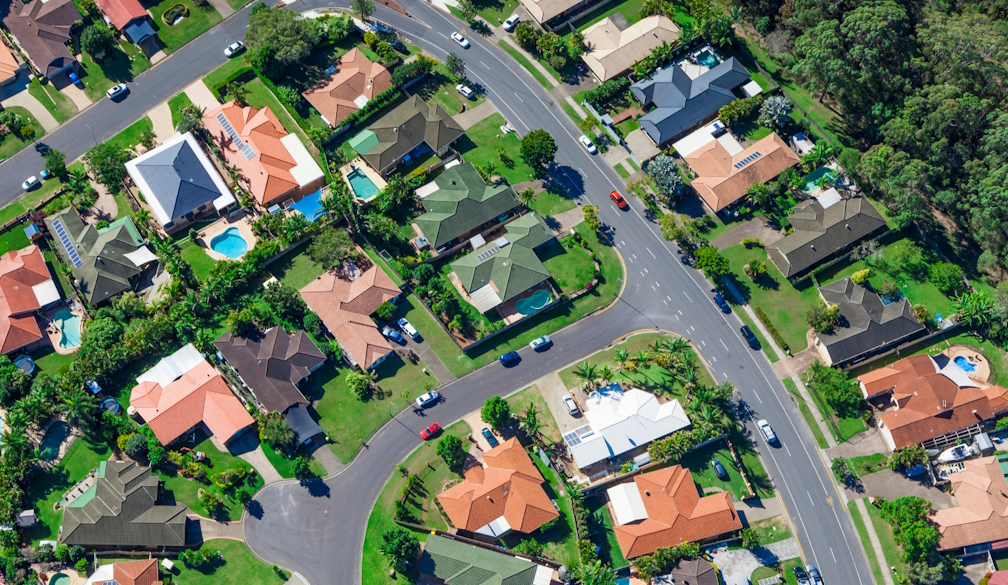
For some, like self-funded retirees, the rate rise was good news. Higher interest means their savings and term deposits will earn more. But for many others, including first home buyers who might have stretched themselves just to get a foot into the housing market, it was a very bad day.
RBA Governor Michele Bullock acknowledged that, saying[3]:
I know this is not the news that Australians with mortgages want to hear, but it is the right thing for the economy.
She warned the alternative – letting inflation keep rising – would be even harder for more Australians.
So what’s the psychology behind the RBA raising rates now and leaving the door open[4] to further hikes if needed? And what does the central bank hope Australians will do in response?
The price squeeze you’re feeling
There’s a striking gap between how the RBA describes the economy and how most Australians experience it.
On paper, things look healthy: unemployment is low, wages are growing[5].
But as Bullock acknowledged[6] on Tuesday, the daily reality has felt very different.
The price level has gone up 20% to 25% over the last few years, and people see that every time they walk into a supermarket, or they go to the doctor, or whatever – that’s I think what’s hurting people.
That relentless price squeeze is not something you forget, even when the rate of increase starts to slow.
What’s driving inflation up?
The headline consumer price index (CPI[7]) hit 3.8%[8] in the year to December, well above the RBA’s target band of 2–3%. The “trimmed mean[9]” – the underlying measure the RBA watches most closely – rose to 3.3%. Both are too high and moving in the wrong direction.
Bullock singled out three factors contributing to inflation[10]. Each behaves differently and requires a different response.
Housing was the single largest contributor to inflation in December, up 5.5% over the year. That includes rents, which rose 3.9% (or 4.2% stripping out government rent assistance), as well as insurance, utilities, and new construction costs, which rose 3% as builders passed through higher labour and material costs.
There is an irony here. Rising interest rates are intended to cool demand, but they slow housing construction. Limited supply of housing is what’s pushing rents up in the first place.
“Durable goods” are the things we buy to last, such as cars, refrigerators, washing machines, televisions and furniture. Demand for many of those has been higher in the past year.
“Market services” are items such as restaurant meals, taxis, haircuts, gym memberships, medical appointments and holiday travel.
The RBA watches these carefully, because these are services priced by supply and demand in the domestic market. Those prices tend to be “sticky”: once they start rising, they don’t come back down easily.
Wages are also a big part of market services inflation. If the people providing those services are earning more, the cost goes up.
Read more: RBA raises interest rates as inflation pressures remain high[11]
How rate cuts made shoppers relax
This is where the behavioural psychology gets interesting.
The RBA cut interest rates three times[12] in 2025. Each cut sent a signal, whether intentionally or not: it’s OK to spend a bit more.
And spend we did. CommBank[13] data shows Australians spent A$23.8 billion over the two-week Black Friday period, up 4.6% on the year before.
It’s a cautionary tale about “rational expectations[14]”. Each rate cut potentially fuelled the belief that more would follow.
If people feel like they can afford to spend, then they spend. Businesses, sensing demand, may raise their prices to match. That’s exactly the self-fulfilling[15] dynamic central banks worry about.
Read more: Here’s what Black Friday sales shopping does to your brain[16]
The 3 ways the RBA hopes we’ll react
When prices go up, as they have been, workers ask for bigger wage rises to keep up. To pay higher wages, businesses lift prices to protect their profit margins. Together, that can create a “wage-price spiral[17]” that becomes very hard to break.
The RBA will be hoping Australians respond to this rate rise in three ways:
RBA Governor Michele Bullock described raising interest rates as “a very blunt instrument” to bring inflation down, and noted setting rates is “not a science. It’s a bit of an art, really […] We’ve just got to respond as best we can.”
The RBA can’t undo the price rises that have already happened. It can only try to slow down further increases.
References
- ^ voted unanimously (www.rba.gov.au)
- ^ lift the cash rate to 3.85% (theconversation.com)
- ^ saying (www.theguardian.com)
- ^ leaving the door open (theconversation.com)
- ^ unemployment is low, wages are growing (www.rba.gov.au)
- ^ acknowledged (www.theguardian.com)
- ^ CPI (theconversation.com)
- ^ hit 3.8% (theconversation.com)
- ^ trimmed mean (www.abs.gov.au)
- ^ inflation (www.abs.gov.au)
- ^ RBA raises interest rates as inflation pressures remain high (theconversation.com)
- ^ cut interest rates three times (theconversation.com)
- ^ CommBank (www.commbank.com.au)
- ^ rational expectations (doi.org)
- ^ self-fulfilling (doi.org)
- ^ Here’s what Black Friday sales shopping does to your brain (theconversation.com)
- ^ wage-price spiral (www.rba.gov.au)