The Impact of Small Class Sizes on Engagement and Confidence
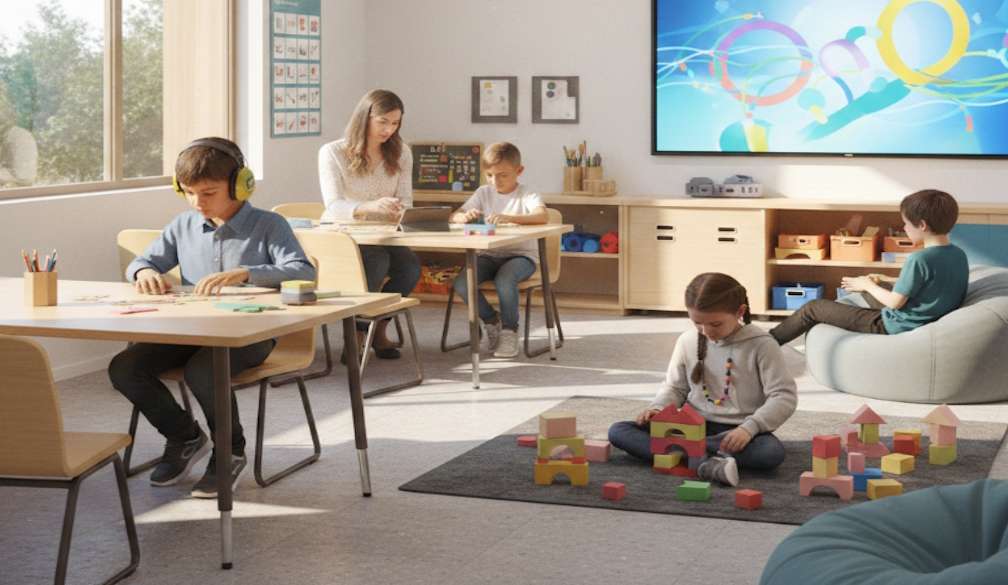
Educational outcomes are shaped by many factors, but the physical and social environment of the classroom is often the most significant. For students who process information differently, the traditional large-scale classroom can be a source of overwhelming sensory input and social pressure. In contrast, reduced class sizes provide a controlled setting where the "noise" of education is lowered, allowing the individual needs of the student to take centre stage.
Within autism Queensland schools, the shift toward smaller groups is not just a luxury; it is a clinical and pedagogical necessity for fostering genuine student engagement.
Reducing Sensory Overload to Foster Focus
A high-volume classroom is naturally filled with unpredictable sounds, movement, and visual clutter. For many students on the autism spectrum, these environmental factors can trigger a "fight or flight" response, making it impossible to focus on the curriculum.
Smaller class sizes allow for a highly regulated sensory environment. With fewer students, teachers can manage lighting, noise levels, and the physical layout of the room more effectively. When a student feels sensory-safe, their brain can move out of a state of hyper-vigilance and into a state of learning. This physiological calm is the foundation upon which all academic engagement is built.
The Opportunity for Individualised Scaffolding
In a large class, a teacher must often aim for the "middle ground" of the group’s ability. In a smaller setting, education becomes a bespoke experience. Teachers can implement "scaffolding"—the process of providing tailored support that is gradually removed as the student masters a skill.
- Real-Time Adjustments: If a student is struggling with a specific concept, the teacher can pivot immediately, changing the delivery method to suit that student’s unique learning style.
- Deep Interests as Hooks: Smaller groups allow teachers to incorporate a student’s "special interests" into the lesson plan. This significantly boosts motivation and keeps students engaged with challenging subjects.
- Pacing Control: Students are not pressured to keep up with a fast-moving group, nor are they left waiting for others. The pace of the lesson is dictated by the student’s actual comprehension.
Building Confidence Through Safe Social Interaction
Confidence is often the "invisible" result of a successful education. For students who have previously struggled in mainstream settings, self-esteem can be low. A small class acts as a social "training ground" where the stakes are lower and the support is higher.
In these environments, students feel safer to take intellectual risks, such as asking questions or participating in group discussions. Because the teacher has a deep understanding of each student’s social profile, they can facilitate interactions that are positive and successful. Over time, these small wins accumulate. A student who was once too anxious to speak in a group may eventually find the confidence to present an idea or lead a small project.
Strengthening the Teacher-Student Connection
The relationship between a student and their educator is one of the strongest predictors of success. In small classes, teachers have the time to truly know their students—not just their grades, but their temperaments, their triggers, and their strengths.
This strong connection creates a "secure base" for the student. When a student knows their teacher understands them, they are more likely to persevere through difficult tasks. This rapport also allows for more effective emotional regulation. A teacher can spot the early signs of a student becoming overwhelmed and intervene with a calming strategy before a meltdown or shutdown occurs.
A Pathway to Long-Term Independence
The ultimate goal of reduced class sizes in autism Queensland schools is to prepare students for a life beyond the classroom. By building a foundation of confidence and engagement in a supportive environment, students develop the self-advocacy skills they need for adulthood.
They learn to identify their own needs, communicate their preferences, and trust in their own abilities. While the class size may be small, the impact on the student’s future is immense. It provides the space needed for a student’s true potential to be seen, nurtured, and celebrated.