


Common Fire Risks in Commercial Buildings (and How to Reduce Them)
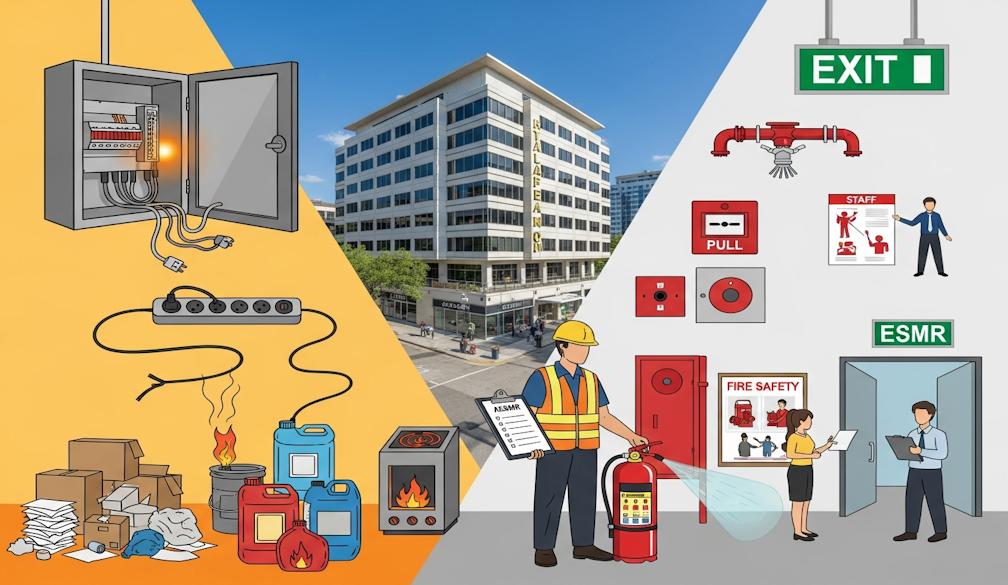
Fire safety is a critical responsibility for anyone who owns, manages, or operates a commercial building. From offices and warehouses to retail spaces and hospitality venues, commercial environments contain a range of potential fire hazards that can place people, property, and business continuity at serious risk if not properly managed.
Understanding the most common fire risks — and taking proactive steps to reduce them — is essential for compliance, safety, and peace of mind. In many cases, this process begins with a structured fire safety review such as an AESMR, which helps identify hazards, assess existing controls, and highlight areas for improvement before incidents occur.
Below, we explore the most common fire risks found in commercial buildings and practical ways to mitigate them.
Electrical Faults and Overloaded Systems
Electrical issues are one of the leading causes of fires in commercial properties. Faulty wiring, aging electrical infrastructure, overloaded power boards, and poorly maintained equipment can all generate excessive heat or sparks. How to reduce the risk:
- Schedule regular inspections by a licensed electrician
- Avoid overloading power points and extension leads
- Replace damaged cords and outdated wiring promptly
- Ensure switchboards and electrical panels are clearly labelled and unobstructed
Improper Storage of Flammable Materials
Many commercial buildings store flammable or combustible materials, including cleaning chemicals, fuels, packaging materials, and aerosols. When stored incorrectly or too close to ignition sources, these items significantly increase fire risk. How to reduce the risk:
- Store flammable substances in approved, fire-resistant cabinets
- Keep materials away from heat sources and electrical equipment
- Clearly label all hazardous substances
- Train staff in safe handling and storage procedures
Poor Housekeeping and Clutter
Excessive clutter, waste build-up, and poor housekeeping can allow fires to start and spread rapidly. Cardboard boxes, paper, and general rubbish are common fuel sources, particularly in storage rooms and back-of-house areas. How to reduce the risk:
- Implement strict cleaning and waste removal schedules
- Keep exits, corridors, and plant rooms clear at all times
- Break down and dispose of cardboard promptly
- Regularly inspect hidden or low-traffic areas
Faulty or Poorly Maintained Fire Safety Systems
Fire detection and suppression systems are only effective if they are properly maintained. Non-functional smoke detectors, expired fire extinguishers, or blocked sprinkler heads can render safety systems useless during an emergency. How to reduce the risk:
- Conduct routine testing and maintenance of all fire safety equipment
- Ensure extinguishers are appropriate for the building’s fire risks
- Keep alarms, sprinklers, and hose reels accessible and unobstructed
- Maintain accurate records of inspections and servicing
Unsafe Use of Heating and Cooking Equipment
In workplaces such as commercial kitchens, workshops, or offices with portable heaters, fire risks increase significantly. Unattended equipment, grease build-up, or heaters placed too close to combustible materials are common issues. How to reduce the risk:
- Regularly clean kitchen exhausts, filters, and cooking surfaces
- Never leave cooking or heating equipment unattended
- Position heaters well away from paper, furniture, and curtains
- Use equipment that meets Australian safety standards
Lack of Staff Training and Fire Awareness
Even with the right systems in place, human error remains a major contributor to workplace fires. Staff who are unaware of fire procedures or hazards may unintentionally create risks or respond poorly during an emergency. How to reduce the risk:
- Provide regular fire safety training and refreshers
- Ensure staff know evacuation routes and assembly points
- Display clear emergency signage throughout the building
- Appoint trained fire wardens where required
Blocked Exits and Inadequate Evacuation Planning
Blocked exits, locked fire doors, or poorly planned evacuation routes can turn a small fire into a major incident. Safe evacuation is just as important as fire prevention. How to reduce the risk:
- Keep all exits and fire doors clear and operational
- Regularly review and update evacuation plans
- Conduct evacuation drills to test readiness
- Ensure emergency lighting is functional and visible
A Proactive Approach to Fire Risk Management
Reducing fire risk in commercial buildings is not a one-off task — it requires ongoing assessment, maintenance, and awareness. By identifying hazards early, maintaining essential systems, and ensuring staff are informed and prepared, businesses can significantly reduce the likelihood and impact of a fire.
A structured fire risk assessment provides clarity on where vulnerabilities exist and what actions are required to meet legal obligations and best-practice safety standards. Ultimately, proactive fire risk management protects lives, safeguards assets, and helps ensure business operations can continue without disruption.
 "Pin It")









